
Per- and polyfluoroalkyl substances(FAS), known as 'forever chemicals' with some levels exceeding proposed EU limits and even those of globally banned PFAS are raising concerns about potential environmental and health impacts. Bangladesh does not have own standard limit of PEAS chemicals. PFAS are known to persist in the environment and can be harmful to human health, potentially causing cancer, reproductive problems, and other health issues. PFASs have been detected in surface- and groundwater worldwide. Both are important sources for drinking water production and as a result public concern has arisen over human exposure risks to PFAS.
Humans are continuously exposed to PFAS. Food and drinking water have been established as the main exposure routes to PFAS. However, exposure from dust, indoor environments, personal care and consumer products are also important. Workers in the PFAS industry are exposed to greater amounts of PFAS than people in the general population. One recent study detected PFAS in breast milk of all 50 mothers studied from the United States. There is no such study on mothers in Bangladesh.
PFAS are a large group of more than 4,500 synthetic fluorinated chemicals that are extremely persistent in the environment. They have been detected in air, soil, water-including drinking water sources-and household dust across the world. Once released, PFAS accumulate in living organisms, including fish, animals, and humans, and can remain in the human body for years. Scientific studies have linked PFAS exposure to kidney disease, asthma, hormonal disruption, weakened immune response, cancer, and adverse reproductive outcomes.
The textile industry is suspected to be a major source of PFAS pollution in Bangladesh. PFAS are extensively used in textile manufacturing, particularly polymers based on fluorinated acrylates and methacrylates. These substances are applied to fabrics to make them water-, stain-, and oil-repellent. PFAS are also used as wetting agents to enhance dyeing, as binders in non-woven fabrics, as antifoaming agents in textile treatment baths, and as emulsifying agents for fiber finishes. Studies have found alarmingly high PFAS concentrations-about 50%-in water bodies near textile factories and in clothing manufactured in Bangladesh. Some samples even contained globally banned PFAS compounds. In one study, PFAS were detected in all five clothing samples purchased locally. Furthermore, three out of four tap water samples collected in 2019 contained PFAS levels exceeding the U.S. drinking water threshold for PFOA (4 ng/L).
In addition to textiles, PFAS exposure occurs through multiple pathways. These include firefighting foams, a major source of groundwater contamination near airports and military bases; commercial household products such as nonstick cookware, polishes, waxes, paints, and cleaning agents; food packaging materials that resist grease and moisture; and personal care products like shampoo, dental floss, cosmetics, and nail polish. Occupational exposure also remains a concern in industries such as electronics manufacturing, chrome plating, oil recovery, and wastewater treatment. Water-repellent clothing, stain-resistant carpets, and grease-resistant products further contribute to daily exposure.
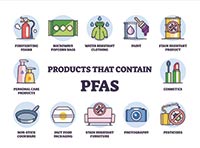
Health concerns related to PFAS exposure are particularly alarming in Bangladesh. One report indicates that approximately 93.55% of women suffer from kidney-related problems and asthma, while nearly 10% experience pregnancy-related complications. PFOA, commonly used in nonstick cookware, has been associated with pregnancy-induced hypertension and preeclampsia. Despite these risks, public awareness of PFAS pollution in Bangladesh remains extremely low, and there is a lack of scientific data on PFAS exposure among vulnerable populations such as pregnant women and infants.
Bangladesh does not produce PFAS domestically; however, import and widespread use of PFAS-containing products are likely the primary sources of contamination. Although Bangladesh is a signatory to the Basel and Stockholm Conventions-global treaties aimed at controlling hazardous and persistent organic pollutants-the country lacks specific regulatory limits or comprehensive policies addressing PFAS. While Bangladesh ratified the PFOS amendment and the global elimination of PFOA under Annex A of the Stockholm Convention in 2023, implementation and enforcement remain weak.
International pressure is also increasing. Studies have implicated suppliers of major global brands such as Benetton, C&A, Calvin Klein, H&M, Marks & Spencer, Sainsbury's, and Zara in PFAS contamination. Due diligence laws in Europe and North America now restrict sourcing from environmentally polluting industries. Failure to phase out PFAS could result in the loss of international garment buyers, posing a serious economic risk for Bangladesh's export-driven textile sector.
PFAS are called "forever chemicals" because they can take hundreds or even thousands of years to degrade. However, safer alternatives already exist, including paraffin-, silicon-, dendrimer-, and polymer-based coatings. The use of PFAS in textiles is no longer necessary. A strong political commitment is urgently needed to phase out PFAS, enforce zero discharge of hazardous chemicals, raise public awareness, and protect both public health and the environment for future generations
The writer is CEO, Bangla Chemical





