



| HEADLINE |

|
The Annual Migration of Clouds
Published : Saturday, 3 January, 2026 at 12:00 AM
By Premee Mohamed


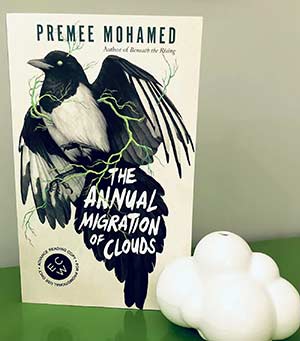 Lots of
bloggers participate in Novellas for November, which is basically just
an annual campaign to read more novellas this month. It's a worthy cause
because so many novellas are overlooked simply because they aren't
considered serious enough with their shorter page count (why do we
consider books that are super long 'serious'?) I'd like to say I was
organized and consciously planned my reading of novella The Annual
Migration of Clouds by Alberta author Premee Mohamed for this month, but
it was Naomi's review over at Consumed by Ink that pushed me to give
this one a go now, as it had been languishing on my shelf for a few
months. I don't often say this n my reviews, but I truly wish this book
was longer because I would have loved to follow these characters for
hundreds of more pages.
Lots of
bloggers participate in Novellas for November, which is basically just
an annual campaign to read more novellas this month. It's a worthy cause
because so many novellas are overlooked simply because they aren't
considered serious enough with their shorter page count (why do we
consider books that are super long 'serious'?) I'd like to say I was
organized and consciously planned my reading of novella The Annual
Migration of Clouds by Alberta author Premee Mohamed for this month, but
it was Naomi's review over at Consumed by Ink that pushed me to give
this one a go now, as it had been languishing on my shelf for a few
months. I don't often say this n my reviews, but I truly wish this book
was longer because I would have loved to follow these characters for
hundreds of more pages.Reviewed byAnne Logan
Plot Summary
Set in the future in Edmonton, Alberta once the foretold climate disaster has done all the terrible things scientists said it would, Reid and her mother are living their daily, exhausting but somewhat stable lives. Society has come together as best as possible to keep going; there are doctors, there is enough food but just barely, and everyone basically works day and night to keep the food supply going by growing their own plants, weaving fibers from recycled plastic, and hunting skinny wild rabbits when in need of extra meat, which is scarce. There is no more electricity, internet, or technology of any kind. The story opens with a jolt of exciting news in Reid's life; against extremely unlikely odds, she has been accepted into the 'domes', which is essentially a university one must apply to with an essay submission. Not much is known about life there, but it's rumoured to be one of the last few places on earth that life resembles the 'before' times, which is the life of abundance we currently enjoy. But Reid is torn over whether she should go because she doesn't want to abandon her mother, who is sick with "CAD", an illness that has ravaged humankind as a parasite that slowly and painfully kills its human host.
My Thoughts
Climate fiction is popping up more and more these days, and why wouldn't it? We are constantly getting reports of how dire life is going to be for our future generations if we don't cut our emissions, so this is a ripe area for dystopian stories to bloom. Much of what's coming from this genre is simply about survival, trying to live one's life in this new, unhospitable world. Not surprisingly, this can cause quite a bit of anxiety when reading, and I definitely feel that, especially when it takes place in the very province you currently live in (see my review of Watershed for more on that). And although I felt that same anxiety reading this novella, I was thankfully distracted by the very compelling problem that Reid faces, torn between the love of her mother and the hope that life may hold something more for her. Because of its short length, we leave Reid before she leaves the community, but I am dying to know how things work out for her, and how the author would create this exciting new world that hints of astonishing technological advances.
The disdain these characters hold for the us in the 'before' times, (i.e. you and me) is something I think of when the affects of climate change are mentioned. The careless way many of us are living now is something that will have an end date, and future generations will no doubt resent our wasteful lifestyles. These characters remark on how much plastic is left in landfills, and the fact that they can't make anymore, but luckily we disposed of so much of if its the one thing they don't believe they will run out of anytime soon. It's the only thing that survived. This is also the first dystopian novel I've come across that specifically references what Indigenous peoples did once civilization started to break down:
"The Indigenous people here under centuries of colonizers, till we broke the world and they quietly, nearly overnight, packed up and left the cities together, to live better on the land that their invaders were too busy dying and fighting to lay claim to any longer" (p. 91 of ARC).
Considering many Indigenous people still have a strong connection to the land and it is a cornerstone of their culture, I'm not surprised Mohamed is predicting they will ride this out much better than us settlers - seems like a safe bet!
The fact that the CAD illness plays a role in society's downfall doesn't seem like the major issue I thought it may be when I first started reading - if anything, it seems to handicap some, but they deal with it, sort of how we slowly move along with our Covid issues - things are no longer at a standstill, they are just…complicated. So are books like this meant as a warning, do they change our behavior after reading them? I'm not sure this book will change my behavior per se, I already try to do quite a bit to reduce mine and my family's environmental impact, but it definitely makes me grateful for the easy way we live our life now. Let me know in the comments how these types of books affect your behavior, if at all - I'd love to hear from you!
Courtesy: I'VE READ THIS
Loading...
Loading...



Editor : Iqbal Sobhan Chowdhury
Published by the Editor on behalf of the Observer Ltd. from Globe Printers, 24/A, New Eskaton Road, Ramna, Dhaka.
Editorial, News and Commercial Offices : Aziz Bhaban (2nd floor), 93, Motijheel C/A, Dhaka-1000.
Phone: PABX- 41053001-06; Advertisement: 41053012; 01793317829, 01550707291, E-mail: [email protected], [email protected] Online: email: [email protected] 41053014; 01550707297 Advertisement: 01550707296
Published by the Editor on behalf of the Observer Ltd. from Globe Printers, 24/A, New Eskaton Road, Ramna, Dhaka.
Editorial, News and Commercial Offices : Aziz Bhaban (2nd floor), 93, Motijheel C/A, Dhaka-1000.
Phone: PABX- 41053001-06; Advertisement: 41053012; 01793317829, 01550707291, E-mail: [email protected], [email protected] Online: email: [email protected] 41053014; 01550707297 Advertisement: 01550707296


