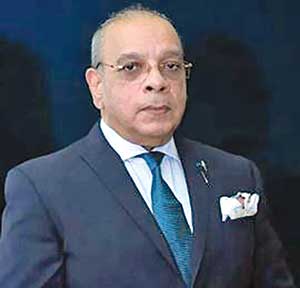
Chief Justice Syed Refaat Ahmed on Thursday said the Supreme Court had played a decisive role in correcting constitutional deviations created during the ousted Awami League regime by overturning post rulings that weakened judicial independence, including efforts to abolish the Supreme Judicial Council and distortions arising from the 15th and 13th amendments.
The chief justice made the remarks while addressing a felicitation programme held on his last working day ahead of his retirement on December 28. The farewell reception was accorded by Supreme Court Bar Association President Barrister AM Mahbub Uddin Khokon and Attorney General Md Asaduzzaman on behalf of the Bar and the Attorney General's Office at Court No-1 of the Appellate Division.
Addressing judges of both divisions of the Supreme Court and senior lawyers, the chief justice said the judiciary and legal community had passed through one of the most significant and challenging phases in the country's judicial history. He expressed gratitude for the cooperation he received during his 16-month tenure.
"The people possess constitutional authority and have the power to amend the constitution over time. The judiciary must accept this as a democratic truth rather than perceive it as a threat," he said, adding that courts must adapt to constitutional evolution while remaining faithful to fundamental principles.
He noted that during a turbulent political period, the judiciary remained the only fully functional constitutional organ and acted within constitutional limits to protect fundamental rights and institutional autonomy.
In a written statement, the chief justice said the July Revolution did not seek to overturn the Constitution but rather to "purify our engagement with it." He said transparency, accountability and responsiveness emerged as guiding principles of public conscience during that time. "The judiciary was compelled to adopt a posture at once humble and resolute-humble in acknowledging that it cannot exceed constitutional boundaries, and resolute in ensuring that within those boundaries no right is rendered illusory, no institution made captive, and no citizen abandoned," he said.
From this perspective, he said, the September 2024 Judicial Reform Roadmap was formulated to respond to a national demand for constitutional normalcy. As part of that effort, unprecedented judicial roadshows were held across the country, revealing what he described as a renewed determination among judges to reclaim institutional autonomy and among lawyers to rediscover their civic responsibilities.
"It is in this spirit that our Court overturned constitutional misadventures, whether in the attempted burial of the Supreme Judicial Council, the distortions of the 15th Amendment Case, or the unresolved echoes of the 13th Amendment review," he said. He also noted that for the first time in the country's judicial history, a judicial appointment collegium was operationalised to ensure transparent, consultative and reasoned appointments.
The chief justice said the reform agenda focused on preventing the erosion of rights and ensuring that no institution became captive. He acknowledged the historic role of the Supreme Court Bar Association in advancing judicial independence, particularly through the Masdar Hossain case, and thanked lawyers for supporting the demand for a separate judicial secretariat.
He said steps were underway to introduce structural reforms, regularise judicial service careers and establish a Supreme Court Secretariat through an ordinance to secure full administrative autonomy.
Highlighting the broader responsibilities of lawyers, journalists and politicians, the chief justice warned that a decline in professional ethics weakens the rule of law. He urged the Bangladesh Bar Council to strengthen ethical standards and proposed including justice and professional responsibility as core components of bar examinations. He also called on law faculties to introduce clinical programmes focused on access to justice, legal aid and community-based legal services.





