Concluding Part
Conflict: Unfortunately, when both military and international situation were turning rapidly in favour of us, the differences among our political leaders were becoming more and more acute. The cabinet seemed to be divided as to the future line of action. Sharp conflict was evident between Mr. Tajuddin Ahmed, the prime Minister and Mr. Khondkar Mushtaq Ahmed, the Foreign Minister, principally for personal rivalry. This threw other members of the Cabinet into embarrassment. Syed Nazrul Islam as the Acting President provided the only cover of unity, as his leadership was accepted by both. Unfortunately, in this crossfire, both Mr. Hossain Ali and I became victims. As the Foreign Secretary, it was my professional duty to work in accordance with the instructions of the Foreign Minister. But the other party interpreted my role as partisan.
Until and unless differences on top was relaxed, I had no prospect of escaping from this embarrassment. In this connection I remember a little incident. One day, in a meeting of the secretaries, the Prime Minister was found highly agitated. He had a copy of the Foreign Ministry's News Bulletin in his hand. He pointed to a photograph in that why that portion of the picture where he was appearing was clipped off. I looked at the picture, which showed Mr. Khorndkar Mushtaq Ahmed with the Bangabandhu. Mr. Tajuddin Ahmed told me that he was standding by the other side of the Bangabandhu, but now it was cut off. I explained that I had not been dealing with photographs or any stuff like that. In any case how was I supposed to know that he was standing on the other side of Bangabandhu ? But he went on abusing me in front of other Secretaries for he was sure that I was damaging his image and boosting up that of Khondkar Mushtaq Ahmed. I, however told him that to boost up some individual was not in my charter of duties. I was only performing my professional responsibilities relating to policy formulation in the field of foreign affairs.
On another occasion, I suggested that the members of the cabinet should pay field visits with a view to boosting up the morale of the freedom-fighters. Indian government was not much willing to encourage such visits for obvious security reasons. But nevertheless during my discussion with the Indian Foreign Secretary, I strongly pleaded for it saying that it would enthuse the freedom-fighters on the one hand and on the other neutralise the Pakistani propaganda that the provisional government of Bangladesh was in security custody of India.
But it was of no avail. My proposal for intensifying the activities of the freedom fighters so as to enhance our image before the world community was also paid little heed. In this situation, it became difficult for me to continue. Nor I was very keen to do so. By that time negotiations had already started as regards of recognition of the provisional government by the Government of India and subsequent entry of the Indian Army in support of the Bangladeshi freedom-fighters. In view of my stated positions, I was not asked to participate in these discussions.
Resignation: In this situation, I submitted my resignation from the post of the Foreign Secretary of Bangladesh on November 19, 1971 and requested for a successor, who would be trusted by both India and Bangladesh. At that time Mr. Abul Fateh the then Pakistani Ambassador in Baghdad had defected and came to Mujibnagar. He was already acting as the Foreign Affairs Adviser to the acting president. I suggested that he could easily take over my responsibilities. But my resignation was not immediately accepted.
When India accorded formal recognition to Bangladesh and Indian Army
stepped in, war situation in Bangladesh changed rapidly and Pakistani
Armed Forces finally surrendered. The instrument of surrender was signed
by Lt. Gen. Jagjit Singh Aurora of the India Army on the one side and
Lt. Gen. A.A.K. Niazi of the Pakistan Army on the other on December 16,
1971.
I knew that as soon as the Indian Army would intervene, the war would be over. But in that event the lion's share of the credit of the independence of Bangladesh would accrue to India. Moreover this process would automatically entail hegemonist overtones on the part of India, even if she did not design to do so. When victory was evident and it was only a matter of time, attitude of the Indian Army to intervene seemed conspiratorial to me. Above all, this was my unflinching belief that to realize the real value and significance of independence one must fight one's own war of independence. The principle of self reliance was relevant in this matter as well. So, I strongly felt that I was a misfit at that moment.
I was aware that the resignation of the Foreign Secretary at the advent of victory might create international embarrassment for the new government. So I decided to go slow and gradually withdrew myself from all public actions.
Pakistani Army Surrendered Dec16, 1971: Good omens were there. India accorded formal recognition to Bangladesh and Indian Army stepped in. Millitary situation in Bangladesh changed rapidly and Pakistani Armed Forces finally surrendered on December 16, 1971. The instrument of surrender was signed by Lt. Gen. Jagjit Singh Aurora of the India Army on the one side and Lt. Gen. A.A.K. Niazi of the Pakistan Army on the other on December 16, 1971.
Provisional government was then getting ready to come back to Dhaka. I was informed that I would have to accompany the cabinet members in the first flight on December 22, 1971. I told them that I had already submitted my resignation in November and now that independence had been achieved. I should return to my original work, which I had left unfinished at Chashi Farm and Gumai Beel. I further added that if they were adamant to take me with them they would have to first take me into custody. It worked and my colleague and friend Abul Fateh was asked to take over from December 22, 1971. Thus I stayed back in Mujibnagar for about a week so as to allow the dust that might be raised due to my absence in Dhaka to settle down.
After one week I flew to Agartala and from there went to Comilla. My first task was to visit Comilla Academy, the base of the rural development programme that I had introduced in Rangunia. There I found that Dr. Habibur Rahman who was Director of Youth Camps at Agartala had already taken over as the Director of the Academy and Prof. D.Dutta Gupta as the Deputy Director of the Youth Camp.
Before that, I went to Ramgati to visit Cooperators- joining `Vishawgram' from where I had left for Liberation War in April 1971. There I had a Cooperators and freedom Figters meeting at Alexander School hall. I called for the start of second War for Literacy Movement. I stayed at night at Vishawgram to hold a meeting with the locals when AHM Nouman, Secretary, Ramgati Cooperative Association was all togather with me.
While in Mujibnagar I had initiated a proposal that the entire youth force that was participating in the liberation war should be given intensive training on rural development and on reconstruction of villages, so that, on return they could start work in their respective villages without any loss of time. A proper training could easily prepare them to build `Sonar Bangla' for which they fought. The Indian Relief Secretary was also willing to provide training support for such a progrmme. I relized that the war was going to be over soon and the youth who were yet undergoing training in the youth camps would not get the opportunity of participating in the war. So it would be better to give them training on reconstruction. A formal proposal was given for the consideration of the government, but it was shelved. Thus a golden opportunity of converting the freedom fighters into reconstruction workers was lost.
During my discussion with Dr. Habibur Rahman and Prof. D. Dutta Gupta in Comilla, I raised this issue again. They informed me that they had already taken up the matter with the Prime Minister, but the Prime Minister vetoed it. The same proposal I gave again in early 1972, when I rejoined the government under Bangabandhu's command. Though it was approved of by Bangabandhu in principle, it was again blocked in the process by the then Finance Minister.
As a result, the freedom fighters did not know what to do after the liberation as they had no constructive programme to follow. So, unfortunate and unbecoming things started to happen at random all over Bangladesh. It seemed that the political leadership had led the youth to go astray with their eyes wide open.
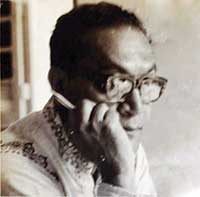
The extract is from the book `In Quest of Shawnirvar' written by Mahbub Alam Chashi, the First Foreign Secretary of Government of Bangladesh in exile





