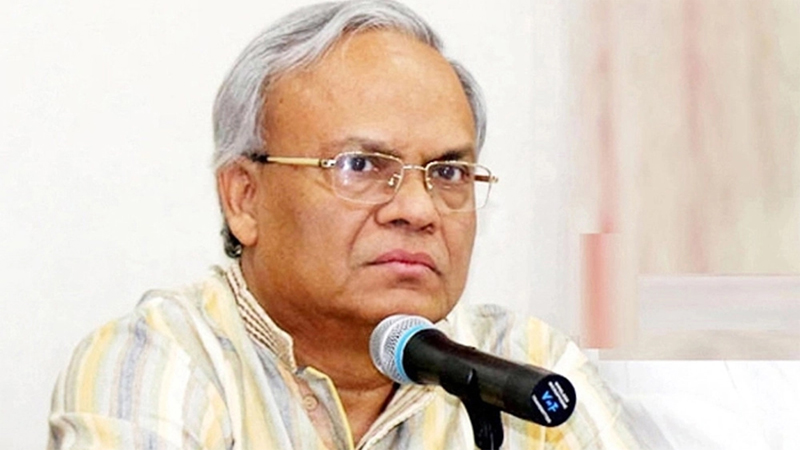
BNP Senior Joint Secretary General Ruhul Kabir Rizvi on Tuesday described the October 28, 2006, ‘Logi-Boitha’ (Oar and Log) movement as the first manifestation of Sheikh Hasina’s fascism, saying the pattern of violence later expanded under her leadership.
Rizvi made the remarks during a discussion organized by Dhaka University Central Students’ Union (DUCSU) titled “Logi-Boithar Lashtranter Theke Awami Fascismer Utthan: 28 October Prekkhit”.
He recalled that the incident occurred as then Prime Minister Khaleda Zia was on her way to the President to submit the cabinet’s resignation, just days before the caretaker government was formed.
“The administration had already stopped following government directives, and law enforcement agencies were hesitant to act, uncertain about the next government and the security of their positions,” Rizvi said. “Sheikh Hasina exploited that vacuum to initiate a wave of violence under the leadership of the Awami League.”
Rizvi cited the brutal attack on former Chhatra Dal president Shahabuddin Lalto, who was beaten with bricks and thrown into a pond by activists of the 14-party alliance, as a notable example of the violence unleashed.
He added that when reports of bloodshed reached authorities, the then premier instructed the BDR to intervene, but much of the damage had already occurred.
Drawing parallels with historical fascism, Rizvi said, “Fascists construct their own narratives. Hitler invoked the ‘State’; Sheikh Hasina invoked the ‘Spirit of Liberation.’ That spirit has been distorted to the point where ordinary citizens now question whether fascism is being disguised under its banner.”
Sharing his personal experience, Rizvi said he feared walking through the Dhaka University campus under Awami League rule, worried about confrontations with Chhatra League activists. “After August 5, that fear disappeared,” he noted.
He called for restoring a democratic environment at the university, urging students across political lines—including Jatiyatabadi Chhatra Dal, Chhatra Shibir, and left- or right-wing groups—to engage in dialogue and unite to safeguard institutions.
“Whatever the fascists have done, it is now the duty of the new generation to undo it,” he concluded.