With the national election drawing near, political manoeuvring over seat-sharing has intensified. Once united on the streets, the Bangladesh Nationalist Party (BNP) and its allied parties are now locked in difficult negotiations to form an electoral coalition.
Party insiders say the BNP is increasingly under pressure, as 34 allied parties have placed demands for more than 200 constituencies, while the party can realistically spare no more than about 40 seats.
The 13th National Parliament election is expected to be held in early February next year, with the Election Commission likely to announce the schedule in early December.
In the meantime, the BNP, already grappling with internal preparations, faces mounting pressure from coalition partners seeking a share of parliamentary seats.
BNP sources said the 34 parties attached to its alliance have already submitted seat demands far exceeding their actual electoral strength. Political analysts believe these parties hope to survive the tough electoral contest by staying under BNP's political umbrella.
The situation has become more complicated as Jamaat-e-Islami, along with several Islamist groups, is reportedly moving to form a separate electoral bloc. BNP insiders fear this could divide the opposition vote.
In response, BNP is reportedly considering bringing in more small parties to expand its alliance, though this has encouraged some minor partners to demand large or strategically important constituencies.
Reliable sources claim that BNP leader Salahuddin Ahmed discussed the possibility of leaving up to 50 seats for Jamaat under informal talks facilitated by the National Consensus Commission. Both parties, however, have publicly denied such discussions.
Meanwhile, leaders of Bangladeshi Islami Andolon have stated they are open to "issue-based cooperation" with any political group but are not interested in forming a formal alliance.
The six-party Democracy Platform (Ganatantra Mancha) has submitted the most ambitious proposal, seeking 140 seats.
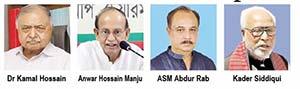
The platform includes Jatiya Samajtantrik Dal (ASM Abdur Rob), Nagorik Oikya (Mahmudur Rahman Manna), Revolutionary Workers Party (Saiful Haque), Ganasanghati Andolon (Jonayed Saki), Bhasani Janashakti Party (Sheikh Rafiqul Islam Bablu), and the Bangladesh Rashtra Sanskar Andolon (Hasnat Kayet).
BNP sources said the party will make final decisions after consulting grassroots leaders. The Democracy Platform, however, insists that the current list is only a draft proposal and subject to further discussion with BNP.
BNP leaders confirmed that no formal list has yet been accepted.
The 12-Party Alliance, which includes Kazi Zafar's Jatiya Party, Liberal Democratic Party (LDP), Kalyan Party, National Democratic Party, Islami Oikya Jote, Islamic Party, National Labour Party, United Liberal Party, Justice Party, and Jamiat Ulema-e-Islam, has jointly demanded 21 constituencies.
However, signs of internal division are already visible within the bloc, several insiders have acknowledged.
Separately, the 11-party "Nationalist Like-Minded Alliance" has submitted a list seeking nine seats.
This alliance comprises the National People's Party (NPP), Jatiya Gonotantrik Party (JAGPA), Democratic League, People's League, National Awami Party (NAP), Bikolpodhara Bangladesh, and Ganodal, among others.
Among individual allies, Colonel (Retd.) Oli Ahmed's Liberal Democratic Party (LDP) has sought 13 constituencies. Party sources said LDP Secretary General Dr Redwan Ahmed personally handed the list to BNP's Acting Chairman Tarique Rahman in London.
According to LDP insiders, even if they do not receive all 13, they expect at least three "symbolic seats"-citing the party's long-term cooperation with BNP.
Andaleeve Rahman Partha's Bangladesh Jatiya Party (BJP) has demanded five seats, while Gonoforum has asked for 15.
The newly registered Bangladesh Labour Party has requested six seats, with its chairman Dr Mostafizur Rahman Iran seeking the Jhalokathi-1 constituency.
Meanwhile, Bobby Hajjaj's National Democratic Movement (NDM) has submitted a proposal for 10 seats.
In the 2018 general election, BNP allocated 58 seats to its allies: 22 to Jamaat-e-Islami, 19 to the Jatiya Oikya Front, five to LDP, two to Khelafat Majlish, and several to Jamiat and the National Party.
Many of those candidates contested under BNP's sheaf of paddy symbol due to the then election law.
This time, however, new Election Commission rules require each alliance partner to contest under its own symbol. Analysts believe this will make it more difficult for smaller parties to capitalize on BNP's voter base, further straining coalition dynamics.
BNP Vice Chairman Shamsuzzaman Dudu told The Daily Observer, "Everyone is placing demands as they wish. The party is reviewing these lists carefully. Priority will be given to candidates with real electoral prospects."
He added that many of the seat demands are "neither logical nor realistic."
BNP Chairperson's Adviser Syed Moazzem Hossain Alal echoed the view, saying the Daily Observer, "Expectations are always high, but there is often a gap between expectation and reality. Those who stood by the party during the movement will naturally get preference."
He added that BNP is currently holding discussions with the Democracy Platform, Gono Odhikar Parishad, and Democratic Left Unity regarding possible seat-sharing arrangements.
Political observers note that the BNP is attempting to balance two parallel strategies-leading the ongoing anti-government movement while preparing to contest the upcoming election.
This dual approach, they say, is proving difficult to maintain amid mounting pressure from coalition partners.
While BNP wants to honour its allies, its capacity to share seats remains limited.
Too many concessions could risk alienating grassroots members, while too little might cause smaller allies to drift away.
Ultimately, the BNP faces one of its toughest political tests in years-to build an effective electoral alliance without weakening its own organizational strength.