



| HEADLINE |

|
Fourteen countries elected to UN Human Rights Council in uncontested vote, drawing criticism
Published : Wednesday, 15 October, 2025 at 10:07 AM
Observer Online Desk


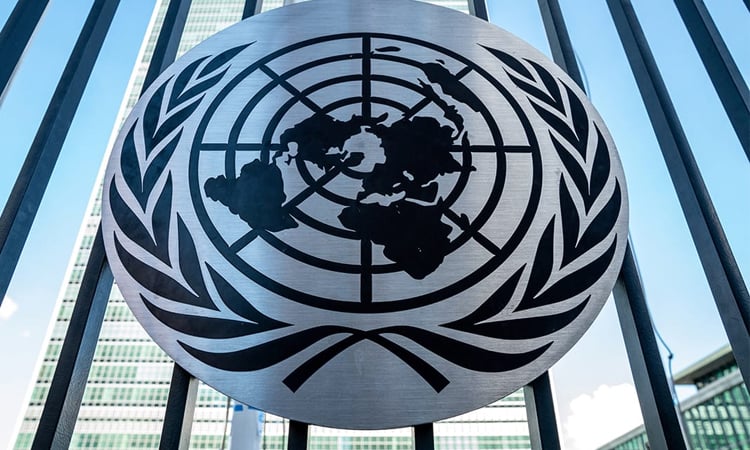
Fourteen countries, including Egypt and Vietnam—nations often criticized for their human rights records—were elected on Tuesday to the United Nations Human Rights Council in a non-competitive vote that advocacy groups say undermines the council’s credibility.
The Human Rights Council, based in Geneva, serves as the UN’s primary body for promoting and protecting human rights. It is composed of 47 members who serve staggered three-year terms. Seats are allocated by world region, with regional groups typically putting forward agreed-upon candidates who are then voted on by the UN General Assembly.
This year’s election filled 14 seats for the 2026–2028 term. All candidates were approved in a secret ballot, with no region offering more nominees than seats available. The newly elected members include four African nations (Angola, Egypt, Mauritius, and South Africa), four from the Asia-Pacific region (India, Iraq, Pakistan, and Vietnam), two from Eastern Europe (Estonia and Slovenia), two from Latin America (Chile and Ecuador), and two from Western Europe (Italy and the United Kingdom).
Human rights organizations criticized the lack of competition. "Uncompetitive elections undermine the Human Rights Council's reputation and work, making it possible for less than ideal candidates to sail through and stall human rights initiatives," said Madeleine Sinclair, director of the New York office of the International Service for Human Rights.
Louis Charbonneau, UN director at Human Rights Watch, warned that allowing countries like Egypt and Vietnam to secure seats unchallenged risks turning the council into "a mockery."
In contrast to this year’s vote, the previous two years saw more candidates than available seats in some regions. This competition led to Saudi Arabia losing its bid in 2023 and Russia failing to regain a seat in 2022 after being removed over its invasion of Ukraine.
The Human Rights Council, based in Geneva, serves as the UN’s primary body for promoting and protecting human rights. It is composed of 47 members who serve staggered three-year terms. Seats are allocated by world region, with regional groups typically putting forward agreed-upon candidates who are then voted on by the UN General Assembly.
This year’s election filled 14 seats for the 2026–2028 term. All candidates were approved in a secret ballot, with no region offering more nominees than seats available. The newly elected members include four African nations (Angola, Egypt, Mauritius, and South Africa), four from the Asia-Pacific region (India, Iraq, Pakistan, and Vietnam), two from Eastern Europe (Estonia and Slovenia), two from Latin America (Chile and Ecuador), and two from Western Europe (Italy and the United Kingdom).
Human rights organizations criticized the lack of competition. "Uncompetitive elections undermine the Human Rights Council's reputation and work, making it possible for less than ideal candidates to sail through and stall human rights initiatives," said Madeleine Sinclair, director of the New York office of the International Service for Human Rights.
Louis Charbonneau, UN director at Human Rights Watch, warned that allowing countries like Egypt and Vietnam to secure seats unchallenged risks turning the council into "a mockery."
In contrast to this year’s vote, the previous two years saw more candidates than available seats in some regions. This competition led to Saudi Arabia losing its bid in 2023 and Russia failing to regain a seat in 2022 after being removed over its invasion of Ukraine.
SR
Loading...
Loading...
Also read



Editor : Iqbal Sobhan Chowdhury
Published by the Editor on behalf of the Observer Ltd. from Globe Printers, 24/A, New Eskaton Road, Ramna, Dhaka.
Editorial, News and Commercial Offices : Aziz Bhaban (2nd floor), 93, Motijheel C/A, Dhaka-1000.
Phone: PABX- 41053001-06; Advertisement: 41053012; 01793317829, 01550707291, E-mail: [email protected], [email protected] Online: email: [email protected] 41053014; 01550707297 Advertisement: 01550707296
Published by the Editor on behalf of the Observer Ltd. from Globe Printers, 24/A, New Eskaton Road, Ramna, Dhaka.
Editorial, News and Commercial Offices : Aziz Bhaban (2nd floor), 93, Motijheel C/A, Dhaka-1000.
Phone: PABX- 41053001-06; Advertisement: 41053012; 01793317829, 01550707291, E-mail: [email protected], [email protected] Online: email: [email protected] 41053014; 01550707297 Advertisement: 01550707296


