



| HEADLINE |

|
Urgent steps a must to preserve our folk music, tradition
Published : Sunday, 28 September, 2025 at 12:00 AM
Osman Gani


 When people forget their roots, they become anonymous, and a nation also becomes weak if it loses its own tradition. Our ancient culture and folk music are not just a source of entertainment, they are a reflection of our history, identity and philosophy of life. Bhatiali, Baul, Lalangiti or Palagan, all contain the struggles, dreams and emotions of our ancestors. However, in the race of modernity, this invaluable resource is at risk of being lost. Therefore, awareness and effective initiatives to preserve tradition are needed now.
Human existence is not limited to only physical life; its spiritual world, emotions, thoughts and dreams are all developed through culture. Every nation gains a unique entity on the face of the earth by retaining its own history, tradition and culture. Bangladesh is no exception. Our thousand-year history, various stories of rural life, love and separation, struggle and dreams are all spread in the tunes of folk music, folk tales, and the rhythm of country songs. However, in the race of modernity, we are gradually forgetting this invaluable tradition. Folk music, which is a reflection of the lives of our ancestors, is on the verge of disappearing today. Therefore, it is necessary to create national awareness and take effective steps to preserve old culture and folk music.
The power of folk music lies in its simplicity and deep pull of the heart. The common people of rural life have expressed their happiness and sorrow, joy and pain in simple language and simple tune. When the Bhatiali song is sung by the river boatman, not only the call of the river can be heard, but also the sigh of the struggle for life. Baul songs are not only about spiritual pursuits, but also express the desire for the liberation of the human soul. Palagan, Murshidi, Marfati, Lalangiti or Jari-Sari-each genre carries a history, a philosophy. These are not just entertainment; they are documents of our social, political and religious life.
Once upon a time, folk music was the main entertainment in the courtyards, markets, courtyards or fair grounds of rural Bengal. People used to gather and listen to songs. They used to find the meaning of life and the warmth of relationships in songs. But now folk music is being lost in the mechanical flow of television, internet and social media. The younger generation is leaning towards Western tunes or modern songs. Yet they do not know that folk music has a classical beauty that resonates not only in the ears but also in the heart.
The roots of our culture are in the villages. The soul of that rural culture was folk songs, folk dances, dramas and fairs. This culture has enriched the national culture. But today, from villages to cities, it is almost impossible to say that folk music is practiced. On the one hand, artists are not getting enough respect and financial support, on the other hand, folk music is not being properly promoted to the next generation. As a result, folk music artists are turning to other professions to earn a living. The names of many talented artists are also being lost in the darkness of oblivion today.
Folk music is not just music, it is a kind of historical document. The social relations, agricultural economy, love and separation, humanity and religious ideology of ancient Bengal are preserved here. If this music is lost, then the document of our past will be lost. For example, Lalon Sai's songs teach us that humanity is the highest religion; Hasan Raja teaches people about the philosophy of life in his songs; Shah Abdul Karim highlights the soil of farmers and workers and the voice of the people. These songs have the identity of our existence, they are at the root of national identity.
In order to deal with this drought of culture in the present time, a joint initiative of the state and society is needed. First, folk music must be brought into the mainstream of education. It is important to highlight the importance of folk music in the curriculum from schools to universities. Secondly, the media should come forward to promote folk music. Not only modern songs, there should be separate programs for folk music on television, radio, and online platforms. Thirdly, the government and private organizations should provide financial support, training, and encouragement to folk music artists.
The most effective way to preserve folk music in the digital age is to create an archive. Today, it is possible to easily preserve and promote songs on platforms like YouTube, Facebook, and Spotify. But this requires proper planning. On the one hand, old songs should be collected and kept in a database, and on the other hand, new generation artists should be encouraged to perform folk music. In this way, the continuity of folk music can be preserved from generation to generation.
Along with preserving folk music, it is also necessary to preserve other aspects of our traditional culture. Rural drama, Palagan, Pithapuli festival, Nabanna festival, Baisakhi fair-all these are part of our lives. These are not just entertainment, but also a unique means of uniting society. In today's consumerist era, these programs are decreasing. As a result, the culture of sincerity, bonding and mutual cooperation that existed in the society is weakening. Therefore, traditional festivals need to be revived.
On the other hand, the family also has to play a role in preserving folk music and culture. If parents make their children listen to folk songs from childhood and take them to fairs, they will be interested in culture. Because culture is not a matter of paper, it flows from generation to generation through feelings.
Our traditional old culture and folk music are not just a medium of art or entertainment, it is the foundation of our nationhood. Hidden within this music and culture are the philosophy of life of our ancestors, the history of struggle, the message of love and humanity. It must be remembered that when tradition is lost, not only music but also the vitality of the nation is exhausted. Therefore, now is the time for all of us to take joint initiatives. The greatest responsibility and honor will be to cherish the tradition left by our ancestors and hand it over to the next generation. Let tradition live, let folk music live-only then will Bangladesh move forward towards the future, remaining firm in its roots.
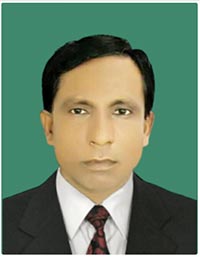
The writer is Vice President, Chandina Press Club
Loading...
Loading...
Also read



Editor : Iqbal Sobhan Chowdhury
Published by the Editor on behalf of the Observer Ltd. from Globe Printers, 24/A, New Eskaton Road, Ramna, Dhaka.
Editorial, News and Commercial Offices : Aziz Bhaban (2nd floor), 93, Motijheel C/A, Dhaka-1000.
Phone: PABX- 41053001-06; Advertisement: 41053012; 01793317829, 01550707291, E-mail: [email protected], [email protected] Online: email: [email protected] 41053014; 01550707297 Advertisement: 01550707296
Published by the Editor on behalf of the Observer Ltd. from Globe Printers, 24/A, New Eskaton Road, Ramna, Dhaka.
Editorial, News and Commercial Offices : Aziz Bhaban (2nd floor), 93, Motijheel C/A, Dhaka-1000.
Phone: PABX- 41053001-06; Advertisement: 41053012; 01793317829, 01550707291, E-mail: [email protected], [email protected] Online: email: [email protected] 41053014; 01550707297 Advertisement: 01550707296


