



| HEADLINE |

|
Moulvibazar’s tourism potential wasted amid neglect, poor infrastructure
Published : Friday, 26 September, 2025 at 5:17 PM
Salahuddin Suvo


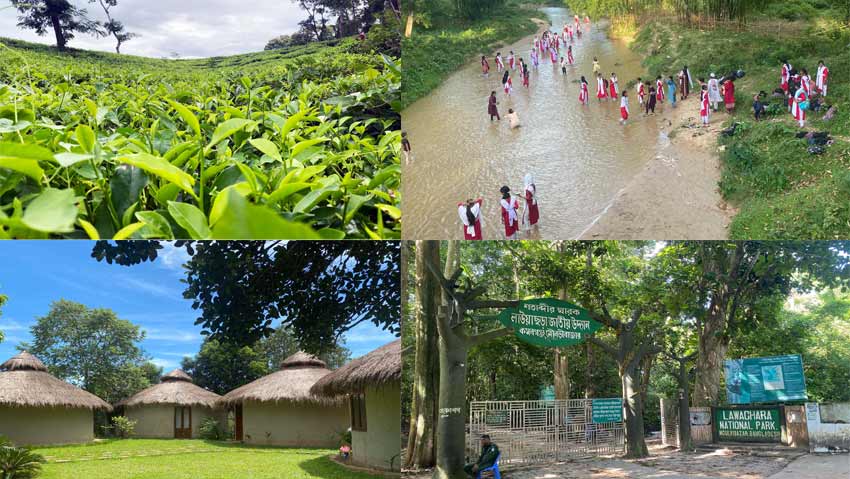
Despite being officially declared a tourism district in 2008, Moulvibazar; blessed with lush tea gardens, forested hills, scenic waterfalls and rich biodiversity, has yet to see meaningful development in its tourism sector.
Experts and local entrepreneurs say the immense potential of this naturally gifted region remains largely unutilized due to government inaction, poor infrastructure and lack of investment in tourist-friendly services.
They also stress the need for affordable travel options, especially for domestic tourists and better marketing to attract foreign visitors.
Despite having over 200 potential tourist attractions; from sprawling tea estates and cascading waterfalls like Madhabkunda and Hamham to vast wetlands like Hakaluki Haor and Baikka Beel, the district lacks basic facilities like reliable transport, experienced tour guides and structured entertainment options.
According to local hoteliers and resort owners, even during peak seasons like Eid or school holidays, the full economic potential of tourism flow is not realized due to these longstanding deficiencies.
Tapas Das, owner of Chamung Restaurant and Eco Cafe in Sreemangal, said that the absence of government support is discouraging local entrepreneurs.
"Without investment in infrastructure and transportation and without professional guides or entertainment options, we are failing to retain tourists. Many leave disappointed," he said.
Ehsan Kabir Sobuj, a member of Arannya Nibash Eco Resort committee at Kamalganj, echoed similar concerns.
"Getting to Moulvibazar is half the struggle," he said. "There’s a dire need for quality transport. If even two tourism-focused trains were introduced from Dhaka, we’d see a boom in visitor numbers."
SK Das Sumon, an environmental activist and tourism service provider, believes a lack of innovation is also hurting the sector.
"Tourists don’t want to visit the same old spots over and over. We need new, well-managed attractions. Despite discussions with various government departments, no tangible progress has been made," he said.
Shamsul Haque, member secretary of Moulvibazar Tourism Service Association, highlighted the region's diverse landscape and cultural richness.
"This district hosts Bangladesh’s largest tea estates, unique tribal cultures, waterfalls, and wildlife; all within reach. Yet the tourism infrastructure remains basic at best. The region is ideal for eco-tourism, but we're falling behind," he said.
Despite these challenges, officials say efforts are underway.
Kamalganj Upazila Nirbahi Officer (UNO) Makhan Chandra Sutradhar confirmed that certain initiatives are in place to promote eco-tourism.
Meanwhile, Moulvibazar Deputy Commissioner (DC) Israil Hossain said a proposal has been sent to the government outlining new plans to attract tourists and develop the sector.
Unless these proposals translate into action, Moulvibazar’s tourism will continue to be a missed opportunity; a sleeping giant waiting to wake.
Loading...
Loading...
Also read





Editor : Iqbal Sobhan Chowdhury
Published by the Editor on behalf of the Observer Ltd. from Globe Printers, 24/A, New Eskaton Road, Ramna, Dhaka.
Editorial, News and Commercial Offices : Aziz Bhaban (2nd floor), 93, Motijheel C/A, Dhaka-1000.
Phone: PABX- 41053001-06; Advertisement: 41053012; 01793317829, 01550707291, E-mail: [email protected], [email protected] Online: email: [email protected] 41053014; 01550707297 Advertisement: 01550707296


