



| HEADLINE |

|
Youth at the heart of climate action in Bangladesh
Published : Saturday, 13 September, 2025 at 12:00 AM
Michael Miller


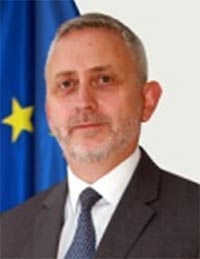 The EU stands with Bangladesh during her political transition, steadfastly supports the reform drives in key sectors and champions the potential of current day youth to propel the nation towards a better and more sustainable tomorrow. Writes Michael Miller...
My starting point - almost precisely one year and one week into my tenure in Bangladesh- is that the EU/Bangladesh relationship is a strategic choice, with respect for rights and the creation of opportunity at its core. We are listening to young people. We are listening to business and innovators. And tailoring our response as your political, commercial and development partner.
In just two months, the world will converge in Brazil for COP30 - an historic moment, marking ten years since the conclusion of the Paris Agreement. At the heart of Paris lie the Nationally Determined Contributions, or NDCs - each country's pledge to reduce emissions and adapt to the impact of climate change.
In 2015, only a handful of countries had national net-zero targets. Today, despite many challenges, some setbacks and the obvious need to do far more, far quicker, we have over 90% of global emissions covered by long-term net-zero pledges.
This platform allows me to talk about the importance of Bangladesh's new NDC 3.0, why the voice of youth is so critical, and how -together - we aspire to shape a sustainable future.
Bangladesh and the EU are both strong defenders of the need to stay below 1.5 degrees. So let me start by restating just how much we have in common. Bangladesh is among the most climate vulnerable countries in the world. And this region of Bangladesh is among the most vulnerable to floods, cyclones and salinisation. Disrupting lives and livelihoods.
Meanwhile, Europe is warming twice as fast as the global average, and also feels climate change acutely. Drought, wildfires, heatstroke increasingly affect our citizens. This is our lived reality. It is not deniable. Which is why the European Union, through its European Green Deal, is driving transition to a net-zero economy by 2050. We haveturned away from fossil fuels, embracing decarbonisation and clean technology, decoupling economic growth from emissions growth.
Our Green Deal is our growth strategy, and we are committed to delivering on its objectives: The fostering of an economy that boosts our competitiveness, delivers jobs, improves and protects our health, and bolsters our security. This is what drives our clean transition. The direction of travel is clear: decarbonisation and electrification through clean-tech.
And our strength lies in our policy predictability, our transparency and our good governance, all of which is a huge selling point for clean-tech investors and companies. You should know that more than one fifth of the world's clean technologies are now being developed in Europe.
Let me provide some context. The EU's share of global emissions is falling. We are now responsible for only 6% of global emissions whereas our economy is around 15% of global GDP.
In 2023, ourgreenhouse gas emissions fell by 8%, bringing total reductions to 37% below 1990 levels. This is the result of work to shutdown coal-fired power plants, invest in energy efficiency, increase the use of renewable energy.
And it is the impact of our Emissions Trading System. Whereby Carbon pricing and carbon markets are delivering cost-effective emissions reductions while generating €200 billion revenues that we can direct to support innovation and investment in a clean economy.
The EU's energy security and competitiveness are being strengthened through the energy transition itself - replacing fossil imports with clean, home-grown energy.
I am proud that the EU is leading this work, acting as a standard setter. But we are conscious of the need to work intensively with our partners if we are to succeed in our climate action. Around the world, climate science tells us that actions need to be accelerated in this critical decade to keep our targets within reach.
I am therefore pleased that, like the EU, Bangladesh has joined the Global Pledge to triple renewable energy capacity and double energy efficiency by 2030. Our immediate focus is to agree on the next step, ambitious post-2030 targets, before COP 30 in Belem.
Globally, the EU is partnering with developing countries, providing support to mitigate and adapt to climate change. We are the largest contributor of public climate finance, in total, anywhere, against any comparator, contributing over €28.6bn (USD 30.9bn) in 2023 alone plus an additional EUR 7.2bn (USD 8.1bn) in private finance mobilisation.
Here in Bangladesh, through our Global Gateway initiative, weare investing €1.3 billion in energy efficiency, renewable energy, grid modernisation and regional connectivity. A key part of this is a €350 million loan from the European Investment Bank and a €45 million EU grant to support solar and wind projects.
Bangladesh is not among the world's largest emitters, but I want to stress that an ambitious NDC 3.0 has the potential to do in Bangladesh what I have described for the EU: drive innovation, attract investment, and foster inclusive growth. It can provide stakeholders with clarity and stability, paving the way for much needed capital and expertise to flow.
Today is the fourth event in the series 'NDC3.0 for COP30', organised together with Youth for NDCs, Sweden, GIZ and the Ministry of Environment, Forestry and Climate Change. In the first round table, we discussed Bangladesh's NDC3.0 with the Ministries involved, and this has been followed by more focused sectoral discussions at BUET University, IUB University and today at Khulna University, focusing on Agriculture, Forestry and Urbanisation.
The NGO "Youth for NDCs" has had the lead in the organisation of these events. We believe that you, the youth,must be at the heart of climate action. Bangladesh's NDC3.0 should, therefore, be a vision for your future.
Your ideas, your energy, and your innovation are vital to crafting an NDC that reflects the needs and aspirations of your generation, which made so many sacrifices last year during the uprising.
Climate change affects you the most, and your voices must shape the solutions.
Whether it is advocating for energy efficiency and renewable energy, designing flood-resilient communities, or pushing for sustainable policies, your input can drive real change.
Grassroots action matters! As we look to COP30, I encourage all of us to seize this moment. Students, communities, governments, and partners like the EU need to pull together.
We can turn the tide against climate change. And in today's unpredictable world, Bangladesh can count on the EU. We are your steadfast partner - in your political transition, whose success we support.
In implementing your reform agenda on climate action, energy and other sectors. In providing your economic operators with market access to the world's largest single market in a way that has driven your remarkable economic growth and will continue to do so as you shift towards graduation.
In taking forward reforms that are essential to underpin the Rule of Law and will encourage both greater dynamism in your economy and greater protection of the rights of the citizen.
The writer is Ambassador of the European Union to Bangladesh and made the observations above on 11 September at the fourth in a series of workshops organised with Bangladeshi youth on climate change at Khulna University
Loading...
Loading...
Also read



Editor : Iqbal Sobhan Chowdhury
Published by the Editor on behalf of the Observer Ltd. from Globe Printers, 24/A, New Eskaton Road, Ramna, Dhaka.
Editorial, News and Commercial Offices : Aziz Bhaban (2nd floor), 93, Motijheel C/A, Dhaka-1000.
Phone: PABX- 41053001-06; Advertisement: 41053012; 01793317829, 01550707291, E-mail: [email protected], [email protected] Online: email: [email protected] 41053014; 01550707297 Advertisement: 01550707296
Published by the Editor on behalf of the Observer Ltd. from Globe Printers, 24/A, New Eskaton Road, Ramna, Dhaka.
Editorial, News and Commercial Offices : Aziz Bhaban (2nd floor), 93, Motijheel C/A, Dhaka-1000.
Phone: PABX- 41053001-06; Advertisement: 41053012; 01793317829, 01550707291, E-mail: [email protected], [email protected] Online: email: [email protected] 41053014; 01550707297 Advertisement: 01550707296


