



| HEADLINE |

|
Bangladesh's battle in global climate politics
Published : Saturday, 16 August, 2025 at 12:00 AM
Dr Nasim Ahmed


 Bangladesh is a vulnerable country to climate change due to its low-lying deltaic landscape, dense population, and reliance on climate-sensitive sectors like agriculture and fisheries. Despite contributing minimally to historical greenhouse gas emissions, the country frequently experiences cyclones, floods, salinity intrusion, and rising sea levels. These disparities between exposure and contribution place Bangladesh at the heart of global climate discussions, where equity, financing, and governance directly impact its development.
 Global climate politics is influenced by institutions, like the UN Framework Convention on Climate Change, the Paris Agreement's Nationally Determined Contributions, and multilateral finance mechanisms like the Green Climate Fund. For Bangladesh, two main concerns are important: (1) Equity concern: whether high-emission countries should provide binding financial support, and (2) Governance concern: whether climate finance should be managed through multilateral bodies or bilateral channels.
Access to concessional and predictable climate finance is essential for Bangladesh's adaptation goals. The Country Climate and Development Report of the World Bank (2022) highlighted a significant funding gap between adaptation needs and resource flows. Bangladesh has established institutional mechanisms to present bankable projects to international donors, such as the Bangladesh Climate Change Strategy and Action Plan (BCCSAP) and the National Adaptation Plan (NAP) 2023-2050.
However, financial availability depends on global political maneuvering. While the COP28 decision to operationalize a loss and damage fund was a breakthrough, its voluntary contributions and interim management by the World Bank mean funds may be unpredictable. For Bangladesh, this uncertainty complicates long-term planning. Bangladesh has consistently advocated for international recognition of loss and damage, emphasizing irreversible harms such as land loss and cultural heritage erosion.
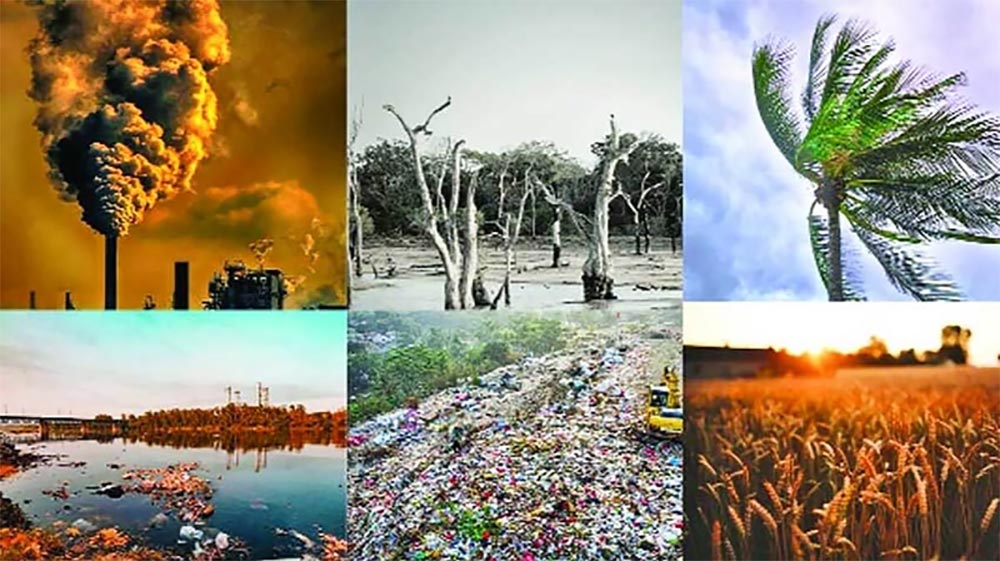
The COP28 outcome established a fund, but eligibility, governance, and scale remain contested. This issue reframes adaptation as a matter of justice, not charity, strengthening Bangladesh's diplomatic voice and risking pushback from high-emission countries wary of legal liability. Bangladesh may face difficult trade-offs between recovery and development investments without assured funding.
Global climate politics intersects with broader geopolitical rivalries. Bangladesh receives climate-linked infrastructure finance from China's Belt and Road Initiative and the EU and US development partnerships. While competition can bring more resources, it may also come with strategic conditions, such as technology procurement rules or energy sector preferences that do not always align with Bangladesh's pro-poor adaptation priorities.
Regional water politics, particularly with India over the Ganges-Brahmaputra system, also influence Bangladesh's resilience strategies, making climate diplomacy inseparable from broader bilateral negotiations.
Climate impacts are causing significant internal migration, with millions moving from rural, hazard-prone areas to urban centers. Internationally, migration governance remains politically sensitive, as climate migrants are not recognized as refugees under current law. For Bangladesh, this means: (1) increased domestic pressure on urban planning and social protection systems, (2) bilateral tensions over cross-border migration, (3) reliance on diplomatic advocacy to secure development assistance for displaced populations.
Global climate finance often comes with requirements for monitoring, procurement, and governance reforms. While these can strengthen institutions, they may also impose high compliance costs. Bangladesh's climate governance, including the Climate Change Trust and NAP, has improved absorptive capacity, but fragmented development partner priorities can lead to overlapping projects and inefficiencies.
Despite challenges, Bangladesh has important opportunities in global climate politics: (1) coalition diplomacy through the Climate Vulnerable Forum and LDC group, (2) direct access to funds by enhancing fiduciary systems, and (3) framing green development to attract concessional finance and private investment in climate-smart agriculture, renewable energy, and resilient cities. Aligning national projects with global funding priorities while maintaining equity goals can help Bangladesh maximize benefits.
Bangladesh should strengthen its politico-diplomatic efforts to: (1) diversify funding sources to decrease dependence on a single development partner or instrument, (2) negotiate for direct access to loss, damage, and adaptation funds, (3) include pro-poor outcomes in bankable projects, (4) enhance transparency in climate finance tracking, (5) build domestic institutions for transparency and assessment, and (6) develop a plan for managed migration and urban adaptation.
Global climate politics presents Bangladesh with both opportunities and challenges. While new mechanisms like the loss and damage fund represent progress, their voluntary nature and governance complexities reduce predictability. Bangladesh must manage competing geopolitical interests, uncertain financial flows, and migration pressures by using coalition diplomacy and strengthening institutional capacity to achieve fair and sustainable adaptation outcomes.
The writer is an Associate Professor, Bangladesh Institute of Governance and Management (Affiliated to the University of Dhaka)
Loading...
Loading...
Also read



Editor : Iqbal Sobhan Chowdhury
Published by the Editor on behalf of the Observer Ltd. from Globe Printers, 24/A, New Eskaton Road, Ramna, Dhaka.
Editorial, News and Commercial Offices : Aziz Bhaban (2nd floor), 93, Motijheel C/A, Dhaka-1000.
Phone: PABX- 41053001-06; Advertisement: 41053012; 01793317829, 01550707291, E-mail: [email protected], [email protected] Online: email: [email protected] 41053014; 01550707297 Advertisement: 01550707296
Published by the Editor on behalf of the Observer Ltd. from Globe Printers, 24/A, New Eskaton Road, Ramna, Dhaka.
Editorial, News and Commercial Offices : Aziz Bhaban (2nd floor), 93, Motijheel C/A, Dhaka-1000.
Phone: PABX- 41053001-06; Advertisement: 41053012; 01793317829, 01550707291, E-mail: [email protected], [email protected] Online: email: [email protected] 41053014; 01550707297 Advertisement: 01550707296


