



| HEADLINE |

|
Ex-BCL leader exiled from DUCSU election
Published : Tuesday, 12 August, 2025 at 6:21 PM
DU Correspondent


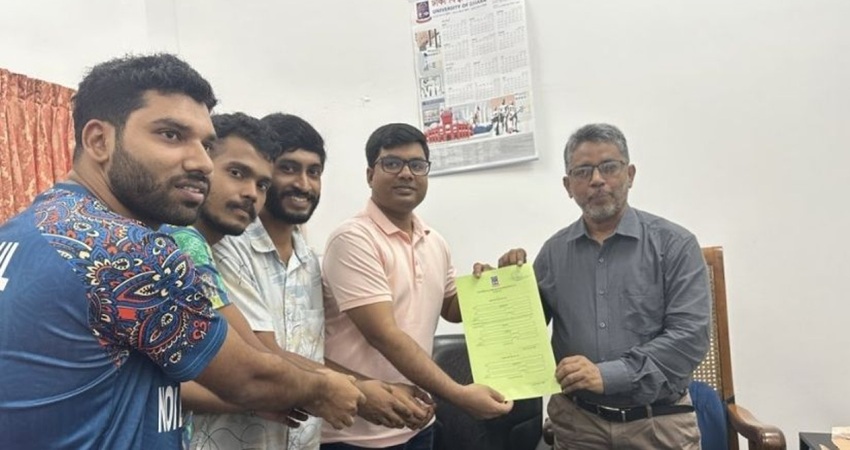
Former Bangladesh Chhatra League (BCL) leader and former General Secretary (GS) of SM hall parliament Zulias Cizar Talukdar has been removed from voter lists for upcoming Dhaka University Central Students' Union (DUCSU) elections after securing nomination forms to contest for Vice President (VP) position.
University Proctor Saifuddin Ahmed confirmed the removal following formal request from Solimullah Muslim Hall authorities, citing allegations of student harassment during previous government rule.
Cizar's candidacy sparked immediate controversy when he collected nomination forms on Wednesday, prompting student demonstrations outside Vice-Chancellor's office.
Protesters demanded accountability and called for voter lists free from "Chhatra League influence and terrorism," highlighting deep-seated concerns about his past conduct.
Hall Returning Officer Jawad Ibn Farid formally requested Chief Returning Officer Professor Mohammad Jashim Uddin to remove Cizar from voter lists, specifically referencing harassment allegations from fascist government period. Letter copy was simultaneously submitted to Proctor, ensuring swift administrative action against controversial candidate.
Cizar's political trajectory began with commanding victory in 2019 SM Hall parliament elections, where he secured impressive 895 votes as General Secretary from Chhatra League panel.
University Proctor Saifuddin Ahmed confirmed the removal following formal request from Solimullah Muslim Hall authorities, citing allegations of student harassment during previous government rule.
Cizar's candidacy sparked immediate controversy when he collected nomination forms on Wednesday, prompting student demonstrations outside Vice-Chancellor's office.
Protesters demanded accountability and called for voter lists free from "Chhatra League influence and terrorism," highlighting deep-seated concerns about his past conduct.
Hall Returning Officer Jawad Ibn Farid formally requested Chief Returning Officer Professor Mohammad Jashim Uddin to remove Cizar from voter lists, specifically referencing harassment allegations from fascist government period. Letter copy was simultaneously submitted to Proctor, ensuring swift administrative action against controversial candidate.
Cizar's political trajectory began with commanding victory in 2019 SM Hall parliament elections, where he secured impressive 895 votes as General Secretary from Chhatra League panel.
However, his tenure became marred by serious allegations including brutal beating of a student, Farid Hasan, who was left bloodied in hall incident that shocked university community.
Opposition candidate Anisur Rahman Khondakar Anik, who contested 2019 DUCSU General Secretary position from Chhatra Dal panel, accused Cizar of orchestrating voting obstruction through "artificial queues" and blocking candidates' rightful access to polling centres. These tactics effectively undermined democratic process and denied candidates their fundamental observation rights.
When students attempted protests under then-DUCSU VP Nurul Haque Nur's leadership, Cizar's followers allegedly responded with violence, throwing eggs and physically assaulting demonstrators. Such incidents earned him notorious nickname "Egg Cizar" amongst student community, reflecting widespread disdain for his methods.
Current critics remain unforgiving of Cizar's past actions. Abdul Wahed, central convener of Dhaka University Biplobi Chhatra Parishad, argued that "criminal offenses should be tried first before he is allowed to run in elections," emphasising need for accountability before political participation.
Former DU student Tuhin Khan questioned institutional integrity, asking: "If Cizar can avoid justice and contest DUCSU elections, then why would Awami League's elections be difficult?" This comparison highlighted broader concerns about impunity and democratic standards within university governance.
Despite mounting accusations, Cizar maintains his innocence, stating no police cases or FIRs mention his name. He claims DU administration summoned him thrice for investigation but "found no connection," though critics suggest this merely reflects inadequate accountability mechanisms rather than actual innocence.
Cizar insists he severed Chhatra League ties after 2019, establishing voluntary organisation called Dhaka University Security Platform to serve "general students."
Opposition candidate Anisur Rahman Khondakar Anik, who contested 2019 DUCSU General Secretary position from Chhatra Dal panel, accused Cizar of orchestrating voting obstruction through "artificial queues" and blocking candidates' rightful access to polling centres. These tactics effectively undermined democratic process and denied candidates their fundamental observation rights.
When students attempted protests under then-DUCSU VP Nurul Haque Nur's leadership, Cizar's followers allegedly responded with violence, throwing eggs and physically assaulting demonstrators. Such incidents earned him notorious nickname "Egg Cizar" amongst student community, reflecting widespread disdain for his methods.
Current critics remain unforgiving of Cizar's past actions. Abdul Wahed, central convener of Dhaka University Biplobi Chhatra Parishad, argued that "criminal offenses should be tried first before he is allowed to run in elections," emphasising need for accountability before political participation.
Former DU student Tuhin Khan questioned institutional integrity, asking: "If Cizar can avoid justice and contest DUCSU elections, then why would Awami League's elections be difficult?" This comparison highlighted broader concerns about impunity and democratic standards within university governance.
Despite mounting accusations, Cizar maintains his innocence, stating no police cases or FIRs mention his name. He claims DU administration summoned him thrice for investigation but "found no connection," though critics suggest this merely reflects inadequate accountability mechanisms rather than actual innocence.
Cizar insists he severed Chhatra League ties after 2019, establishing voluntary organisation called Dhaka University Security Platform to serve "general students."
However, his political history reveals deeper involvement; he served as joint general secretary of hall's Chhatra League committee in 2017, indicating sustained organisational commitment.
His Facebook post seeking "prayers, love and support" for VP candidacy demonstrated continued political ambitions despite controversial past.
His Facebook post seeking "prayers, love and support" for VP candidacy demonstrated continued political ambitions despite controversial past.
However, swift administrative response removing him from voter lists suggests institutional recognition that certain actions carry lasting consequences for political eligibility.
Current developments represent significant victory for student activists who demanded accountability from university leadership.
Current developments represent significant victory for student activists who demanded accountability from university leadership.
Removal decision sends clear message that past misconduct, particularly involving student harassment and electoral violence, remains relevant factor in determining democratic participation rights within university community.
NRE/NSA
NRE/NSA
Loading...
Loading...
Also read




Editor : Iqbal Sobhan Chowdhury
Published by the Editor on behalf of the Observer Ltd. from Globe Printers, 24/A, New Eskaton Road, Ramna, Dhaka.
Editorial, News and Commercial Offices : Aziz Bhaban (2nd floor), 93, Motijheel C/A, Dhaka-1000.
Phone: PABX- 41053001-06; Advertisement: 41053012; 01793317829, 01550707291, E-mail: [email protected], [email protected] Online: email: [email protected] 41053014; 01550707297 Advertisement: 01550707296
Published by the Editor on behalf of the Observer Ltd. from Globe Printers, 24/A, New Eskaton Road, Ramna, Dhaka.
Editorial, News and Commercial Offices : Aziz Bhaban (2nd floor), 93, Motijheel C/A, Dhaka-1000.
Phone: PABX- 41053001-06; Advertisement: 41053012; 01793317829, 01550707291, E-mail: [email protected], [email protected] Online: email: [email protected] 41053014; 01550707297 Advertisement: 01550707296


