Sometimes we see fighter jets flying over our city near Hazrat Shahjalal International Airport (HSIA) and surrounding areas in Dhaka. These aircraft move at an incredible speed and create a loud, thrilling noise that excites many of us, especially the youth. Such scenes often inspire dreams of becoming fighter pilots, serving our nation from the skies. However, behind that excitement lies a dangerous reality we rarely consider - the risks involved in military aviation, especially when performed near civilian areas.
This harsh truth came to life in a heartbreaking way on 21 July 2025, when a Bangladesh Air Force fighter jet, an F-7 BGI, crashed into Milestone School & College in Diabari, Uttara, just moments after taking off from a nearby airbase. The jet suffered a technical failure, and the pilot, Flight Lieutenant Md Towkir Islam Sagar, attempted to steer it away from densely populated areas. He ejected to save lives, but the aircraft had already lost control.
The result was catastrophic.
The jet crashed directly into the school during class time. Flames erupted, walls collapsed, and panic spread like wildfire. At least 31 civilians(++) including many students and teachers, lost their lives. Over 170 people were injured, several of them critically. The pilot, who had initially survived by ejecting, sadly passed away later in the hospital due to severe injuries. This marked one of the deadliest aviation disasters involving a military aircraft in Bangladesh's history.
Rescue efforts began immediately. Teachers, staff, and even local residents rushed into the burning building to save students. Ambulances were too few, so people used cars, rickshaws, and even carried children by hand to get them to hospitals. The fire service and military later arrived and brought the situation under control. Hospitals faced blood shortages, and urgent appeals were made for donations.
A National Day of Mourning was observed on Tuesday, with flags flown at half-mast across the country. An official investigation was launched by the Air Force to understand the cause and to prevent such tragedies in the future.
This incident reminds us of an important lesson - while the sight of fighter jets may be thrilling, the risks are real. Military aircraft are not toys. Their speed, power, and technical complexity mean that any malfunction can lead to a massive disaster, especially in populated urban areas. It also raises an important question: Should military training flights or fighter jet operations be allowed near civilian zones and schools?
As we mourn those innocent lives lost, we must also reflect on aviation safety policies. The bravery of the pilot, the dedication of rescuers, and the unity shown by the people of Dhaka cannot bring back the lives lost - but they can inspire us to ensure such a tragedy is never repeated.
Difference in Flying Style: Civil Aircraft vs Fighter Jets
1. Purpose
* Civil aircraft are designed mainly for transporting passengers and cargo safely, comfortably, and efficiently.
* Fighter jets are built for military missions such as air combat, surveillance, interception, and tactical strikes.
2. Flying Style
* Civil aircraft fly on fixed, pre-determined routes with a smooth, stable, and level flying pattern. Takeoff and landing are slow and steady.
* Fighter jets, on the other hand, fly in a highly dynamic and aggressive manner. They perform rapid climbs, steep dives, sharp turns, loops, and rolls during missions.
3. Speed and Altitude
* Civil aircraft typically cruise at speeds around 800-900 km/h (500-560 mph) and fly at altitudes of 30,000 to 40,000 feet.
* Fighter jets are capable of flying at supersonic speeds (over Mach 1 or 1,235 km/h) and can operate at both very low altitudes and very high altitudes depending on mission needs.
4. Control and Handling
* Civil aircraft are designed for stability and comfort. They are usually operated with the help of autopilot systems, especially during cruise.
* Fighter jets are highly responsive and controlled mostly manually by the pilot. They are built for fast reaction and high maneuverability.
5. Operational Environment
* Civil aircraft operate in controlled airspace under guidance from Air Traffic Control (ATC). They avoid bad weather and turbulence for safety.
* Fighter jets may operate in unregulated, hostile, or combat zones and are trained to handle extreme G-forces, weather, and combat situations.
Why Fighter Jets Should NOT Perform Combat Maneuvers at Civil Airports:
1. Safety Risk to Civilian Aircraft
* Civil airports like HSIA (Hazrat Shahjalal International Airport)handle large commercial airliners full of passengers.
* Fighter jet maneuvers involve sudden climbs, sharp turns, high speeds, and unpredictable paths, which can conflict with the safe flight paths of commercial flights.
* It increases the risk of mid-air collisions or runway incursion.
2. Disruption of Air Traffic Control (ATC)
* Civil airports follow strict ATC procedures to manage high volumes of flights in an orderly manner.
* Fighter jet maneuvers are fast and aggressive, making it hard for ATC to maintain separation and communication.
* It can disrupt scheduled takeoffs, landings, and air traffic flow.
3. Noise Pollution & Public Panic
* Fighter jets are extremely loud and cause sonic booms or shockwaves.
* Practicing such maneuvers over densely populated areas around civil airports can cause public fear, disturbance, or even panic.
* Regular flights are designed to minimize noise; military jets do the opposite.
4. Infrastructure and Runway Limitations
* Fighter jets require special support facilities (like arresting gear, hardened shelters, blast walls) that civil airports don't have.
* Civil runways are built for larger, slower landings, and repeated high-speed maneuvers may wear out the infrastructure faster.
What Is Practiced at HSIA Regarding Fighter Jets?
While HSIA is a civilian airport, it is also occasionally used by the
Bangladesh Air Force under special coordination. Here's what happens in practice:
1. Limited Use with Coordination
* Fighter jets rarely perform maneuvers at HSIA.
* When they do operate, it is done during low-traffic hours, in strict coordination with civil aviation authorities.
2. Transit, Not Training
* HSIA may be used as a transit stop, not for air combat practice.
* Regular fighter jet training, exercises, or combat maneuvers are done in dedicated air force bases, such as BAF Base Bangabandhu (near Kurmitola), BAF Base Zahurul Haque (Chattogram) or BAF Base Matiur Rahman (Jessore).
Is Dhaka Airport Safe for Air Force Flying Practice?
Dhaka's Hazrat Shahjalal International Airport is a busy airport mainly for passenger planes and commercial flights. It is not made for regular Air Force flying practice or maneuvers.
Every day, many passenger flights take off and land at this airport. Because of this, the airport is very crowded and busy. Fighter jets need a lot of open space to do their fast and sharp flying moves safely. But Dhaka airport is located in a crowded city area, which does not have enough space for these kinds of military flights.
Doing Air Force training near the airport can be dangerous for passengers, airport workers, and people living nearby. That's why the Bangladesh Air Force uses special airbases like Kurmitola, Jessore, and BAF Base Bashar for their flying exercises. These places are safer and better suited for military training.
Dhaka airport is not safe or suitable for regular Air Force flying practice or maneuvers because it is a busy civil airport in a crowded area.
Fighter Jets Used by Bangladesh Air Force (BAF): The Bangladesh Air Force (BAF) currently operates a mix of fighter jets for air defense, pilot training, and light combat roles. Among its main combat aircraft is the MiG-29UB/SE, a Russian-made multi-role fighter. Bangladesh owns eight of these jets, but only six of the twenty engines are currently operational, limiting their usage. To address this, the Air Force has signed a major upgrade and repair deal with a Russian company to modernize the fleet to the MiG-29BM standard. These upgraded jets will feature advanced avionics, improved radar, and an extended service life, with the first updated aircraft expected to return to service by October 2025.
Another important aircraft in the BAF's inventory is the Chengdu F-7BG and F-7BGI, Chinese-built fighters based on the older MiG-21 design. The F-7BGI variant is equipped with a modern glass cockpit and radar system. However, these jets are now considered outdated by modern standards, as they lack long-range missile capability and advanced electronic systems. Bangladesh currently operates around 36 of these aircraft, but they are expected to be gradually phased out by 2034 under the Forces Goal 2030 modernization plan.
For advanced pilot training, the BAF uses the Yakovlev Yak-130, a Russian subsonic jet that also has light combat capabilities. These jets are ideal for preparing pilots for next-generation aircraft and can carry live weapons for ground attack missions. The Yak-130 fleet is in good condition and plays an important role in both training and secondary combat support.
Looking to the future, Bangladesh is planning to strengthen its air power by acquiring modern fighter jets. Two aircraft types under serious consideration are the Chengdu J-10CE from China and the JF-17 Thunder Block III, jointly developed by Pakistan and China. Both aircraft feature modern radar systems (like AESA), electronic warfare capabilities, and support for beyond-visual-range (BVR) missiles. The J-10CE deal is expected to include up to 32 jets, and discussions are ongoing regarding the JF-17, with the possibility of acquiring 24 to 32 units.
In summary, while the Bangladesh Air Force is still operating several aging aircraft like the F-7BGI, it is actively working to modernize its fleet. The MiG-29 upgrade program and the planned acquisition of new multirole jets reflect the Air Force's commitment to building a modern and capable force fit for the demands of today's regional and global security environment.
Solo Flight in Aviation: A solo flight in aviation means a student pilot flies an aircraft completely alone, without a flight instructor or any other passengers on board. This is a very important moment in a pilot's training journey. It shows that the student has learned enough to handle the aircraft safely on their own-including taking off, flying around the airport, and landing successfully.
When to Fly First Solo: Before a student can fly solo, they must go through a certain amount of training. Most students are ready for their first solo flight after 10 to 20 hours of flying with an instructor. However, it depends on each student's skill, confidence, and how quickly they learn. The student must understand how to control the aircraft, follow all safety procedures, and communicate clearly with Air Traffic Control (ATC).
Conditions for Solo Flight: There are some important conditions that must be met before a student is allowed to fly solo. First, the student must be medically fit and have a valid medical certificate. Second, they need to hold a Student Pilot License (SPL). Third, they must complete basic flight training with their instructor and pass a short test on flying rules, weather conditions, and emergency procedures.
The student must also have practiced flying in the same type of aircraft they will use for the solo flight. Most importantly, they need written permission from their instructor, who will only allow the solo flight if they are confident in the student's flying ability. The weather must also be good - usually with clear skies and light wind, to make the flight safe and smooth.
In short, a solo flight is a major achievement that shows a student pilot is becoming capable and confident. It is a careful, step-by-step process with strict rules to ensure safety. The instructor decides when the student is truly ready, making the first solo flight a proud and unforgettable moment for any future pilot.
A Wake-Up Call for Aviation Safety Around Dhaka Airport: The recent crash near Dhaka's Hazrat Shahjalal International Airport (HSIA) was a serious warning. It was disastrous, and it clearly reminds us that we must be more careful. If we continue to ignore these risks, the next accident could be even more dangerous - and possibly deadly. It is time to take aviation safety seriously before it's too late.
One of the key concerns is that Air Force jets are flying over a civilian airport like HSIA, which is already very busy with commercial flights. This airport is surrounded by dense residential and commercial areas - homes, schools, hospitals, offices. Fighter jets fly at high speeds and require much more open space for safe maneuvers. These kinds of flights should take place at dedicated military airbases, not over civilian areas.
Another major issue is the rise of high-rise buildings near the airport, especially along the runway approach path - the space pilots need for safe takeoffs and landings. According to old aviation safety rules, tall buildings were strictly prohibited in these zones. But now we are seeing new skyscrapers in places like Uttara, Nikunja, Tejgaon, and Banani- right under flight paths.
In the past, Tejgaon was designated only as an industrial area, and high-rise construction was not allowed. It is also an emergency fuel dumping zone for aircraft in distress. But today, Tejgaon is being converted into a commercial zone, and high-rise buildings are going up fast- ignoring the risks.
Banani is facing a similar problem. For example, the Sheraton Hotel in Banani has reportedly exceeded its height limit- a fact that many in the community already know. Still, no one is taking action. We stay silent until an accident happens - and then the blame game begins. RAJUK blames CAAB, CAAB blames developers, and nothing really changes.
The real question is: How are these risky buildings getting approved? Why are safety rules not being enforced? Are we just waiting for a major disaster to happen before we open our eyes?
Now is the time to act. We must enforce aviation safety rules strictly, protect the runway approach paths, and stop unsafe construction near the airport. It's not just about policies - it's about protecting lives. Let's act before the next accident, not after.
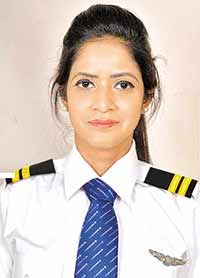
The writer is a Commercial Pilot





