



| HEADLINE |

|
CA hopes to bridge gaps thru 'July Consensus Charter'
Published : Monday, 2 June, 2025 at 7:57 PM
Observer Online Report


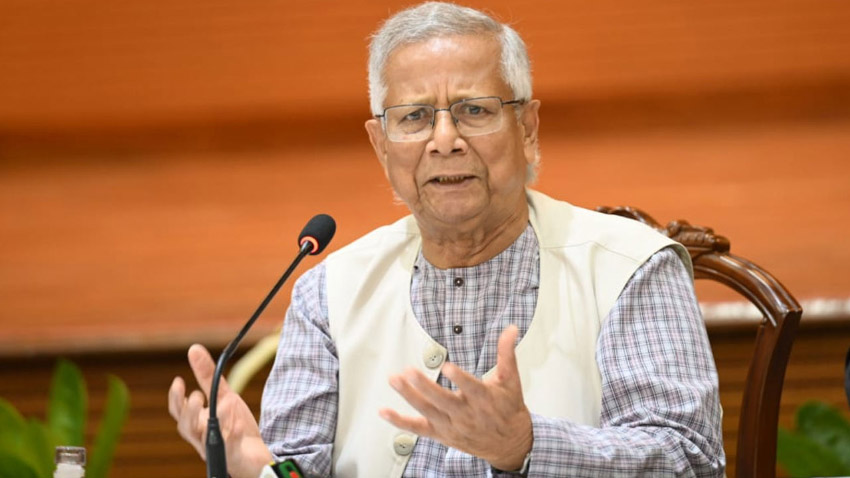
Chief Adviser (CA) Dr. Muhammad Yunus has expressed optimism that ongoing dialogue among political parties will lead to the formulation of a comprehensive and unifying "July Consensus Charter."
His remarks came at the opening session of the second phase of talks hosted by the National Consensus Commission on Monday (June 2) at the Foreign Service Academy in Dhaka.
The meeting saw participation from leaders of 30 political parties, including BNP, Jamaat-e-Islami and NCP.
A three-member BNP delegation, led by its Standing Committee Member Salahuddin Ahmed, attended the meeting to make it successful.
Welcoming the participants, Dr. Yunus said, “Among all the meetings I hold in a day, I enjoy these sessions the most. It is truly inspiring to be part of a process where we are collectively shaping the future of Bangladesh.” He emphasized the significance of the dialogue in healing divisions and fostering national unity.
Reflecting on the reform efforts undertaken by the interim government, CA noted, “We were given the responsibility to initiate reforms, but initially we didn’t know where to begin. After much discussion, we decided to establish several commissions to explore key issues in depth.”
The government initially formed six commissions, followed by six more, giving each 90 days to submit reports. While some commissions required additional time, Dr. Yunus acknowledged their valuable contributions.
He credited these commissions with laying the groundwork for the formation of the National Consensus Commission, led by Professor Ali Riaz, which he described as a pivotal move. “Every time I meet with Professor Riaz, I feel encouraged. The spirit of cooperation from all parties has been truly heartening,” he said.
Dr. Yunus stressed the genuine engagement of political parties in the process, noting that many went beyond formal discussions and held internal deliberations to shape their positions. “I had feared that some might be reluctant or disengaged. But I was pleasantly surprised by how deeply involved everyone became,” he remarked.
Summarizing the progress of the first phase, Dr. Yunus said the goal is to compile all areas of agreement into a formal document — the July Consensus Charter — capturing the collective vision for national reform and political stability.
Looking ahead, he explained that the second phase of discussions aims to close remaining gaps and expand the number of consensus points. “We are very close on several issues. With just a little more effort, we can add more recommendations to our list. We must not miss this opportunity,” he urged.
He concluded with hope: “We have already achieved consensus on many issues. As a nation, we should be proud that instead of deepening political divisions, we are choosing unity. I believe we will succeed in creating a truly remarkable July Charter that reflects our shared commitment to the nation’s progress.”
His remarks came at the opening session of the second phase of talks hosted by the National Consensus Commission on Monday (June 2) at the Foreign Service Academy in Dhaka.
The meeting saw participation from leaders of 30 political parties, including BNP, Jamaat-e-Islami and NCP.
A three-member BNP delegation, led by its Standing Committee Member Salahuddin Ahmed, attended the meeting to make it successful.
Welcoming the participants, Dr. Yunus said, “Among all the meetings I hold in a day, I enjoy these sessions the most. It is truly inspiring to be part of a process where we are collectively shaping the future of Bangladesh.” He emphasized the significance of the dialogue in healing divisions and fostering national unity.
Reflecting on the reform efforts undertaken by the interim government, CA noted, “We were given the responsibility to initiate reforms, but initially we didn’t know where to begin. After much discussion, we decided to establish several commissions to explore key issues in depth.”
The government initially formed six commissions, followed by six more, giving each 90 days to submit reports. While some commissions required additional time, Dr. Yunus acknowledged their valuable contributions.
He credited these commissions with laying the groundwork for the formation of the National Consensus Commission, led by Professor Ali Riaz, which he described as a pivotal move. “Every time I meet with Professor Riaz, I feel encouraged. The spirit of cooperation from all parties has been truly heartening,” he said.
Dr. Yunus stressed the genuine engagement of political parties in the process, noting that many went beyond formal discussions and held internal deliberations to shape their positions. “I had feared that some might be reluctant or disengaged. But I was pleasantly surprised by how deeply involved everyone became,” he remarked.
Summarizing the progress of the first phase, Dr. Yunus said the goal is to compile all areas of agreement into a formal document — the July Consensus Charter — capturing the collective vision for national reform and political stability.
Looking ahead, he explained that the second phase of discussions aims to close remaining gaps and expand the number of consensus points. “We are very close on several issues. With just a little more effort, we can add more recommendations to our list. We must not miss this opportunity,” he urged.
He concluded with hope: “We have already achieved consensus on many issues. As a nation, we should be proud that instead of deepening political divisions, we are choosing unity. I believe we will succeed in creating a truly remarkable July Charter that reflects our shared commitment to the nation’s progress.”
Loading...
Loading...
Also read








Editor : Iqbal Sobhan Chowdhury
Published by the Editor on behalf of the Observer Ltd. from Globe Printers, 24/A, New Eskaton Road, Ramna, Dhaka.
Editorial, News and Commercial Offices : Aziz Bhaban (2nd floor), 93, Motijheel C/A, Dhaka-1000.
Phone: PABX- 41053001-06; Advertisement: 41053012; 01793317829, 01550707291, E-mail: [email protected], [email protected] Online: email: [email protected] 41053014; 01550707297 Advertisement: 01550707296
Published by the Editor on behalf of the Observer Ltd. from Globe Printers, 24/A, New Eskaton Road, Ramna, Dhaka.
Editorial, News and Commercial Offices : Aziz Bhaban (2nd floor), 93, Motijheel C/A, Dhaka-1000.
Phone: PABX- 41053001-06; Advertisement: 41053012; 01793317829, 01550707291, E-mail: [email protected], [email protected] Online: email: [email protected] 41053014; 01550707297 Advertisement: 01550707296


