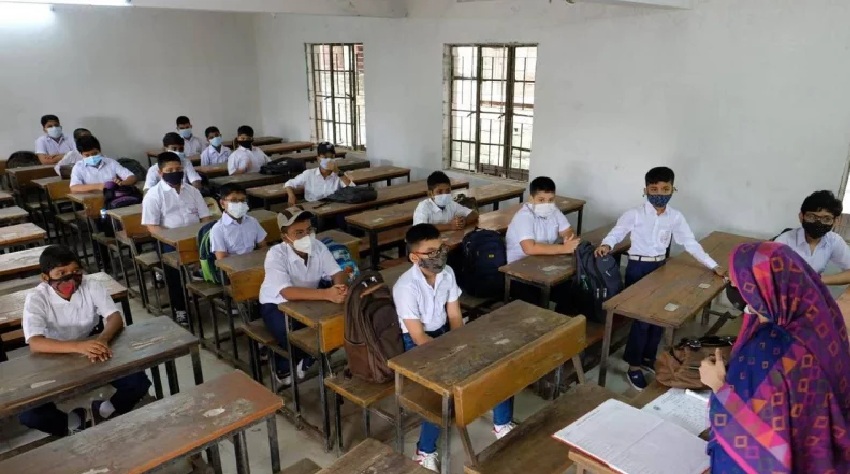
The proposed national budget for the 2025–26 fiscal year signals a major policy shift in Bangladesh’s education sector, with significant funding cuts to primary education while increasing allocations for secondary, technical, and madrasa education.
Experts warn reduced budget for primary education could strain essential operations, including teachers’ salaries, while the increased investment in technical and madrasa education aims to address long-standing neglect and rising enrollment.
In the newly proposed national budget of Tk 7,89,999 crore, announced on Monday, by Finance Adviser Dr. Salehuddin Ahmed, the allocation for Ministry of Primary and Mass Education has been reduced to Tk 35,403 crore.
This marks a decrease of Tk 3,416 crore from previous year’s proposed allocation of Tk 38,819 crore. Even though the revised budget for 2024–25 had already cut this figure to Tk 35,123 crore, the current proposal signals continued austerity in primary education sector.
This budget cut may challenge efforts to improve primary education, particularly in enhancing teacher compensation and maintaining quality standards in rural and underserved areas.
In contrast, Ministry of Education’s two other divisions; Secondary and Higher Education and Technical and Madrasa Education, have received notable increases in the 2025–26 proposal.
The Secondary and Higher Education Division has been allocated Tk 47,564 crore, up by Tk 3,456 crore from the previous year’s Tk 44,108 crore. The revised budget last year had reduced this to Tk 39,233 crore, making this year’s proposal a significant rebound.
The Technical and Madrasa Education Division has also seen a boost, receiving Tk 12,678 crore in proposed budget; an increase of Tk 895 crore from the original 2024–25 allocation of Tk 11,783 crore. This year’s figure is even more striking when compared to the previous year’s revised allocation of just Tk 9,953 crore.
Officials from Ministry of Education note that increasing student enrollment in madrasas over recent years has prompted the government to allocate more funds to the sector. After years of underfunding, this move is expected to benefit both students and educators across technical and religious education institutions.
Overall, education budget reflects a strategic reallocation of resources, prioritizing long-neglected sectors while raising concerns about the future of foundational education in the country.
SH





