



| HEADLINE |

|
Can Bangladesh’s leather industry rise from crisis to global glory?
Published : Friday, 30 May, 2025 at 4:23 PM
Md. Magem Ali Molin



When Bangladesh emerged as a new nation in 1971, few sectors held as much promise as its leather industry. With an abundance of livestock, skilled artisans, and relatively low production costs, the country seemed destined to become a global leader in leather and leather goods. For decades, the industry thrived, positioning itself as the second-largest export earner after ready-made garments (RMG). However, in recent years, the sector has faltered. Exports have declined, factories have shuttered, and global buyers have begun to look elsewhere. What went wrong? More importantly, how can Bangladesh reclaim its place in the global leather market?
A Legacy Undermined by Mismanagement
Bangladesh's leather industry has a deep-rooted history. During the 1980s and 1990s, the Hazaribagh area of Dhaka was the heart of leather tanning in South Asia. Despite lacking modern infrastructure, more than 90% of the country’s tanneries operated from this cramped, polluted neighborhood. However, the success was built on shaky foundations. Tanneries dumped toxic waste into the Buriganga River, destroying aquatic life and threatening public health. Yet, even amid environmental degradation, global demand for Bangladeshi leather remained high due to its durability, finish, and competitive pricing.
In 2003, recognizing the environmental catastrophe of Hazaribagh, the government decided to shift the tanneries to Savar and construct a Central Effluent Treatment Plant (CETP). The idea was noble: create an eco-friendly, export-compliant leather hub. But poor planning, delayed implementation, and inadequate investment turned the relocation into a nightmare. The CETP still does not meet international standards, and many tanneries have suffered production losses due to a lack of essential infrastructure. As a result, major global markets—especially the European Union—have placed restrictions on Bangladeshi leather.
A Legacy Undermined by Mismanagement
Bangladesh's leather industry has a deep-rooted history. During the 1980s and 1990s, the Hazaribagh area of Dhaka was the heart of leather tanning in South Asia. Despite lacking modern infrastructure, more than 90% of the country’s tanneries operated from this cramped, polluted neighborhood. However, the success was built on shaky foundations. Tanneries dumped toxic waste into the Buriganga River, destroying aquatic life and threatening public health. Yet, even amid environmental degradation, global demand for Bangladeshi leather remained high due to its durability, finish, and competitive pricing.
In 2003, recognizing the environmental catastrophe of Hazaribagh, the government decided to shift the tanneries to Savar and construct a Central Effluent Treatment Plant (CETP). The idea was noble: create an eco-friendly, export-compliant leather hub. But poor planning, delayed implementation, and inadequate investment turned the relocation into a nightmare. The CETP still does not meet international standards, and many tanneries have suffered production losses due to a lack of essential infrastructure. As a result, major global markets—especially the European Union—have placed restrictions on Bangladeshi leather.
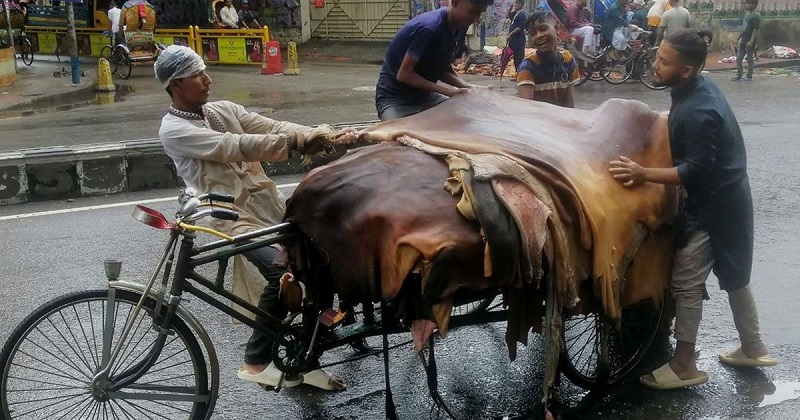
This year, the availability of sacrificial livestock is expected to include 5,602,905 cattle and buffaloes, 6,838,920 goats and sheep, and 5,512 of other species, totaling 12,447,337 animals. It is anticipated that there will be a surplus of approximately 2,068,135 animals. Leather industry owners have stated that for various reasons, the number of animals sacrificed this year may be lower compared to previous years. They have indicated that around 8 to 9 million pieces of rawhide might be collected this year.
Every year during Eid-ul-Adha, approximately 8 to 9 million sacrificial animals are slaughtered. If each hide is properly processed, it can yield an income of between 500 to 2,000 taka. However, in reality, hides are being sold in some urban areas for as little as 30 to 40 taka, and in rural areas, they fetch only 10 to 15 taka—or even less. In some places, instead of being donated to orphanages, hides are discarded in drains or dustbins. This is a cruel mockery of the economy.
The Price of Environmental Non-Compliance
In today’s world, environmental compliance is not merely a moral obligation—it is a passport to global markets. Bangladesh’s failure to meet environmental standards has had disastrous consequences. According to data from the Export Promotion Bureau (EPB), leather and leather goods exports fell to around $800 million in 2023, down from over $1.2 billion in 2018. Global brands that once sourced heavily from Bangladesh have turned to countries like Vietnam, India, and even Ethiopia, where green certification and transparent supply chains are prioritized.
The CETP at Savar, built with hundreds of crores in public investment, has remained dysfunctional for years. Wastewater from the tanneries continues to pollute local rivers and land, violating both domestic laws and international trade protocols. For global buyers, especially those bound by REACH (Registration, Evaluation, Authorization, and Restriction of Chemicals) regulations in the EU, sourcing from non-compliant factories poses a reputational risk they are unwilling to take.
A Value Chain in Disarray
The challenges of Bangladesh’s leather sector are not limited to environmental compliance. The entire value chain—from rawhide collection to export—is marred by inefficiency, corruption, and syndicate control. During Eid-ul-Azha, when 50–60% of annual rawhide is collected, unregulated middlemen exploit small traders and farmers. Rawhides are often stored improperly or sold at throwaway prices due to lack of cold storage and price monitoring. In some years, news footage has shown rawhides being discarded in drains or buried in fields due to market failure.
The absence of a structured supply chain means that by the time rawhide reaches the tannery, it has often lost quality. This reduces the yield of finished leather and forces producers to rely on imported chemicals and treatments to salvage materials. The cost of production rises while the quality and reputation of Bangladeshi leather deteriorate.
Moreover, finished leather is mostly exported in semi-processed form. Very few domestic companies are engaged in the production of high-end leather goods such as handbags, wallets, belts, and footwear. This results in massive value loss. According to the Leather Sector Business Promotion Council (LSBPC), if Bangladesh can increase value addition and promote finished goods manufacturing, the industry could grow to $3.5 billion in exports within five years.
Skill Gaps and Institutional Weakness
A thriving leather industry requires more than raw material; it needs skilled labor, research support, and innovation. Bangladesh lags significantly in this regard. The Institute of Leather Engineering and Technology (ILET) under the University of Dhaka is the only dedicated public institution for leather education and research, and it is severely underfunded and outdated. Most workers in the tanneries are informal, untrained laborers who lack the technical expertise needed to meet international standards.
Countries like Vietnam and China invest heavily in leather design, fashion integration, and advanced manufacturing techniques. In contrast, Bangladesh continues to export semi-finished leather with minimal branding or innovation. Without targeted investment in human capital and research, the country will struggle to move up the value chain.
Policy Paralysis and Governance Deficits
The lack of a comprehensive National Leather Policy is another major obstacle. Decisions about the sector are made in an ad hoc manner by different ministries, often with conflicting priorities. While the Ministry of Industries oversees tannery relocation and CETP implementation, the Ministry of Commerce focuses on exports, and the Ministry of Environment regulates compliance. The absence of inter-ministerial coordination results in policy paralysis.
Corruption further compounds the crisis. Rent-seeking behavior at every level—from licensing to rawhide transport to export documentation—discourages honest entrepreneurs and deters foreign investors. Efforts to digitalize leather transactions or create smart procurement systems have stalled due to bureaucratic inertia and vested interests.
A Comparative Lens: Lessons from Ethiopia and Vietnam
Ethiopia is often cited as an inspiring example. Like Bangladesh, it has abundant livestock and low labor costs. However, Ethiopia invested in clean technology, partnered with international brands, and developed industrial parks dedicated to leather goods. Within a decade, its leather exports multiplied, and Ethiopian shoes are now sold in high-end markets across Europe and the US.
Vietnam, another success story, focused on policy coherence, environmental standards, and skill development. With strong government support and international collaborations, Vietnam’s leather and footwear exports reached over $20 billion in 2023—twenty times that of Bangladesh. These examples underscore that strategic vision, not just raw material, determines success.
The Untapped Power of Artisanship
Despite its troubles, Bangladesh still has a treasure trove of traditional artisans—leatherworkers with generational knowledge of crafting shoes, bags, and accessories by hand. In areas like Narayanganj, Gazipur, and Rajshahi, thousands of families are engaged in small-scale leather goods manufacturing. These micro-entrepreneurs represent a silent workforce that has not been integrated into the formal economy.
If given proper training, access to credit, and e-commerce platforms, these artisans could become the backbone of a vibrant domestic leather goods market. The global market for handmade and sustainable leather products is booming. Platforms like Etsy, Amazon Handmade, and even Alibaba are full of such items fetching premium prices. Bangladesh should not miss this wave.
The Way Forward: Rebuilding with Purpose
To revive its leather industry, Bangladesh needs a multi-pronged strategy. First and foremost, the government must finalize and implement a National Leather Policy with clear targets for environmental compliance, export growth, skill development, and SME support. This policy should be informed by stakeholders—including tanners, exporters, academics, workers, and environmentalists.
Second, the CETP in Savar must be fully upgraded and made compliant with EU and US environmental norms. Without this, regaining access to high-value markets will be impossible. A public-private partnership model could be considered to manage the CETP more efficiently.
Third, the country should incentivize value-added leather goods production through tax breaks, export subsidies, and R&D grants. Special Economic Zones (SEZs) for leather goods could attract domestic and foreign investment.
Fourth, the government must digitize the rawhide supply chain using mobile apps, digital wallets, and QR-coded traceability. This will reduce the dominance of syndicates and ensure fair prices for farmers and small traders.
In today’s world, environmental compliance is not merely a moral obligation—it is a passport to global markets. Bangladesh’s failure to meet environmental standards has had disastrous consequences. According to data from the Export Promotion Bureau (EPB), leather and leather goods exports fell to around $800 million in 2023, down from over $1.2 billion in 2018. Global brands that once sourced heavily from Bangladesh have turned to countries like Vietnam, India, and even Ethiopia, where green certification and transparent supply chains are prioritized.
The CETP at Savar, built with hundreds of crores in public investment, has remained dysfunctional for years. Wastewater from the tanneries continues to pollute local rivers and land, violating both domestic laws and international trade protocols. For global buyers, especially those bound by REACH (Registration, Evaluation, Authorization, and Restriction of Chemicals) regulations in the EU, sourcing from non-compliant factories poses a reputational risk they are unwilling to take.
A Value Chain in Disarray
The challenges of Bangladesh’s leather sector are not limited to environmental compliance. The entire value chain—from rawhide collection to export—is marred by inefficiency, corruption, and syndicate control. During Eid-ul-Azha, when 50–60% of annual rawhide is collected, unregulated middlemen exploit small traders and farmers. Rawhides are often stored improperly or sold at throwaway prices due to lack of cold storage and price monitoring. In some years, news footage has shown rawhides being discarded in drains or buried in fields due to market failure.
The absence of a structured supply chain means that by the time rawhide reaches the tannery, it has often lost quality. This reduces the yield of finished leather and forces producers to rely on imported chemicals and treatments to salvage materials. The cost of production rises while the quality and reputation of Bangladeshi leather deteriorate.
Moreover, finished leather is mostly exported in semi-processed form. Very few domestic companies are engaged in the production of high-end leather goods such as handbags, wallets, belts, and footwear. This results in massive value loss. According to the Leather Sector Business Promotion Council (LSBPC), if Bangladesh can increase value addition and promote finished goods manufacturing, the industry could grow to $3.5 billion in exports within five years.
Skill Gaps and Institutional Weakness
A thriving leather industry requires more than raw material; it needs skilled labor, research support, and innovation. Bangladesh lags significantly in this regard. The Institute of Leather Engineering and Technology (ILET) under the University of Dhaka is the only dedicated public institution for leather education and research, and it is severely underfunded and outdated. Most workers in the tanneries are informal, untrained laborers who lack the technical expertise needed to meet international standards.
Countries like Vietnam and China invest heavily in leather design, fashion integration, and advanced manufacturing techniques. In contrast, Bangladesh continues to export semi-finished leather with minimal branding or innovation. Without targeted investment in human capital and research, the country will struggle to move up the value chain.
Policy Paralysis and Governance Deficits
The lack of a comprehensive National Leather Policy is another major obstacle. Decisions about the sector are made in an ad hoc manner by different ministries, often with conflicting priorities. While the Ministry of Industries oversees tannery relocation and CETP implementation, the Ministry of Commerce focuses on exports, and the Ministry of Environment regulates compliance. The absence of inter-ministerial coordination results in policy paralysis.
Corruption further compounds the crisis. Rent-seeking behavior at every level—from licensing to rawhide transport to export documentation—discourages honest entrepreneurs and deters foreign investors. Efforts to digitalize leather transactions or create smart procurement systems have stalled due to bureaucratic inertia and vested interests.
A Comparative Lens: Lessons from Ethiopia and Vietnam
Ethiopia is often cited as an inspiring example. Like Bangladesh, it has abundant livestock and low labor costs. However, Ethiopia invested in clean technology, partnered with international brands, and developed industrial parks dedicated to leather goods. Within a decade, its leather exports multiplied, and Ethiopian shoes are now sold in high-end markets across Europe and the US.
Vietnam, another success story, focused on policy coherence, environmental standards, and skill development. With strong government support and international collaborations, Vietnam’s leather and footwear exports reached over $20 billion in 2023—twenty times that of Bangladesh. These examples underscore that strategic vision, not just raw material, determines success.
The Untapped Power of Artisanship
Despite its troubles, Bangladesh still has a treasure trove of traditional artisans—leatherworkers with generational knowledge of crafting shoes, bags, and accessories by hand. In areas like Narayanganj, Gazipur, and Rajshahi, thousands of families are engaged in small-scale leather goods manufacturing. These micro-entrepreneurs represent a silent workforce that has not been integrated into the formal economy.
If given proper training, access to credit, and e-commerce platforms, these artisans could become the backbone of a vibrant domestic leather goods market. The global market for handmade and sustainable leather products is booming. Platforms like Etsy, Amazon Handmade, and even Alibaba are full of such items fetching premium prices. Bangladesh should not miss this wave.
The Way Forward: Rebuilding with Purpose
To revive its leather industry, Bangladesh needs a multi-pronged strategy. First and foremost, the government must finalize and implement a National Leather Policy with clear targets for environmental compliance, export growth, skill development, and SME support. This policy should be informed by stakeholders—including tanners, exporters, academics, workers, and environmentalists.
Second, the CETP in Savar must be fully upgraded and made compliant with EU and US environmental norms. Without this, regaining access to high-value markets will be impossible. A public-private partnership model could be considered to manage the CETP more efficiently.
Third, the country should incentivize value-added leather goods production through tax breaks, export subsidies, and R&D grants. Special Economic Zones (SEZs) for leather goods could attract domestic and foreign investment.
Fourth, the government must digitize the rawhide supply chain using mobile apps, digital wallets, and QR-coded traceability. This will reduce the dominance of syndicates and ensure fair prices for farmers and small traders.

Finally, Bangladesh must undertake a nation branding campaign to promote its leather goods as ethical, eco-friendly, and artisanal. Trade fairs, digital campaigns, and international collaborations can change global perceptions and open up new markets.
A National Cause Beyond Commerce
The crisis in the leather industry is not just an economic setback—it is a crisis of governance, planning, and moral responsibility. Each rawhide wasted, each artisan unemployed, and each factory shuttered represents lost potential and growing inequality. In a country struggling to diversify its export base and reduce dependence on RMG, leather could be the next engine of inclusive growth—if we dare to act with vision and integrity.
Bangladesh’s leather industry is a sleeping giant, battered but not broken. With the right blend of policy, planning, and passion, it can rise again—not just as a symbol of economic growth but as a beacon of sustainable, inclusive development.
The writer is an Assistant Professor and Head, Department of
Sociology, Rosey Mozammel Women’s Honors College
Loading...
Loading...
Also read







Editor : Iqbal Sobhan Chowdhury
Published by the Editor on behalf of the Observer Ltd. from Globe Printers, 24/A, New Eskaton Road, Ramna, Dhaka.
Editorial, News and Commercial Offices : Aziz Bhaban (2nd floor), 93, Motijheel C/A, Dhaka-1000.
Phone: PABX- 41053001-06; Advertisement: 41053012; 01793317829, 01550707291, E-mail: [email protected], [email protected] Online: email: [email protected] 41053014; 01550707297 Advertisement: 01550707296
Published by the Editor on behalf of the Observer Ltd. from Globe Printers, 24/A, New Eskaton Road, Ramna, Dhaka.
Editorial, News and Commercial Offices : Aziz Bhaban (2nd floor), 93, Motijheel C/A, Dhaka-1000.
Phone: PABX- 41053001-06; Advertisement: 41053012; 01793317829, 01550707291, E-mail: [email protected], [email protected] Online: email: [email protected] 41053014; 01550707297 Advertisement: 01550707296


