



| HEADLINE |

|
Industrial system on brink of collapse amid mounting pressures
Published : Thursday, 29 May, 2025 at 10:04 PM
Tanvir Raihan


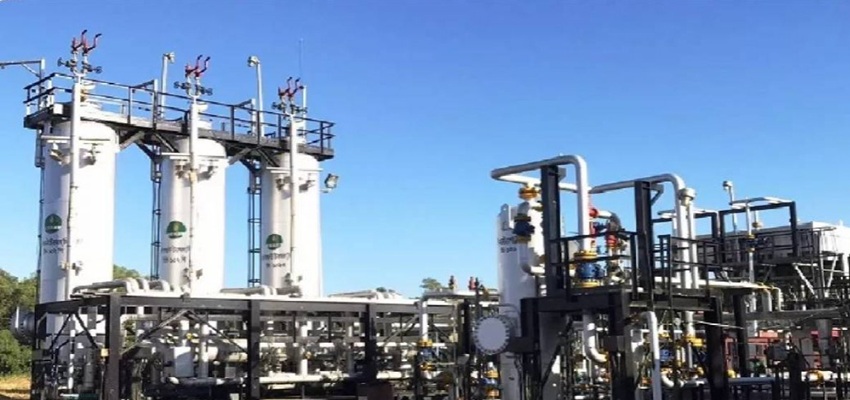
Bangladesh’s industrial sector is facing an unprecedented crisis, with many factories and businesses struggling to survive under multiple layers of pressure.
Industrial entrepreneurs report a grim scenario marked by soaring production costs, a strong dollar, instability in energy sector and significantly high interest rates on loans.
According to industry insiders, more than 60 percent of factories are currently non-operational. The combined effects of rising bank interest rates, severe gas shortages and a deteriorating law and order situation have pushed many industries to the verge of closure.
A key concern is government’s inability to ensure a steady supply of gas and electricity. Entrepreneurs and analysts alike have highlighted that sustaining existing industries is becoming increasingly difficult due to a lack of capital.
The competitiveness of the private sector is under serious threat. Furthermore, if political instability worsens in lead-up to the national parliamentary elections, crisis in business, commerce and the broader economy is likely to deepen.
Shawkat Aziz Russell, President of Bangladesh Textile Mills Association (BTMA), stated at a recent press conference; conducted via mobile phone, that the number of unemployed people has risen by 330,000 over the past year. This marks the highest unemployment rate in country’s history. Looking ahead to 2025, both industry leaders and entrepreneurs are feeling disheartened. Russell described the situation as a "conspiracy," warning that failure to revive the industry could lead the country toward famine.
He further noted that industries are being heavily impacted by what he described as "anti-industrial activities." The gas crisis, in particular, has drastically reduced working capital. Concerns are mounting over factories’ ability to pay salaries and allowances in the near future.
Layoffs have become increasingly common across factories. Russell warned that if this trend continues, it may result in widespread public unrest, potentially leading to a famine-like situation. He emphasized the urgent need to save the industrial sector, claiming there appears to be a deliberate effort to undermine domestic entrepreneurs in favor of foreign investors.
Production levels have plummeted by 60 percent due to the gas crisis. In 2023 alone, gas prices surged by 178 percent, with a further 33 percent increase this year. Despite these price hikes, the supply of gas to industries has not improved. Entrepreneurs in the export-oriented textile and garment sectors—representing around $70 billion in investment—are alarmed by the ongoing crisis.
BTMA Vice President Saleud Zaman Khan warned that if current conditions persist, half of the country’s factories could shut down within the next two to three months. He noted that his own factory has continued paying workers over the last five to six months despite receiving inadequate gas supply. Many factories are being charged gas bills of up to Tk 10 crore without receiving the service. As a result, some have had to install alternative power lines through REB, given that current load-shedding lasts up to seven hours daily, with power outages occurring up to six times a day. Khan asked, “How can industries and business owners survive under these conditions?”
Meanwhile, ordinary citizens are also feeling the pinch due to high inflation and reduced income and employment opportunities. One of the major contributing factors is the rise in interest rates on bank loans, which has simultaneously reduced production. While depositors might benefit from higher interest, businesses are grappling with a credit crisis.
The interest rate on bank loans has now exceeded 16 percent, which has directly impacted private sector loan growth. Syed Mahbubur Rahman, Managing Director of Mutual Trust Bank (MTB), told that political instability and high interest rates are driving uncertainty among investors. As a result, industrialists are increasingly hesitant to invest.
A major concern remains the declining flow of credit to the private sector, a critical driver of economic growth. After seven consecutive months of decline, private sector credit growth stood at just 6.82 percent in February—its lowest level in 21 years. Although it slightly improved to 7.57 percent in March, these figures are still alarmingly low.
Bank officials have noted that increased import demand for essential goods during Ramadan temporarily boosted credit growth. Additionally, some banks were forced to convert long-term foreign currency loans into local currency, which inflated overall credit figures. Nevertheless, the situation remains dire for employment and investment.
In the October-December quarter of the current fiscal year, unemployment rose to 2.73 million—an increase of 3.3 million from the previous year.
According to Dipankar Roy, Joint Secretary of Statistics and Information Management Department, the service sector experienced the highest rise in unemployment, with women disproportionately affected.
National Board of Revenue (NBR) reported that revenue collection grew by only 3.24 percent during the first ten months of 2024-25 fiscal year (July-April)—the lowest growth rate in five years. For comparison, revenue growth during the 2019-20 fiscal year, impacted by COVID-19 pandemic, was just 1.96 percent.
NBR officials have attributed the slow revenue growth to protests surrounding the government’s decision to abolish the organization. In response to weak revenue collection, the government has ramped up borrowing from the banking sector, which now accounts for approximately 60 percent of available credit.
This high level of public sector borrowing has squeezed out credit available to the private sector, putting additional pressure on the financial system.
According to the General Economics Division (GED) of Planning Commission, by April 2025, government borrowing from commercial banks reached Tk 985.79 billion—a 60 percent increase compared to the same period last year. This is the highest rate of loan growth in three years. Conversely, private sector loan growth has dropped significantly.
This situation poses a serious threat to private investment, the main engine of economic growth. Abdul Awal Mintu, former president of Federation of Bangladesh Chambers of Commerce and Industry (FBCCI), noted, "The environment necessary for business expansion, investment and job creation is currently non-existent. A stable environment, law and order and political certainty are essential for fostering investment."
Taskin Ahmed, President of Dhaka Chamber of Commerce and Industry (DCCI), stated that recent hikes in gas prices and loan interest rates have significantly increased production costs, creating an unequal playing field and deterring new investments.
Dr. Mashrur Riaz, Chairman of Policy Exchange Bangladesh, added that while the balance of payments has stabilized over the past nine months and foreign reserves have begun to recover, inflation remains high. This continues to suppress consumer demand, leading to a decrease in industrial output and a near halt in new investment.
He emphasized that political uncertainty, especially in light of the upcoming elections, is further eroding investor confidence. Strengthening investment, employment, energy and the SME sector is critical to overcoming the current crisis.
According to Dr. Riaz, these sectors are currently underperforming and regaining the trust of business leaders is vital for economic recovery.
SH
Industrial entrepreneurs report a grim scenario marked by soaring production costs, a strong dollar, instability in energy sector and significantly high interest rates on loans.
According to industry insiders, more than 60 percent of factories are currently non-operational. The combined effects of rising bank interest rates, severe gas shortages and a deteriorating law and order situation have pushed many industries to the verge of closure.
A key concern is government’s inability to ensure a steady supply of gas and electricity. Entrepreneurs and analysts alike have highlighted that sustaining existing industries is becoming increasingly difficult due to a lack of capital.
The competitiveness of the private sector is under serious threat. Furthermore, if political instability worsens in lead-up to the national parliamentary elections, crisis in business, commerce and the broader economy is likely to deepen.
Shawkat Aziz Russell, President of Bangladesh Textile Mills Association (BTMA), stated at a recent press conference; conducted via mobile phone, that the number of unemployed people has risen by 330,000 over the past year. This marks the highest unemployment rate in country’s history. Looking ahead to 2025, both industry leaders and entrepreneurs are feeling disheartened. Russell described the situation as a "conspiracy," warning that failure to revive the industry could lead the country toward famine.
He further noted that industries are being heavily impacted by what he described as "anti-industrial activities." The gas crisis, in particular, has drastically reduced working capital. Concerns are mounting over factories’ ability to pay salaries and allowances in the near future.
Layoffs have become increasingly common across factories. Russell warned that if this trend continues, it may result in widespread public unrest, potentially leading to a famine-like situation. He emphasized the urgent need to save the industrial sector, claiming there appears to be a deliberate effort to undermine domestic entrepreneurs in favor of foreign investors.
Production levels have plummeted by 60 percent due to the gas crisis. In 2023 alone, gas prices surged by 178 percent, with a further 33 percent increase this year. Despite these price hikes, the supply of gas to industries has not improved. Entrepreneurs in the export-oriented textile and garment sectors—representing around $70 billion in investment—are alarmed by the ongoing crisis.
BTMA Vice President Saleud Zaman Khan warned that if current conditions persist, half of the country’s factories could shut down within the next two to three months. He noted that his own factory has continued paying workers over the last five to six months despite receiving inadequate gas supply. Many factories are being charged gas bills of up to Tk 10 crore without receiving the service. As a result, some have had to install alternative power lines through REB, given that current load-shedding lasts up to seven hours daily, with power outages occurring up to six times a day. Khan asked, “How can industries and business owners survive under these conditions?”
Meanwhile, ordinary citizens are also feeling the pinch due to high inflation and reduced income and employment opportunities. One of the major contributing factors is the rise in interest rates on bank loans, which has simultaneously reduced production. While depositors might benefit from higher interest, businesses are grappling with a credit crisis.
The interest rate on bank loans has now exceeded 16 percent, which has directly impacted private sector loan growth. Syed Mahbubur Rahman, Managing Director of Mutual Trust Bank (MTB), told that political instability and high interest rates are driving uncertainty among investors. As a result, industrialists are increasingly hesitant to invest.
A major concern remains the declining flow of credit to the private sector, a critical driver of economic growth. After seven consecutive months of decline, private sector credit growth stood at just 6.82 percent in February—its lowest level in 21 years. Although it slightly improved to 7.57 percent in March, these figures are still alarmingly low.
Bank officials have noted that increased import demand for essential goods during Ramadan temporarily boosted credit growth. Additionally, some banks were forced to convert long-term foreign currency loans into local currency, which inflated overall credit figures. Nevertheless, the situation remains dire for employment and investment.
In the October-December quarter of the current fiscal year, unemployment rose to 2.73 million—an increase of 3.3 million from the previous year.
According to Dipankar Roy, Joint Secretary of Statistics and Information Management Department, the service sector experienced the highest rise in unemployment, with women disproportionately affected.
National Board of Revenue (NBR) reported that revenue collection grew by only 3.24 percent during the first ten months of 2024-25 fiscal year (July-April)—the lowest growth rate in five years. For comparison, revenue growth during the 2019-20 fiscal year, impacted by COVID-19 pandemic, was just 1.96 percent.
NBR officials have attributed the slow revenue growth to protests surrounding the government’s decision to abolish the organization. In response to weak revenue collection, the government has ramped up borrowing from the banking sector, which now accounts for approximately 60 percent of available credit.
This high level of public sector borrowing has squeezed out credit available to the private sector, putting additional pressure on the financial system.
According to the General Economics Division (GED) of Planning Commission, by April 2025, government borrowing from commercial banks reached Tk 985.79 billion—a 60 percent increase compared to the same period last year. This is the highest rate of loan growth in three years. Conversely, private sector loan growth has dropped significantly.
This situation poses a serious threat to private investment, the main engine of economic growth. Abdul Awal Mintu, former president of Federation of Bangladesh Chambers of Commerce and Industry (FBCCI), noted, "The environment necessary for business expansion, investment and job creation is currently non-existent. A stable environment, law and order and political certainty are essential for fostering investment."
Taskin Ahmed, President of Dhaka Chamber of Commerce and Industry (DCCI), stated that recent hikes in gas prices and loan interest rates have significantly increased production costs, creating an unequal playing field and deterring new investments.
Dr. Mashrur Riaz, Chairman of Policy Exchange Bangladesh, added that while the balance of payments has stabilized over the past nine months and foreign reserves have begun to recover, inflation remains high. This continues to suppress consumer demand, leading to a decrease in industrial output and a near halt in new investment.
He emphasized that political uncertainty, especially in light of the upcoming elections, is further eroding investor confidence. Strengthening investment, employment, energy and the SME sector is critical to overcoming the current crisis.
According to Dr. Riaz, these sectors are currently underperforming and regaining the trust of business leaders is vital for economic recovery.
SH
Loading...
Loading...
Also read





Editor : Iqbal Sobhan Chowdhury
Published by the Editor on behalf of the Observer Ltd. from Globe Printers, 24/A, New Eskaton Road, Ramna, Dhaka.
Editorial, News and Commercial Offices : Aziz Bhaban (2nd floor), 93, Motijheel C/A, Dhaka-1000.
Phone: PABX- 41053001-06; Advertisement: 41053012; 01793317829, 01550707291, E-mail: [email protected], [email protected] Online: email: [email protected] 41053014; 01550707297 Advertisement: 01550707296
Published by the Editor on behalf of the Observer Ltd. from Globe Printers, 24/A, New Eskaton Road, Ramna, Dhaka.
Editorial, News and Commercial Offices : Aziz Bhaban (2nd floor), 93, Motijheel C/A, Dhaka-1000.
Phone: PABX- 41053001-06; Advertisement: 41053012; 01793317829, 01550707291, E-mail: [email protected], [email protected] Online: email: [email protected] 41053014; 01550707297 Advertisement: 01550707296


