



| HEADLINE |

|
Jobs scarce for our agriculture graduates
Published : Tuesday, 29 April, 2025 at 12:00 AM
Dr Shahrina Akhtar


 Each year, Bangladesh's agricultural education system produces around 7,500 graduates from 11 public and over 20 private universities (UGC Graduate Tracking Report 2024). Majoring in fields like agronomy, soil science, plant pathology, agricultural economics, and veterinary sciences, these graduates face a tough career landscape. Despite the growing pool, only 18-20 percent secure government jobs in agencies like the Department of Agricultural Extension (DAE), BARC, BRRI, and BARI. The private sector, though expanding, absorbs merely 25-30 percent across agribusiness, agro-input industries, consultancy, food processing, and development projects. About 10-12 percent pursue academia or research, often after higher studies.
Alarmingly, 35-40 percent of graduates remain unemployed or underemployed for up to three years post-graduation. Many pivots to non-agricultural fields, banking, marketing, migration, or spend years preparing for competitive BCS exams. According to the Bangladesh Bureau of Statistics Labour Force Survey 2023, agriculture graduates face almost double the national youth unemployment rate of 10.6 percent. This mismatch between education and employment highlights an urgent need to rethink agricultural education, strengthen industry linkages, and introduce structured internship and career support programs to better integrate graduates into the workforce.
Beyond Skills: Bridging Knowledge and Markets: Bangladesh's agriculture curricula are deeply rooted in technical knowledge transfer. Students graduate with expertise in crop production, sustainable farming, pest management, irrigation techniques, and increasingly, climate-resilient agriculture. However, according to the UGC Curriculum Review Report 2024, less than 5 percent of universities integrate entrepreneurship education into their agriculture programs. This means that while students may understand seed multiplication techniques or soil nutrient cycles, they often have no training in how to set up a business, create a brand, manage cash flows, navigate market systems, or approach investment opportunities. Research by the International Food Policy Research Institute (IFPRI) South Asia Regional Office, 2023 highlights that entrepreneurship exposure during undergraduate studies can increase the probability of business formation by over 30 percent within five years post-graduation.Without entrepreneurial skills, most graduates remain dependent on a shrinking pool of public sector jobs, contributing to an ever-growing backlog of unemployed agricultural experts.
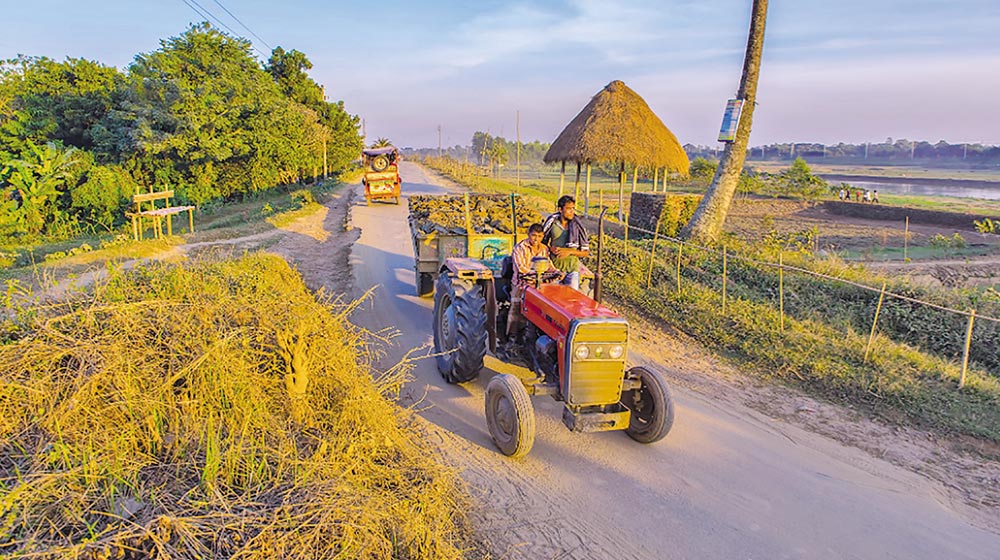
Clock is Ticking for Bangladesh: Time is of the essence. According to FAO's Bangladesh 2023 country report, the nation must increase food production by at least 70 percent by 2050 to ensure food security amid rising population pressures. This will require innovation not just on the farm, but across the food system, processing, logistics, packaging, marketing, and export strategies. Simultaneously, Bangladesh faces growing climate risks, with agriculture identified as one of the sectors most vulnerable to changing rainfall patterns, sea level rise, and temperature shocks. The ILO Green Jobs Assessment 2024 projects that up to 3 million green jobs can be created in Bangladesh's agriculture and allied sectors by 2035 through climate-smart innovations.Capturing these opportunities requires a workforce that thinks beyond traditional farming. It demands young leaders who are agile, innovative, and entrepreneurial.Yet the UGC Graduate Tracking Report 2024 warns that without curriculum reform, the proportion of unemployed agriculture graduates could rise by 5 to 7 percent over the next five years, exacerbating rural underemployment and weakening Bangladesh's food security efforts.
Planting Success Stories: Evidence shows that entrepreneurship can thrive among agriculture graduates when supported by the right conditions. Agroshift, co-founded by alumni from Bangladesh Agricultural University, uses digital technology to connect smallholder farmers with urban retailers. In just two years, it expanded to over fifty supermarkets in Dhaka and Chattogram and secured international funding to scale operations. Similarly, Krishok Bondhu, launched by young graduates, provides digital advisory services to over 100,000 farmers, boosting average incomes by 12% in pilot areas. EcoCrop, another post-graduate venture, develops climate-resilient seed varieties and exports them to Nepal and Myanmar. These successes highlight the untapped potential that could be unleashed with proper entrepreneurial training for agriculture students.
Cultivating a New Future: Bangladesh must reimagine agricultural education to cultivate not just scientists and extension agents, but visionary leaders and business builders. Universities should establish entrepreneurship centers, partner with local businesses, and provide seed funding grants for student ventures. Ministries and development agencies must support internship and business incubation programs targeting agriculture graduates. An agriculture student should leave university not only with a degree but with a viable business plan, a network of potential customers, and the confidence to lead. They should know how to pitch an idea, build a brand, scale operations, and adapt to market dynamics. Entrepreneurship must be positioned not as an alternative career path, but as an essential pillar of agricultural transformation.
From Growing Crops to Growing Leaders: The next agricultural revolution will not come from increasing paddy yields alone. It will be driven by the boldness of young minds who dare to innovate, to create, and to lead.Bangladesh must act now to plant the seeds of entrepreneurship within its agricultural education system. For in the classrooms of today walk the agripreneurs who will build the farms, industries, and food systems of tomorrow.It is not just crops that need nurturing. It is dreams, ideas, and futures.
The writer is a Specialist (Technical) & Research Adviser, Krishi Gobeshona Foundation
Loading...
Loading...
Also read



Editor : Iqbal Sobhan Chowdhury
Published by the Editor on behalf of the Observer Ltd. from Globe Printers, 24/A, New Eskaton Road, Ramna, Dhaka.
Editorial, News and Commercial Offices : Aziz Bhaban (2nd floor), 93, Motijheel C/A, Dhaka-1000.
Phone: PABX- 41053001-06; Advertisement: 41053012; 01793317829, 01550707291, E-mail: [email protected], [email protected] Online: email: [email protected] 41053014; 01550707297 Advertisement: 01550707296
Published by the Editor on behalf of the Observer Ltd. from Globe Printers, 24/A, New Eskaton Road, Ramna, Dhaka.
Editorial, News and Commercial Offices : Aziz Bhaban (2nd floor), 93, Motijheel C/A, Dhaka-1000.
Phone: PABX- 41053001-06; Advertisement: 41053012; 01793317829, 01550707291, E-mail: [email protected], [email protected] Online: email: [email protected] 41053014; 01550707297 Advertisement: 01550707296


