



| HEADLINE |

|
Rising E-waste in Bangladesh becomes a serious concern
Published : Tuesday, 22 April, 2025 at 12:00 AM
Asif Al Mahmood


 The swift advancement of science and information technology, the rise in manufacturing activities, the growth of urbanization, and the escalation of globalization have all contributed to heightened consumption and production demands for newer, improved, and faster electrical and electronic devices. As these devices are increasingly utilized by both households and businesses, the frequency of people's continual rejection of obsolete products is escalating. A lot of these have short life spans, making it not more expensive to discard the old one and purchase a new one. These increasing amounts of outdated and discarded electrical and electronic equipment, referred to as electronic waste or e-waste, have emerged as a major societal concern.
 E-waste comprises more than 1000 different materials and components, including arsenic, copper, nickel, zinc, mercury, lead, and flame retardants. These substances can cause damage to humans and the environment if they are not disposed of and recycled correctly. When e-waste such as soldered materials and plastic components is burned in open spaces, it emits poisonous gases. Because these components do not decay, they pose a threat to soil fertility.
Furthermore, dumping all these toxic substances and waste into oceans and rivers endangers marine organisms. Important and pertinent aspects of e-waste management include the safe disposal, recycling that is both safe and feasible, and reuse of old and obsolete electronic items. These materials necessitate unique handling and recycling techniques; without these, significant health and environmental risks arise. In addition, for some recycled materials, a workable market does not exist.
Everyone, including governments, manufacturers, and international organizations, faces a significant challenge in managing e-waste. The Basel Convention, which came into force in May 1992, is a notable initiative in the international arena aimed at addressing the outrage over the global trafficking of hazardous waste. Developed nations contribute to the creation and management of e-waste to a relatively greater extent.
At times, affluent nations send this discarded gear to developing nations disguised as assistance. China is far ahead of other developing countries in terms of e-waste production. Multinational companies across various economies are implementing measures to manage e-waste, including redesigning products and providing reuse and recycling initiatives. However, smaller businesses and residential PC users must locate their own safe disposal programs.
Consumer awareness plays a vital role in managing e-waste. Purchasing products that are made more responsibly helps to decrease the issue of e-waste. At a minimum, developed nations ensure that penalties are levied on consumers and vendors who fail to adhere to the regulations. However, in developing countries, there are no stringent regulations, and individuals lack awareness of the adverse effects and risks associated with improper disposal methods. In this regard, South Asia is marked by a rapid rise in e-waste, the absence of regulations for its safe disposal, the lack of a management infrastructure, and insufficient institutional capacity and awareness to address the issue.
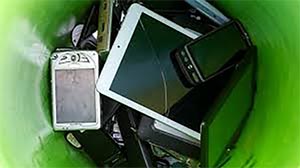
A recent survey by the Environment and Social Development Organization found that Bangladesh's ICT sector has generated more than 35,000 tons of e-waste over the past decade. In Bangladesh, reusing electronic equipment is common, and recycling and dismantling are becoming increasingly prevalent industries. Dismantlers of rejected or obsolete equipment generally operate solely in the informal sector, which is significantly polluting. Recycling computers entails hiring individuals to dismantle computers and retrieve components that can be reused in machines marketed as refurbished. The remaining part is either incinerated or discarded, both of which pose significant risks to the environment. Employees dismantling the old equipment manage hazardous substances, which may lead to severe health issues.
To date, there are no regulations in the country that specifically address e-waste. The Medical Waste Management Rules, enacted in 2008, deal with the waste management challenges faced by the medical sector. Since Bangladesh is a Basel Convention signatory, any waste imports necessitate government approval. Environment, climate, and disaster management is recognized as one of the ten objectives in the National ICT Policy, 2009, with the goal of ensuring the safe disposal of toxic waste. A draft of the National 3R (Reduce, Reuse, and Recycle) Strategy has been prepared by the government, which addresses e-waste issues. It is a positive development that the High Court of Bangladesh has recently banned the entry of scrap ships into the country unless public health safety is guaranteed.
Some scattered efforts have been made to salvage components from used PCs and reuse them in creating products for the local market in Bangladesh. A project of this kind aims to turn monitors into televisions in the southern Bagerhat district. Only a handful of corporate offices have stepped up to the plate in terms of providing computers for reuse across various organizations. For example, Standard Chartered Bank has distributed their used PCs to schools. Some NGOs and Computer Jagat, an IT magazine, have been working to develop awareness to redistribute the used computers to schools in remote areas. In Bangladesh, Nokia tried to promote its green technology campaign in order to collect used mobile phones for its recycling plant.
The country lacks sufficient research activities and awareness regarding the issue. D.Net (an Internet service provider) recently conducted a study that dealt with the problem of measuring e-waste and evaluated how aware residents of Dhaka city are of it. We certainly need thorough research in this field in order to better grasp the seriousness of the issue and to make effective policy choices. It is crucial to run an awareness campaign using both traditional media (TV, newspapers) and new media (blogs, web, social networks). It is important for the campaign to target both the general public and policymakers. It is essential for consumers to uphold and retain their equipment for as long as they can.
Individuals ought to contribute their no longer needed electronic devices for reuse. Manufacturers can be supported and encouraged by the government to include waste recycling facilities in their production processes. It is important for consumers to be better informed about how to handle electronic waste. It is crucial for Bangladesh to implement legislation and develop infrastructure that guarantees safe e-waste disposal.
The writer is a contributor
Loading...
Loading...
Also read



Editor : Iqbal Sobhan Chowdhury
Published by the Editor on behalf of the Observer Ltd. from Globe Printers, 24/A, New Eskaton Road, Ramna, Dhaka.
Editorial, News and Commercial Offices : Aziz Bhaban (2nd floor), 93, Motijheel C/A, Dhaka-1000.
Phone: PABX- 41053001-06; Advertisement: 41053012; 01793317829, 01550707291, E-mail: [email protected], [email protected] Online: email: [email protected] 41053014; 01550707297 Advertisement: 01550707296
Published by the Editor on behalf of the Observer Ltd. from Globe Printers, 24/A, New Eskaton Road, Ramna, Dhaka.
Editorial, News and Commercial Offices : Aziz Bhaban (2nd floor), 93, Motijheel C/A, Dhaka-1000.
Phone: PABX- 41053001-06; Advertisement: 41053012; 01793317829, 01550707291, E-mail: [email protected], [email protected] Online: email: [email protected] 41053014; 01550707297 Advertisement: 01550707296


