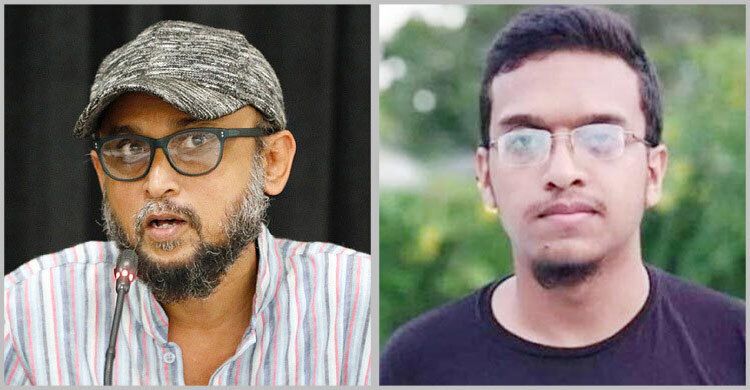
The posthumous award of the Swadhinata Padak to Abrar Fahad, the BUET student who was beaten to death by Chhatra League activists, has sparked widespread discussion. On March 3, Local Government Adviser Asif Mahmud Sajib Bhuiyan announced the honor via a Facebook post, igniting both support and controversy.
Cultural Affairs Adviser Mostofa Sarwar Farooki offering a strong defense of the decision. In a Facebook post, Farooki shared his thoughts, making it clear that Abrar Fahad’s award should be categorized under "Liberation War." "Some cheer, others question—'What’s the basis?' I say: 'Liberation War.' That’s where he belongs,” Farooki stated.
He elaborated on why Abrar, despite being a student, should be recognized in the context of the Liberation War: “Independence is born from the Liberation War, and its core is sovereignty. Abrar Fahad stood as a symbol of that sovereignty—his defiance was a continuation of the spirit of our freedom struggle.” Farooki also emphasized that Abrar’s death in 2019 wasn’t just a loss, but a catalyst for a student-led uprising demanding justice, echoing the nation’s fight for freedom.
The Swadhinata Padak, Bangladesh's highest civilian award, has historically been reserved for figures with a direct role in the country’s independence. However, the posthumous recognition of Abrar Fahad has divided opinions. While many see him as a martyr, others question whether his death, resulting from a brutal assault by fellow students, truly aligns with the values and spirit of the Liberation War.
Farooki addressed the skeptics, challenging them to wait for the full list of awardees. He rejected the notion of downplaying Abrar’s sacrifice. According to Farooki, Abrar's act of defiance represented something much larger than a single tragedy—it symbolized the fight for justice and sovereignty. “Sovereignty is not abstract—it’s embodied in Abrar’s resistance,” Farooki asserted.
MB