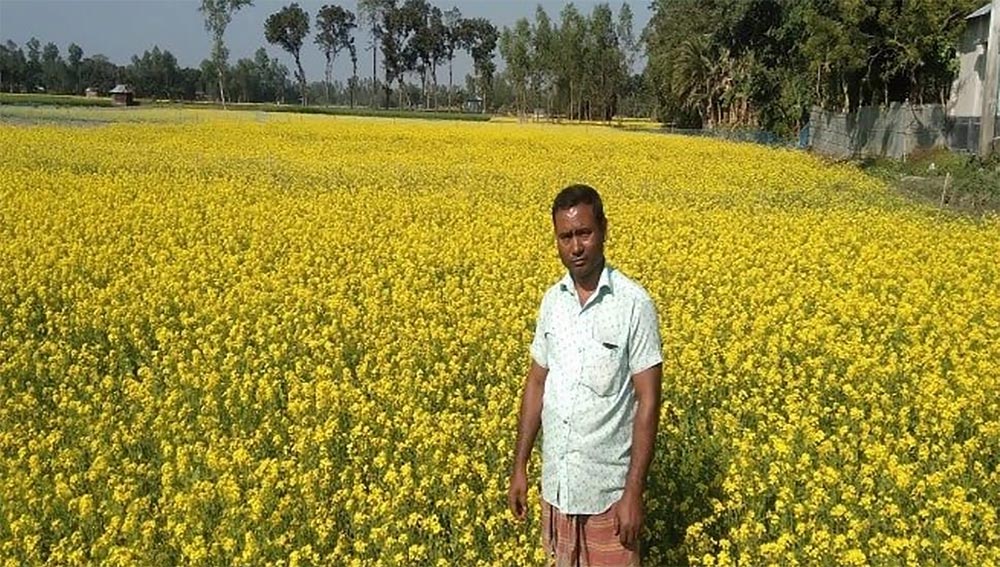
HABIGANJ, Feb 8: Mustard cultivation is gaining significant traction in Lakhai Upazila of the district as farmers increasingly turn to high-yielding mustard varieties for profitable returns.
The Bangladesh Agricultural Research Institute (BARI) has played a pivotal role in promoting these varieties, such as BARI Mustard-1, which have demonstrated high yields and economic success.
Farmers in the region are integrating mustard cultivation into their crop cycles alongside traditional Aman and Boro rice cultivation, diversifying their agricultural practices and boosting income.
In Muriauk Union of Lakhai Upazila, farmers like Mir Jewel from Dharmapur village are reaping the benefits of cultivating BARI Mustard-1.
Mir Jewel cultivated this variety on 8 decimals of land, and within two months, the mustard plants flourished, showcasing vibrant yellow flowers.
He credited the local Agriculture Office for providing essential support, including seeds, fertiliser, pesticide, and expert advice, which contributed to the bumper yield.
According to Mir Jewel, mustard cultivation is cost-effective, requiring minimal production expenses and periodic care. He expressed satisfaction with the results, noting that the land, initially intended for paddy, had instead yielded a successful mustard crop.
The success of BARI Mustard-1 in Lakhai Upazila highlights the potential of mustard cultivation as a profitable and sustainable agricultural practice.
With continued support from agricultural institutions and the adoption of high-yielding varieties, farmers in the region are likely to further embrace mustard cultivation, enhancing their livelihood and contributing to food security.





