



| HEADLINE |

|
Unique Hotel & Resorts CEO Says
Branding Prof Yunus could catalyse tourism growth in BD
Published : Wednesday, 20 November, 2024 at 12:00 AM
Shamsul Huda


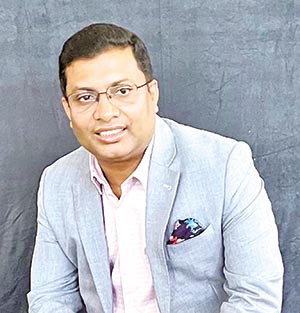 Md Shakawath Hossain, Chief Executive Officer of Unique Hotel & Resorts PLC (Westin and Sheraton) and Co-Chairman of Bangladesh International Hotel Association (BIHA), has said branding strategic state policies, service excellence, and the role of the government are important to transform Bangladesh into a global tourism destination.
In a recent interview with The Daily Observer he further highlighted branding Prof. Muhammad Yunus as an ambassador for the nation's tourism sector may play a key role to catch unique global attention to Bangladesh tourism sector.
Hossain mentioned the broader challenges Bangladesh's hospitality and tourism industry is facing and said it holds immense potentials but lags behind due to insufficient policy support and lack of a comprehensive national strategy.
"Tourism can be one of the largest contributors to Bangladesh's GDP," he said adding we need long-term policy planning, supported by government initiatives that target key areas like infrastructure, training, and global business promotion to grow."
He believes Bangladesh tourism sector requires a separate dedicated ministry to oversee its development with specialized personnel who understand the nuances of the industry and a unified policy approach. It must be guided by experts, to be a key driver to both local and international investors.
He said despite potentials to grow, Bangladesh currently lacks the necessary skilled workforce. The hospitality industry, in particular, faces a severe shortage of trained professionals, hampering its growth and quality of service. He suggested the industry requires a strong foundation in human resources.
In developed countries, the industry is well-established with formal education and training programs from the grassroots but in Bangladesh, it is still in early stages lacking infrastructure to develop skilled workforce," he said.
Hossain called for government seed funding for hospitality training programs and to promote higher education institutions.
"Investment in human capital is essential to ensure service excellence. By developing skilled workforce, we can improve customer satisfaction and raise the overall standards." he added.
He laid importance for a global branding strategy to raise Bangladesh's profile as a tourists' destination and suggested tapping international recognition of Prof. Muhammad Yunus, chief advisor to the Bangladesh Interim Government as the face of the country's tourism industry.
"Prof Younus is a global celebrity and his involvement would lend immense credibility and visibility to our efforts," Hossain said proposing a powerful global campaign, titled "Visit Bangladesh, Explore Bangladesh," to showcase the country's rich cultural heritage, historical landmarks, and untapped tourism opportunities.
"As a global ambassador, Prof. Yunus could showcase Bangladesh as a destination for peace, culture, and sustainable tourism," he said, highlighting the crucial role of the government in fostering a conducive environment for tourism growth.
He said the government must focus on several key areas: enhancing infrastructure, ensuring safety, removing regulatory barriers, and providing financial incentives for both local and international investors.
"The government needs to simplify access to finance; especially in terms of loans, tax incentives, and funding for infrastructure projects," Hossain suggested and also called for improved safety measures for attracting foreign tourists.
"We need to lift the current travel advisories, and ensure that tourists feel safe while traveling across Bangladesh," he emphasized.
Another area Hossain sees as crucial is promotion of village tourism. With over 68,000 villages, each offering unique cultural experiences, Hossain sees immense untapped potential in rural tourism.
"This type of tourism can be a game-changer, both economically and socially. It can create jobs, preserve local cultures, and contribute to sustainable development," he explained.
While utterly optimistic about the sector's potentials, Hossain acknowledged that the challenges that the hospitality industry is facing including political instability, security concerns, and global economic downturn need to be addressed. "These can be better addressed with better governance and stronger diplomatic efforts," he said.
He said the hospitality industry has been hit by the global economic slowdown, including the recent dollar crisis and rising inflation. "The government must take proactive steps to ease access to finance, particularly for small and medium-sized enterprises. This will help stimulate growth and ensure that businesses in the hospitality sector remain competitive."
Hossain highlighted the role of innovative technology in modernizing the hospitality industry pointing to the use of AI, blockchain, and other technologies in international hotels, which are reshaping the customer experience.
"Bangladesh must embrace these technologies to stay competitive and offer modern services," he said adding we must however remain committed to maintain personal touch that is essential to hospitality."
The country can unlock its full potentials as a leading tourism destination by unlocking the barriers.
"Tourism has the power to transform our economy, create jobs, and raise Bangladesh's profile on the global stage," he said. By working together-government, private sector, and global influencers-Bangladesh can position itself as a beacon for international travelers, he pointed out.
Loading...
Loading...
Also read



Editor : Iqbal Sobhan Chowdhury
Published by the Editor on behalf of the Observer Ltd. from Globe Printers, 24/A, New Eskaton Road, Ramna, Dhaka.
Editorial, News and Commercial Offices : Aziz Bhaban (2nd floor), 93, Motijheel C/A, Dhaka-1000.
Phone: PABX- 41053001-06; Advertisement: 41053012; 01793317829, 01550707291, 01550707296
E-mail: [email protected], [email protected]. [email protected], [email protected], [email protected], [email protected], Online-email: [email protected]


