



| HEADLINE |

|
We must wake up to serious health crisis posed by dengue
Published : Wednesday, 20 November, 2024 at 12:00 AM
Md Al-Mamun and Abul Kalam


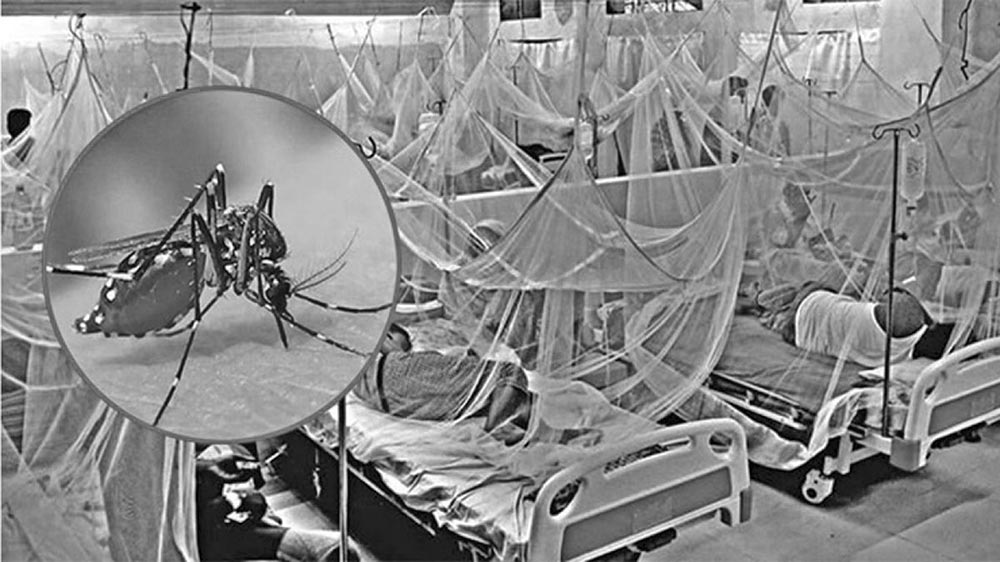 Bangladesh is battling a severe dengue crisis, with the disease claiming over 400 lives and hospitalizing nearly 79,000 individuals as of November 2024. These staggering figures highlight the escalating threat of vector-borne diseases exacerbated by climate change, urbanization, and inadequate preventive measures.Urban hubs like Dhaka and Chattogram remain the epicenters of this public health catastrophe, fueled by climate change, unplanned urbanization, and inadequate healthcare systems.
The country's long-standing struggle with dengue has intensified due to climate change. Prolonged monsoon seasons, rising temperatures, and erratic rainfall have created a perfect breeding ground for the Aedes aegypti mosquito. Dhaka, the epicenter of the outbreak, remains overwhelmed with over 1,800 active cases in hospitals, while the rest of the country struggles with more than 2,300 hospitalized patients in 2023, Bangladesh recorded its worst-ever dengue outbreak, with 1,705 deaths and over 321,000 hospitalizations.
As of November, the country had already seen more than 79,000 hospitalizations and more than 400 deaths. This is a shockingly high number of cases compared to past years. Problems with Health Infrastructure and Organized Crime have made things 50% worse than they were at this time last year.
Rapid urbanization has made the dengue problem worse. Cities have become breeding grounds for mosquitoes because of their high population density, standing water in slums, and poor trash management. Hospitals across the country, especially in big cities, are seriously lacking beds, basic supplies, and trained medical staff to handle the huge number of cases.
Hospitals are breaking down from the stress. There are too many people in dengue wards, and there aren't enough critical supplies like saline, blood transfusions, and diagnostic kits. A disease that could have been avoided has become a national problem because people weren't ready and healthcare systems didn't have enough resources. As they try to pay for care, many families are in danger of losing everything they own.
Alarming data notwithstanding, public health measures are still reactive rather than proactive. Random and useless efforts to get rid of mosquitoes are common, and campaigns to raise awareness barely scratch the surface. Climate-sensitive diseases aren't taken into account in urban planning, so towns aren't ready to deal with repeated outbreaks.
Bangladesh's fight against dengue requires bold, immediate action: Integrated Vector Control: A coordinated mosquito eradication program, including chemical fogging, larvicide use, and environmental sanitation, must be implemented year-round. Community Engagement: Public campaigns emphasizing household mosquito control, such as eliminating standing water and using protective measures like nets, can mitigate risks. Strengthening Healthcare: Expanding hospital capacity, training medical personnel in dengue management, and ensuring the availability of essential resources are critical. Climate Adaptation: Urban planning must include green spaces and proper drainage systems to counteract the impacts of climate change on disease proliferation. Policy Innovation: The government should allocate specific funding for dengue prevention and partner with international organizations to build a sustainable strategy.
Even though there is a problem, not enough people know how to avoid getting dengue. There are still problems with preventative steps like giving out mosquito nets, running campaigns to raise awareness, and keeping an eye on vectors all year long. Integrated vector management, includes biological controls like fish that kill larvae and regular community clean-up drives, has been called for by experts. The government should also put a high priority on climate-adaptive urban planning. To keep areas from flooding, drainage systems need to be updated. Green places and environmentally friendly housing can help reduce the number of mosquitoes.
The dengue epidemic in Bangladesh is a stark warning of how climate change and bad city infrastructure can make health problems worse. The whole world needs to understand that it is everyone's job to help prevent health problems caused by climate change by sharing money and technology.
Dengue is no longer a seasonal nuisance-it is a public health emergency. Combating this crisis requires a united front involving policymakers, healthcare providers, urban planners, and citizens. Only through sustained, collective action can Bangladesh turn the tide on dengue and protect the health and dignity of its people.The time to act is now, before dengue claims even more lives and deepens its grip on our nation.
Md Al-Mamun, Researcher and Social Scientist, Brac Institute of Governance and Development (BIGD), Brac University and Abul Kalam, Assistant Professor and Social Scientist, Department of Sociology, Bangabandhu Sheikh Mujibur Rahman Science and Technology University
Loading...
Loading...
Also read





Editor : Iqbal Sobhan Chowdhury
Published by the Editor on behalf of the Observer Ltd. from Globe Printers, 24/A, New Eskaton Road, Ramna, Dhaka.
Editorial, News and Commercial Offices : Aziz Bhaban (2nd floor), 93, Motijheel C/A, Dhaka-1000.
Phone: PABX- 41053001-06; Advertisement: 41053012; 01793317829, 01550707291, E-mail: [email protected], [email protected] Online: email: [email protected] 41053014; 01550707297 Advertisement: 01550707296
Published by the Editor on behalf of the Observer Ltd. from Globe Printers, 24/A, New Eskaton Road, Ramna, Dhaka.
Editorial, News and Commercial Offices : Aziz Bhaban (2nd floor), 93, Motijheel C/A, Dhaka-1000.
Phone: PABX- 41053001-06; Advertisement: 41053012; 01793317829, 01550707291, E-mail: [email protected], [email protected] Online: email: [email protected] 41053014; 01550707297 Advertisement: 01550707296


