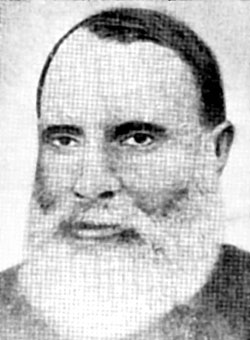
Mir Mosharraf Hossain, a novelist, dramatist, poet, journalist, literary figure, teacher, reformer and essayist in the 19th century. He was born at Lahinipara in the district of Kushtia on November 13 in 1847. His father Mir Moazzem Hossain was one of the few Muslim landlords of the nineteenth century Bengal. His mother's name is Daulatunnesa. Mosharraf learned Arabic and Persian with a teacher at home and then Bangla at a local school. He was admitted to Kalighat School in Kolkata but could not complete his studies. While still a student, Mosharraf worked as a reporter for the Sangbad Prabhakar and Grambarta Prakashika. His literary career also started here. Kangal Harinath, editor of Grambarta Prakaxika, was his literary guru. Mosharraf Hossain later worked as editor of the Azizannehar and Hitakari. He was also associated with the Vangiya Sahitya Prishad. He began his career looking after his father's landed property. Later he served the Faridpur Nawab Estate and, in 1885, the Delduar Estate. He lived in Kolkata from 1903 to 1909.
Mir Mosharraf is principally known for his famous novel "Bishad Sindhu". He is considered as the first novelist to emerge from the Muslim society of Bengal. He was a pioneer among nineteenth-century Bengali Muslim writers. His first novel, Ratnavati, was published in 1869. Apart from novels, Mosharraf Hossain wrote poetry, plays, textbooks and an autobiography. Among his works are "Gauri-Setu", "Basantakumari Natak", "Zamindar Durpun", "Er Upay Ki", "Bisad Sindhu", "Sabgit Lahari", "Go-Jiban", "Behula Gitabhinay", "Udasin Pathiker Maner Katha", "Tahmina", "Tala Abhinay", "Niyati Ki Abanati", "Gazi Miyar Bastani", "Maulood Sharif", "Mussalmander Babgala Shiksa", "Bibi Khodejar Bibaha", "Hazrat Omarer Dharmajiban Labh", "Madinar Gaurab", "Bajimat", "Amar Jibani", "Amar Jibanir Jibani Bibi Kulsum"etc.
Bisad Sindhu, which narrates the tragic tale of the battle of Karbala, is considered to be his masterpiece. Zamindar Durpun was written against the background of the peasant riots in Sirajganj during 1872-73. In much of his writing, Mosharraf Hossain satirised the follies and vices of contemporary society. In Gazi Miyar Bastani, for example, he criticised the chaos and corruption of nineteenth-century Bengal in general and the increasing freedom of women in particular, which he believed led to loose living.
Mosharraf Hossain was outspoken and free from communal prejudices. He did not hesitate to take up positions that would make him unpopular among his own community. He believed that the indiscriminate slaughtering of cows would endanger agriculture and accordingly, wrote the essay 'Gokul Nirmul Ashabka', against this practice. He died in 1912 and was buried at Padamdi.
December 19 marked the 104th death anniversary of Mir Mosharraf Hossain.
The writer is a freelance contributor.