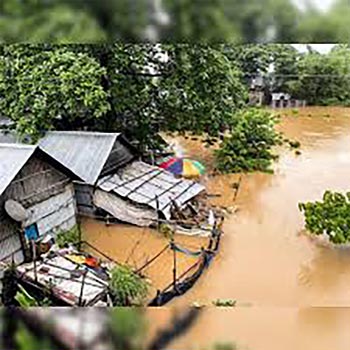
Fulgazi, Parshuram, and Chhagalnaiya in Feni District are in dire straits due to the catastrophic floods. The area is now underwater, and communication systems are completely cut off. The people of this region have not faced such a severe flood in the last 41 years. There have already been reports of human deaths and significant property damage.
Normal rains should not create such dire conditions. India has exacerbated this situation by releasing water from their Dambur Dam in Tripura. This action was taken under the cover of night, and the last such incident occurred in 1984. Does India comply with international laws and policies? Have they ever been held accountable for such actions?
The people of this region suffer immense losses amounting to thousands of crores of takas from agriculture, fisheries, and infrastructure due to each flood. In an attempt to avoid responsibility, local representatives appeared at the people's 'pathetic doors' with only a packet of puffed and flattened rice (Chira Muri) for a photo session, making grand promises but failing to deliver any permanent solutions. There is a significant issue here.
Local government officials, ministers, and MPs have repeatedly promised to build a permanent and sustainable dam on the Muhuri River, known as the 'sorrow of the region,' but this dam has yet to be constructed. This raises the question of why permanent and durable dams are not built and under whose direction this neglect occurs. The people of this region must speak out about it.
The flood situation in Feni is worsening over time. The water level is rising every minute due to the catastrophic floodwater released by India in the middle of the night without informing Bangladesh. Roads are submerged, communication systems are cut off, and electricity is out in most areas. Public life is completely disrupted, and forecasts indicate that the situation will deteriorate further.
Millions of people are trapped in the water, facing the agony of potential death. Despite the severity of the disaster, no effective measures have been taken by the administration to protect public life. Although various voluntary organizations are working in isolation, their efforts are insufficient compared to the scale of the disaster. Moreover, they lack the necessary equipment for disaster response, which the state forces possess.
The people of this region have not slept since last night. In every village, water has entered the houses; some homes are submerged, and in some places, the water is up to neck level. People are screaming for survival. This area is facing one of the worst human disasters in memory. Saving lives is now more critical than distributing relief. High-rise buildings, public and private institutions, and educational facilities in the area should be opened to the public. Everyone should assist each other.
Skilled forces such as the Army, Fire Service, and Coast Guard must be deployed immediately to address the disaster. A 'terrible tragedy' will occur in the region if immediate action is not taken and rescue operations are not carried out.
The writer is a researcher, journalist, and columnist