Bangabandhu Sheikh Mujibur Rahman, known as the Father of the Nation, created the University Grants Commission (UGC) as the main organization overseeing higher education in Bangladeshon 16 December 1972 and later enacted as an autonomous apex body in Higher Education under the President Order No. 10 of 1973. The UGC is in charge of awarding funding, upholding standards, and directing the growth of the nation's higher education institutions. Additionally, the UGC is essential in advancing higher education's globalization, innovation, and research. This article will cover the function of UGC, its relationship with universities, its constraints and difficulties, as well as its empowerment and hiring practices.
The UGC has a wide range of functions and powers to regulate and support higher education in Bangladesh. Some of the major roles of UGC are- to create policies, strategies, and programs to advance higher education, as well as to provide government advice on problems pertaining to higher education; provide money to public universities and other higher education institutions, and to keep track of how it is being used and how well it is performing; to establish and uphold standards for instruction, testing, research, curriculum, faculty, infrastructure, and administration in higher education facilities; to encourage academic cooperation and exchange between local and international colleges and institutes and to make it easier for degrees and certificates to be recognized; to create research networks and institutes, and to support and stimulate research endeavors across a range of academic disciplines; to encourage methods for quality control and accreditation as well as to regularly examine and evaluate institutions of higher learning; to offer deserving students, teachers, researchers, and administrators scholarships, fellowships, rewards, and incentives.; to maintain a database of higher education institutions and to gather and disseminate information and statistics on higher education; In order to defend the interests of students, professors, staff, and society as a whole, higher education institutions' autonomy and academic freedom must be protected.
Relation between the UGC and the Universities: The UGC works closely and cooperatively with Bangladesh's universities and other higher education institutions. The UGC serves as a link between the state and universities and a catalyst for educational advancement. The UGC supports universities with financial support, advice, coordination, oversight, monitoring, evaluation, accreditation, quality assurance, research support, academic cooperation, information sharing, policy formulation, and advocacy. Additionally, the UGC advocates university interests in national and international fora.
In accordance with the laws, rules, regulations, policies, plans, programs, standards, norms, criteria, guidelines, directives, circulars, orders, ordinances, statutes, codes of conduct, etc. that are periodically issued by the government or the UGC, universities are autonomous bodies that enjoy academic freedom and self-governance. For their performance, use of finances, adherence to standards, quality assurance, accreditation, research output, academic collaboration, information disclosure, social responsibility, etc., universities are answerable to the government or the UGC.
Limitations and Challenges of the UGC: The UGC faces several limitations and challenges in fulfilling its role as the regulator and supporter of higher education in Bangladesh. Some of these are:
Lack of funding: The UGC's budget from the government is too small to fulfill the rising demands and requirements of higher education. The UGC must divide funding among a number of conflicting agendas, including internationalization, research promotion, quality improvement, infrastructure expansion, and human resource development. The UGC must also deal with inflation, currency depreciation, and rising tuition prices.
Lack of independence: The UGC is reliant on the government for policy guidance, financing, member appointments, and approval of plans, programs, and projects, among other things. The UGC must abide by the policies and guidelines of several government departments and organizations, which may hinder its efficacy and efficiency. Additionally, the UGC must cope with political pressure and influence from many sources that might compromise its impartiality and integrity.
System diversification: The UGC must oversee and promote a system of higher education that includes both public and private universities and institutions of diverse sizes and types that provide a range of programs and courses in various delivery formats. The UGC must guarantee equity and quality among these diverse entities while respecting their autonomy and diversity.
Rapid growth: The UGC must deal with the higher education sector's rapid growth in terms of students, institutions, programs, courses, teachers, staff, and researchers, among other areas. The UGC must ensure that this growth satisfies the requirements and expectations of students, society, and the economy without compromising the quality and relevance of higher education.
Promotion of research: To encourage a culture of research and innovation in higher education, the UGC must promote and support research activities, publications, and projects in a variety of domains of knowledge. For research initiatives, programs, centers, networks, etc., the UGC must offer funding, facilities, incentives, prizes, recognition, etc. The UGC must promote interchange and collaboration in research between domestic and international scholars and institutions as well as the dissemination of research results.
The UGC is a crucial component in Bangladesh's higher education system. It is crucial for overseeing and supporting institutions of higher learning as well as increasing their standards, research, and globalization. However, the UGC must overcome a number of challenges to fulfill its role effectively. The UGC must thus be strengthened and given greater funding, autonomy, structure, and advantages such as globalization and excellent quality. Additionally, open, competitive, inclusive, and participatory selection processes should be used for leadership positions in the UGC and academic staff positions at institutions. In addition to assisting institutions of higher learning in their pursuit of quality and innovation, the UGC may achieve this by enhancing its reputation and skills.
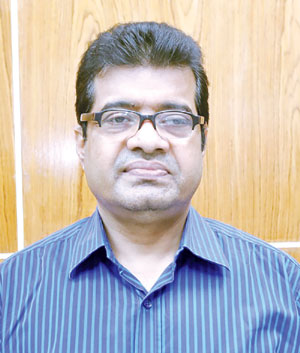
The writer works as Secretary, University Grants Commission of Bangladesh (UGC). He is also the Secretary General of the Dhaka University Sociology Alumni (DUSA) and Member of Bangladesh Press Council (BPC).





