



| HEADLINE |

|
Rajshahi city: From a colonial trading jetty to present urbanisation
Published : Wednesday, 1 March, 2023 at 12:00 AM
Raquib Ahmed


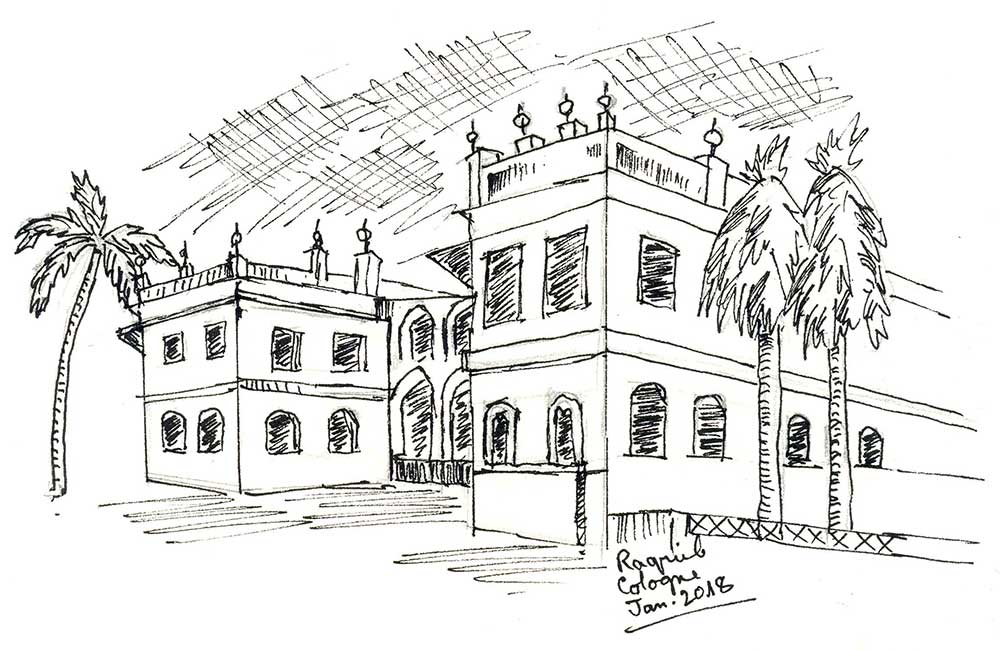
 Rajshahi College is a landmark of British colonial history erected at the middle of the city. A well-maintained campus offers an impression of a noble past that was a strong contender of the Calcutta Presidency College during the nineteenth century. The Dutch building known as Barakuthi, just south of Shaheb bazaar on the river Ganges, from where the University of Rajshahi started in 1953, still stands intact to praise the river view and attracts tourists. This is perhaps one of really few or the only one Dutch buildings of the eighteenth century in Bangladesh as a leftover sign of the Dutch�s exploitation of natives through forced cultivation of indigo for European markets.
 Although I have had an attachment to the city for the last about forty years, the Varendra Research Museum in Rajshahi appears ever new all the time. It is located about half a kilometer west of the city center. Along with great historian Ramaprasad Chanda, generous Prince Sarat Kumar Ray of Dighapatia of Natore founded in 1910 dedicated primarily for advanced research, the museum which is the only of its kind in the region even in Bangladesh today. Under its academic statute, the University of Rajshahi took over the museum in 1953. Middle and early-period sample-rich Varendra Museum maintains collaborations with many museums worldwide including Louvre Museum in Paris. The entire river bank along the city is a spectacular beauty spot � attracts thousands of visitors every evening.
Some of the city�s fresh-food markets are hubs of a special test for people. What we call katcha bazzar- is a kind of agglomerated market system where quite a big range of traders gather together to form a spotlight for the customers to benefit from located at one place. Friday is particularly a big day for people who still love to get fresh fish for the day�s menu. Traditionally big water bodies around, just few kilometers north-east, is the Chalan Beel � host of a vast range of fresh-water fish, normally a bounty in late autumn for fishermen. There is also several water bodies located few kilometers north and in the north-west near Tanore. But all the water bodies are getting transformed into agricultural lands to meet the increasing need for the growing population. Once winter used to be a good market for migratory wild birds traveling from as far as Siberia, but now restricted by new environmental law to protect those endangered guests from extinction. All Katcha bazaars are also an attraction for green fresh vegetables those come just from a hands� distance. The status still prevails but a range of products has decreased and at the same time arrival of high yield varieties fish and vegetables has psychologically disappointed fresh-product lovers. At the same time this is perhaps the only option to meet the growing demand. Hilsha of Rajshahi is quite famous, but is not really attainable to me. This is true once upon a time, perhaps before 1975 when India unilaterally blocked the river Ganges (Padma in Bangladesh), the river was a flowing stream. It was a special place for catching Hilsha near Rajshahi, and it was plenty. Now the catch has fallen to a minimum and size is smaller, just to keep the tradition alive. But however, you get it in Monsoon season.
 Perhaps the most visible phenomena of Rajshahi city is its mango market during summer. Although for just two months, it overwhelms normal city function and people from other parts of Bangladesh while passing by can not ignore to stop for a while to buy fresh mangos themselves, although price does not vary much. There is a huge mango mural near Naohata about five kilometers north from city center.
 Rajshahi still has some more iconic beauties such as Zia Park and the Dargah of Hazrat Shah Makhdum. Zia Park is a sizable children�s park with modern amenities which receives visitors from around Rajshahi region. The Dargah was built in 1876 and has been modified almost regularly attracts devotees from across Bangladesh and even abroad, particularly during yearly Urs Sharif. The city has a unique beauty when to look from the river. The entire city is viewed as a line, and particularly it is spectacular during evening. Anybody could go for a river-cruise even for several hours without feeling fatigue, which is best in winter. The sand bar in the middle adds beauty to the adventure. The city is known for its environment friendly traffic system. Electricity-run three wheelers dominate city�s transport system, creates minimum noise and offer cheap and faster mobility. Newly built modern aesthetically attractive railway station and the University of Rajshahi of more than 25000 students with many well maintained green patches and outstanding structures are two city-icons. Several murals and sculptures of renowned artists grace the campus. The city is yet to get its new
urban plan for its future expansion. The narrow inner-city lanes in the older part gives a nerve-soothing feeling of past whereas fringe areas have wide and free roads give a feeling of openness. The city has such a nice blending of old and new that reminds a link between the generations� contribution and devotion to grow through ages � from the time of local Raj to the colonial time and to Bangladesh era of present. Dominance of educational institutions has given it a flavor of intellectual hub in north Bengal. This is the city where Professor Shamsuz Zoha�s death ignited the fire that lit the whole nation�s sole towards the mass movement of 1969 and finally contributed to the Liberation War of 1971.
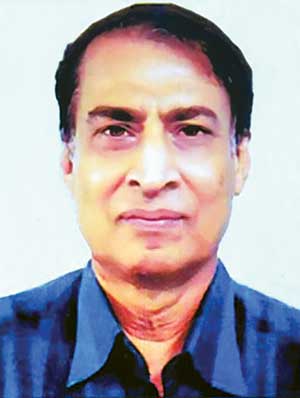
- Professor Raquib Ahmed, PhD, Vice Chancellor, Fareast International University, Former Chairman, Geography & Environmental Studies, University of Rajshahi
Loading...
Loading...
Also read



Editor : Iqbal Sobhan Chowdhury
Published by the Editor on behalf of the Observer Ltd. from Globe Printers, 24/A, New Eskaton Road, Ramna, Dhaka.
Editorial, News and Commercial Offices : Aziz Bhaban (2nd floor), 93, Motijheel C/A, Dhaka-1000.
Phone: PABX- 41053001-06; Advertisement: 41053012; 01793317829, 01550707291, E-mail: [email protected], [email protected] Online: email: [email protected] 41053014; 01550707297 Advertisement: 01550707296
Published by the Editor on behalf of the Observer Ltd. from Globe Printers, 24/A, New Eskaton Road, Ramna, Dhaka.
Editorial, News and Commercial Offices : Aziz Bhaban (2nd floor), 93, Motijheel C/A, Dhaka-1000.
Phone: PABX- 41053001-06; Advertisement: 41053012; 01793317829, 01550707291, E-mail: [email protected], [email protected] Online: email: [email protected] 41053014; 01550707297 Advertisement: 01550707296


