



| HEADLINE |

|
Industrial transformation and industrial development policy
Published : Saturday, 14 January, 2023 at 12:00 AM
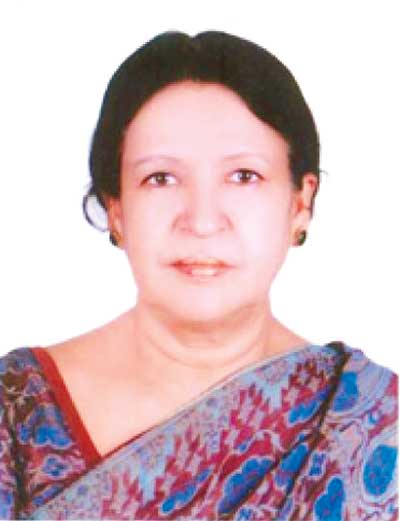
Ferdaus Ara Begum


 Industrial policies can play an innermost role in supporting industrial transformation, diversification and upgrading towards more resilient and competitive industrial development, as well as environment friendly and socially inclusive industries. Structural change for facilitating and removing obstacles and addressing market failures is another most important objective. Identifying areas to diversify and how and what to upgrade depends on close private-public action through the government policies, as major transformations in the economic structure of a country have occurred with combination of market forces, support from government and contribution of relevant actors.
 For successful transformation the fundamental issues are the process under which the policy has been emerged, gathering inputs of multiple actors. The crossing point between public and private actors play an important role, thus mutual learning, dialogue and understanding plays important roles.
In case of GDP calculation, Bangladesh Bureau of Statistics (BBS) follow internationally agreed System of National Accounts (SNA) framework, three methods/approaches are used to calculate GDP, on which production and expenditure approach have been used. In case of industry, four broad sectors are covered these are; mining and quarrying, manufacturing, electricity, gas, water supply and construction sector.
As per the economic review 2022, growth in the manufacturing sector, large scale industries is 12.87%, small and medium 11.71% and cottage is 11.75%. The growth indices of garments is 33.91%, textile 24.1% and leather and leather goods 43.1% (during July-Dec 2021-11 over 2020-2021). It means manufacturing sector mostly based on Textile and RMG and leather, there are other emerging sub-sectors such as steel and iron, cement, jute etc. BBS can think of accommodating some more and new non-traditional sector, industrial contribution may show different picture then. Recent LDC Report 2022 by UNCTAD has defined sunset and sunrise industries, sunset industries are comparatively more polluting and less technology-intensive, RMG, Leather can be some examples. In case of preparing Industrial Policies these type of technology-oriented transformation may also be taken care.
Bangladesh�s structural transformation has been happened towards encouraging more industry-based growth than agro- sector led growth. Share of Agriculture was 31.15% in 1985-86 reduced to 11.50% in 2021-22 while contribution of industry was 19.13% increased to 37.07% in 2021-22. Contribution of service sector increased from 49.73% of 1985-86 to 51.44% in 2021-22. Industry sector growth in the in 2021-22 was 10.44%, while growth in agriculture was 2.20%, service sector growth was 6.31%. Manufactured based export-led growth is aligned with industrial policy and 8th FYP.
Objectives of recent industrial policy 2022 are for diversification of exportable products, encouraging FDI by simplifying the administrative and legal framework, coordination and training programmes for skilled manpower in line with 4IR.
In the earlier policy (2016), CMSMEs were identified as the main driving force, establishment and diversification of export oriented industries, development of specialized industries through optimal utilization of local resources, opportunities for women entrepreneurs(WE), legal and infrastructural facilities to encourage investment were some other goals. It is seen that export diversification, more emphasis on FDI, thrust on 4IR are present thrust for industrial policies.
The new policy has several strategies with time-bound action plans for a dynamic, skilled industry and service sector, additional priority has been given for less developed areas so that supply of raw materials for export oriented industries can be ensured for more value addition. Capability for technology and 4IR adaptation and challenges; skilled manpower development, export diversification and new market exploration are priorities.
In order to attract local and foreign investment simplification of administrative procedures, allowing industrial park, EZ and other infrastructural services will be extended. Bilateral, regional and multilateral trade agreement in collaboration with national and international organization, encouraging women entrepreneurs, financing support to cottage, micro, small and medium enterprises, capability development for private sector for sustenance in case of natural and anthropogenic calamity, import substitute industry and back ward and forward linkage industries and in that respect support to light engg sector have been announced.
Definitional issues have been widened as some new definitions such as heavy industries, export diversification industries, specialized developmental industries, informal industries, trading and tourism industries included in the IP 2022.
Plunge on informal sector and they will be registered and specific national time-bound action plan will be prepared. A list of activities for formalization of informal establishments has been planned which is a good initiative, however, it would be a difficult task as the informal entrepreneurs are not aware about the full benefits of formalization and afraid stringent administrative procedures which requires cost and time. Implementation of policies also needs attention.
Industrial policy also for the first time announced some initiatives for start-ups and how to create an enabling environment for them. In that respect BSCIC, SMEF will work for creating new entrepreneurs, providing support services, advisory services; one stop services in BSCIC centres, training for them and specially encourage ICT-based entrepreneurship. This is an encouraging steps, however, confidence on BSCIC has to be revisited in each and every districts.
As like as the previous policies women entrepreneurs (WE) are encouraged to develop entrepreneurship, there are assurance of collateral free loans. Main constraints raised by the WE is finance, there are a number of financial schemes announced by the Bangladesh Bank for WE, however for any discrete reasons WEs are not getting funding.
The policy has given push for industrialization in the backward places and special incentives for them. Reforms and management of State owned enterprises, increased productivity for global competitiveness, quality of products and intellectual property, special incentives for import substitute industries , encouragement of non-resident Bangladesh, diversification of industrial goods, export oriented industries, encouraging foreign investment, technology development and expansion and 4IR, environmental issues for waste management, skill development and research are important.
From the above analysis it is obvious that IP2022 has tried to accommodate all related issues for transforming industrial development to a next stage to fit to the requirements of graduation. However as per Global Industrial Performance Index (GII) 2021, Bangladesh Ranks 70 out of 152 countries in 2020. IP 2022 has not mentioned any target to improve its rankings. Malaysia ranks 23 while Vietnam Ranks 38, Indonesia 39. Vietnam is very close to Indonesia. Bangladesh would need to work hard to improve its ranking. Industrial Policy should have specific targets to improve rankings in GII.
Bangladesh (105) ranking in Global Competitiveness Index (GCI) is far away from Vietnam (67) and Malaysia(27). GCI ranks a number institutional, infrastructural, skill development, ICT adoption, labour market, product market, financial system etc, some of which have been included in the IP 2022. The policy is a simple wish list, for implementation of different provisions of the policy, it has to depend on a number of organizations/agencies, if all stakeholders� efforts are not aligned properly, and the objectives of policy may not be achieved. In that respect the status of the policy can be upgraded to an order or any other ways suitable to the administrative procedures.
Labour productivity of Bangladesh is behind those ASEAN countries. Targeted annual average productivity growth rate is 5.6% for Bangladesh for the period 2021�31(National Productivity Master Plan FY21-F30), national productivity growth rate averaged 3.8% between 1995 and 2016 while in Vietnam by 2030, the average growth rate of labor productivity is targeted as 7.5% in the industrial sector.
Bangladesh is going to face graduation challenges, some of these are; loss because of LDC-ISMs, concessional loans, cash incentives/subsidies, tariff rationalization will be required. Export Diversification is far away- as policy support is discriminatory and sector-specific, Cottage, Micro and Small (CMS) enterprises are the main employment creating agencies-are not getting proper attention, logistics costs is the highest in the country, lead time is high, LPI Index is also low in the country. Digitalization and FDI are two primary requirements; Bangladesh is much behind in comparison with other countries. FDI is concentrated in a few sectors, few destination- needs diversification, we do not have updated FDI Policy, business confidence is at low stage. Poor data management-inconsistencies, trained manpower and capacity development, quality of education is an issue. Industrial transformation cannot remain only in plan, implementation strategies would need to be strengthened.
- Ferdaus Ara Begum, CEO, BUILD.
Loading...
Loading...
Also read



Editor : Iqbal Sobhan Chowdhury
Published by the Editor on behalf of the Observer Ltd. from Globe Printers, 24/A, New Eskaton Road, Ramna, Dhaka.
Editorial, News and Commercial Offices : Aziz Bhaban (2nd floor), 93, Motijheel C/A, Dhaka-1000.
Phone: PABX- 41053001-06; Advertisement: 41053012; 01793317829, 01550707291, E-mail: [email protected], [email protected] Online: email: [email protected] 41053014; 01550707297 Advertisement: 01550707296
Published by the Editor on behalf of the Observer Ltd. from Globe Printers, 24/A, New Eskaton Road, Ramna, Dhaka.
Editorial, News and Commercial Offices : Aziz Bhaban (2nd floor), 93, Motijheel C/A, Dhaka-1000.
Phone: PABX- 41053001-06; Advertisement: 41053012; 01793317829, 01550707291, E-mail: [email protected], [email protected] Online: email: [email protected] 41053014; 01550707297 Advertisement: 01550707296


