By the third week of February, the situation in the province and in Rajshahi became incendiary. In the Rajshahi University, the sanguinary clash was between the students and the Pakistani army. It led to the tragic death of Rajshahi University's teacher and proctor Dr Shamsuzzoha, adding a fiery dimension to the students-mass movement. As history records, 'The murder of Sergeant Zahurul Haq, one of the accused of Agartala Conspiracy Case on 15 February (in Dhaka), the students of Rajshahi University became furious and started staging demonstration. On 17 February the students were injured by the then Pakistani police. On the same day local administration imposed section 144 on Natore-Rajshahi Highway near Rajshahi University. When the enraged students violated the section, the Pakistani army was deployed to shoot the students, but Professor Dr Shamsuzzoha talked with them and urged them not to fire. When the tension grew the army shot Professor Shamsuzzoha. He was taken to the hospital and died there. Professor Shamsuzzoha was buried in front of the administrative building of Rajshahi University. His death added a new dimension to the anti-Ayub mass movement and led to the fall of the Ayub government.'
The tragic event in Rajshahi created a pall of gloom and grave socio-political uncertainty in the entire greater Rajshahi district. Consequently, our scheduled four-month srvey and settlement training was cut short by a month. We all returned to our stations by the end of February 1969.
The tornado
Shahed and I joined our duty in the Dhaka collectorate by early March 1969. Khashruzzaman Choudhury having recovered from his critical injury in the Kohat car crash also joined the Dhaka deputy commissioner's office. Some of the novel and interesting events and encounters experienced during our tenure as assistant commissioners in Dhaka have already been described. A new and unprecedented experience came our way after what was variously called the Dhaka cyclone or tornado of March 1969. The severe storm-hit Demra, Khilgaon, Meradia-Nasirabad and Trimohini on the outskirts of the Dhaka city. It swept along a relatively narrow area in this region, causing numerous death and widespread destruction. The grave natural disaster called for immediate and intense relief efforts. The district administration acted as the focal point of these exercises. The affected region was divided into two areas for relief operations: one consisting of the Demra area and localities adjacent to the River Buriganga. One of the additional deputy commissioners, Nawab and Khashruzzaman Choudhury were put in charge of this operational area. They made a well equipped launch anchored in the Buriganga, their headquarters.
The other area with its centre in the Khilgaon High School was put in charge of Shahed Shadullah and me. We made a few rooms in the first floor our operational headquarters. The ground floor and part of the premises of the school doubled as temporary relief camp for a number of affected families. Apart from Khilgaon, the suburban, almost rural areas of adjacent villages of Meradia-Nasirabad and Trimohini were under the jurisdiction of our relief operations. These villages could only be reached by river route. We had a number of country boats at our disposal to reach packets of essentials to the affected villagers. The packets usually contained some dry food, clothes, ropes, candles and matchboxes. Shahed and I frequently made the four-mile-long trip by boat to distribute relief materials among the tornado-hit people.
There was also a lot to do in our headquarters, the Khilgaon school. Sacks full of rice were supplied by contractors and stocked in the school for distribution. Clerks and the assistants of the collectorate were deputed to keep track of the rice and other relief commodities and we had to supervise them. Besides, an active and alert non-Bengali Ansar adjutant used to come every day with bags full of what was called GR (gratuitous relief) cash. This was used to pay part of the relief in cash to the disaster-hit public. This was risky work and had to be done with great care. Shahed was meticulous and, therefore, a great help in this as well as other matters of distribution. He and I agreed that we needed to compensate the clerical staff who worked overtime late in the evening. Their sincere and restless work shone brightly in the light of radiant mantle lamps. There was no provision for paying them overtime. Shahed and I, therefore, found a way out. Ten paisa was provided as contractor's charges for each mound of rice (about 40kg) as handling charges. The contractors did not take this money. So we made the clerks put their thumb impressions on receipt purported to be receipt of payment to handling coolies. It made the clerical staffs happy.
Another thing we did by cutting the red tape was to give away the empty gunny bags in which rice was carried to the inhabitants of the Khilgaon relief camp free. The Ansar adjutant told us that according to the Bengal Relief Code of the British colonial times, we had to put on auction the gunny bags after publicising the sale by the 'beat of drums'. Not only that, we also had to deposit the proceeds in the state bank with challans in quadruplicate! When we said this was a stupid procedure, the adjutant agreed. He also shared our decision to declare the empty gunny bags 'stolen' and distribute these among the needy residents of the Khilgaon relief camp.
Surprise visit by deputy
commissioner
We came to know later that the deputy commissioner MK Anwar made a surprise visit to the headquarters of the relief operations in the Derma-Buriganga area. This was late in the afternoon and officers-in-charge, ADC Nawab and assistant commissioner Khasruzzaman Choudhury after having sincerely discharge their responsibilities, were taking a nap in the cabin of the lunch, their headquarters. Needless to say, the deputy commissioner flew into a rage and censured them heavily.
On hearing this, Shahed and I who had no cabin of a lunch to rest and relax were all the more alert. Thus, when MK Anwar, the DC, made a surprise visit to our camp office, he found nothing wrong. Even then he was not satisfied but made it a point to travel with us by boat to the villages of Meradia, Nasirabad and Trimohini. There he visited a number of households and asked all heads of family if they had received all the relief goods meant for them. When he received positive replies, MK Anwar mumbled with suppressed satisfaction, 'You seemed to have done a thorough job. Carry on the good work.' Needless to say, we heaved a sigh of relief and felt immensely delighted.
Martial law 1969
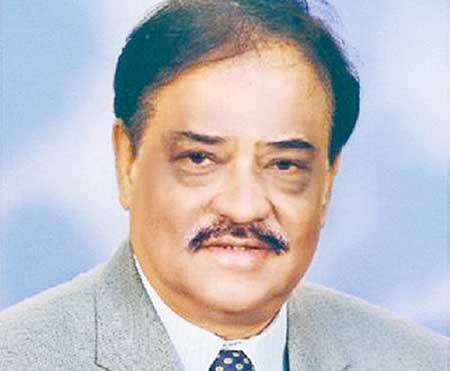
As Already mentioned, the political scenario in Pakistan became complex and turbulent especially during the first quarter of 1969. After more than a decade of autocratic rule, the 'iron man', military dictator field marshal Ayub Khan resigned. The army chief of staff General Yahia Khan stepped in and promulgated martial law throughout Pakistan on March 25, 1969. Although not entirely unexpected, the happening gave us a jolt and began a time of new uncertainty in the country. I remember that a few days after the imposition of the martial law, MK Anwar, the deputy commissioner, speaking with us in his office chamber, said with composed confidence, "This is not going to do any good to the country.' Needless to say, he acted as a brave man and did not compromise with the demands of force. We later heard that he crossed swords with the military authorities on the question of civil- military jurisdiction over relief operations. A few months later, along with other superior officers, he was removed from the government service in the action known as the removal of '303'. He got back his government job in the liberated Bangladesh and became chairman of the Bangladesh Jute Mills Corporation in 1974. Later, still he was appointed the cabinet secretary in 1990. After retirement, he joined politics and became a cabinet minister (1991-1996 and 2001-2006).
The author, founder Chairman of Centre for Development Research, Bangladesh (CDRB) and Editor quarterly "Asian Affairs" was a former teacher of political science in Dhaka University (1964-1967) and former member of the erstwhile Civil Service of Pakistan (CSP) (1967-1980) and former non-partisan technocrat Cabinet Minister of Bangladesh (1990).





