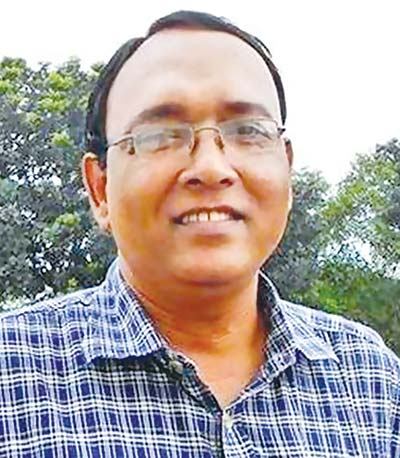
Abdul Gaffar Chowdhury understood the language of the people and their needs even while sitting in distant London. Abdul Gaffar Chowdhury just wanted to be a journalist. He attains perfection in his pursuit. His name means the name of a pen soldier. His readers were across the world.
Today, this state of Bangladesh is running towards its centenary beyond its 51 years. Abdul Gaffar Chowdhury is one of the thinkers who was born and raised in this country. His great love was passed on to the next generation with the inevitable responsibility of carrying on the legacy of progressive consciousness. Undoubtedly, his death is an irreparable loss for us. His emptiness is not to be filled. Bangladesh will never forget a timeless child like him. He will be in the depths of our hearts.
We are deeply saddened by the death of eminent writer and journalist Abdul Gaffar Chowdhury, the author of Ekushey's immortal song "Amar Bhaiyer Rokte Rangano Ekushey February, Ami ki Bhulite Pari". Abdul Gaffar Chowdhury is an integral part of the history of Bangladesh. He was a close associate of the Father of the Nation Bangabandhu Sheikh Mujibur Rahman. He took part in the Non-Aligned Conference with Bangabandhu in Algiers in 1973.
He was the founding executive editor of the weekly Joy Bangla, the first independent Bengali newspaper registered through the Mujibnagar government during the war of liberation. During this time he also worked as a columnist in Kolkata's Anandabazar and Jugantar.
Even before independence, Abdul Gaffar Chowdhury wrote various analytical articles in favor of the autonomy of this country. He was imprisoned in Dhaka in 1955 while celebrating Ekushey February. He was always vocal in favor of liberation war, Bangladesh, Bangabandhu and non-communal consciousness. Abdul Gaffar Chowdhury started his career as a journalist in the daily Insaf. Later he worked in many newspapers including Daily Sangbad, Monthly Saugat, Daily Ittefaq, Daily Azad, Daily Purbodesh and Daily Janpad.
Although he emigrated to the United Kingdom due to his wife's medical condition a few years after independence, he wrote a significant column in the top dailies of Bangladesh. His columns on politics, contemporary events and international affairs were very popular. He was one of the most popular columnists in Bangladesh. A few days before his death, he wrote a regular column in several newspapers in the country. Not just newspaper columns, he has many notable literary works. These include poems, stories, novels, plays and memoirs. He has been awarded numerous awards including the country's highest award, the Independence Award, the Ekushey Padak and the Bangla Academy Award.
With the death of Abdul Gaffar Chowdhury, the Bengali nation lost a great patriot and a man of non-communal consciousness. Even if Abdul Gaffar Chowdhury dies physically, he will live in the hearts of people, especially through the immortal songs of Ekushey. The name Abdul Gaffar Chowdhury is closely associated with the formation of the context of the language movement and the final chapter of the bloodbath language movement, Ekushey February. He was an immortal chapter of it. As long as there is the Bengali nation, there is the Bengali language and the name Abdul Gaffar Chowdhury will come up in context.
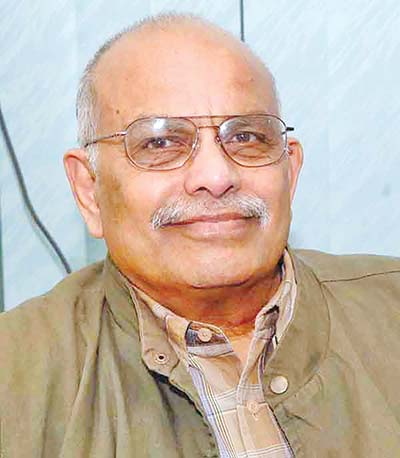
Ekushey February is now recognized as International Mother Language Day. Ekushey February is celebrated as Mother Language Day in all countries of the world. The late Abdul Gaffar Chowdhury, the writer of the song Amar Bhaier Rokte Rokte Rangano Ekushe February is sung in the morning procession of 21st February.
For a long time, his position in the world of journalism was mainly centered on democratic, non-communal, nationalist ideology. It was in this vein that his fame spread at home and abroad. He embodied the spirit of language movement and liberation war in his political beliefs and from these two sources, he has remained steadfast in his policy by being rich in political-cultural power. Abdul Gaffar Chowdhury is an authentic Bengali who holds the history tradition and literary culture of Bengal at the core of his consciousness.
He became a legend as a journalist and columnist. Until his death he was vocal in favor of progressivism and the spirit of liberation war against secularism, backwardness and reaction. His strong arguments, historical facts and statements of real experience have pushed the nation towards the path of light.
Ekushey's immortal song is recognized as the immortal song of Prabhatferi, was composed to commemorate the bloody body of Language martyr Rafiquddin who was shot in the head by the police on February 21, 1952. The song was used in Zaheer Raihan's 1970 film Jibon theke Neya. The song was ranked third among the best songs in the Bengali language by BBC Audience Survey. At present this song is sung in 15 languages including Hindi, Malay, English, French and Swedish.
Abdul Gaffar Chowdhury was aware of history and tradition and rich in non-communal consciousness. Whenever the poison of communalism has poisoned the Bengali life, he has picked up the pen. Abdul Gaffar Chowdhury's thought-consciousness enlivened the Bengalis with non-communal consciousness. Instead of religion-based nationalism, it shines in the light of Bengali nationalities. His columns and literature ignited the eternal flame of Bengaliness in the consciousness of the nation.
During the war of independence in 1971, he worked in 'Joy Bangla', 'Jugantar' and 'Anandabazar' magazines. In the context of 1952's language movement, his song brought him not only fame but also immortality. At first, he composed the melody himself. Later Abdul Latif and finally Shaheed Altaf Mahmood composed the song and the song is sung in the present tune.
Although Gaffar Chowdhury did not write a lyric poem after writing it. We pay our respects to his life and struggle. His non-communal consciousness and sharp writing will keep him alive forever.
Hiren Pandit, researcher and columnist





