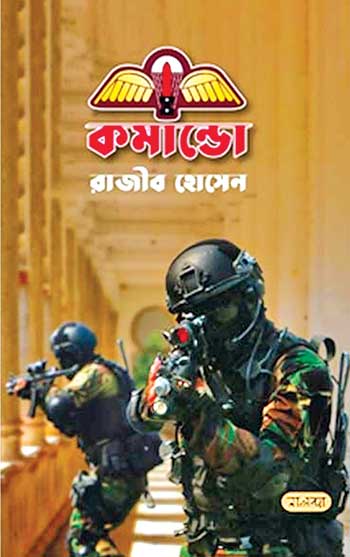
“Commando”, written by Rajib Hossain, a former army personnel, is the first-ever book on the Bangladesh Army Para Commando course. Published in 2021, the book tells the author's experience during his enrolment in the toughest course Bangladesh Army has to offer. Before this, the only available Bangladeshi book on commando training was "Hell Commando" by Maj (rtd) Anwar Hossain who wrote about his SSG training days as a Bengali officer in Pakistan Army.
Words like "commandos" or "special forces" might instantly remind us of a muscular figure like Rambo, going behind enemy lines and killing them with no mercy; or maybe it's just Navy SEAL that comes into our mind.
Interestingly, most of the countries have their special forces for special operations. I'm writing this with much pride that Bangladesh also has an intimidating "1 Para Commando Brigade", the special operation force of the Bangladesh Army. If some of you are already wondering what it takes to be a para commando, the book is the answer.
The author joined the Army in 2002 and gradually the story leads to its main attraction: his getting selected for the commando course in 2003. The writer has cited "Hell Commando" several times as his early inspiration to choose this challenging course.
The training takes place in "School of Infantry and Tactics" situated in Jalalabad Cantonment, Sylhet.
The 17th batch has its surprise welcome at the dead of the night when a sudden firing shattered the dorm's window glasses. From that moment, it was the beginning of a six-month-long hell period.
The day starts with intense physical exercise. Trainees are punished for the slightest mistakes. Take "voltage point" for example. It sounds as horrific as the name suggests. Trainee commandos get beaten almost all the time with thick sticks as a "simulation" of actual enemy fire. This training pushes them to the extreme, both physically and mentally. Running miles after miles with a 30 or 40lbs of load on their back might sound hard but at the end, it's all about how well they can handle the stress and keep moving forward no matter what.
It requires tremendous amount of mental strength to put up with all the physical torture. But ask the instructors, they will say, "The harder the training, the easier the battle". Now, all of these might sound so gruesome and no fun in it. Thanks to the author's great sense of humour which made the training description quite enjoyable.
At the later phase, trainee commandos go through "survival training exercise". They have to survive in a dense forest for seven days totally depending on the natural resources. Then comes the "gagging", the most brutal test commandos have to encounter. They are laid on their stomach facing the ground. Instructors tie their hands and legs together tightly with a bootlace and pull it so hard which makes a trainee's body bend like the letter U. No word can describe this pain.
That should make them scream so loud but ironically their mouths are sealed with cloths. The purpose of this inhuman torture is to make the trainees not to open up in enemy interrogation. In simple words, this place is not for quitters.
After some final exercises that include an airport raid, the trainee commandos are inches apart from being a commando. The last 5-week para-jumping course will be the only stop sign before calling them "para commandos". Minimum five successful parachute jumps are required to pass the course. After completion, the commandos are decorated with maroon berets and the golden 'commando insignia' on the right side of their chests. Now there's nothing they can't eat, no place they can't reach, and nothing they can't do. This is a moment of glory that remains with the commandos for the rest of their lives.
Whenever the call of duty comes, the "cheetahs" will act without delay and will not return until the job is done.
The reason stays in their motto: "Do or die"!
The reviewer is a student of Dhaka University, Dhaka University





