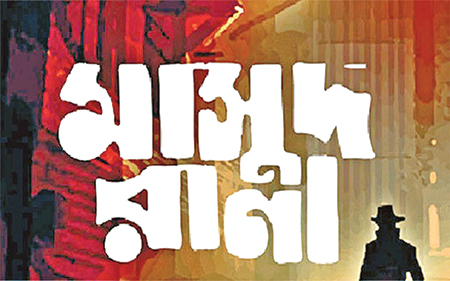
For those who had the privilege to grow up in Bangladesh in the decades after independence, the names Qazi Anwar Hussain and Masud Rana and Kuashaare etched in the minds.
In those days of austerity, privation and black and white aspirations, Masud Rana books added exoticism to our lives. And certainly, Kazi Anwar Hussain, who died on 19 January, last, deserves kudos because if he had not created the characters of Masud Rana and Kuasha, the leisurely winter afternoons of early 80s would not have been so vivid in our minds
In an age of the Internet, we all know that most Rana thrillers are either based on western books or have been influenced by works of Alistair Maclean, James Hadley Chase, Clive Cussler, Wilbur Smith and others.

However, that fact hardly diminishes the allure of Masud Rana - our own espionage agent who, just like 007, went around the globe in dangerous missions, got out alive in the end, unabashedly took the girl to the hotel room, ordered the bottle of Dom Perignon and never got entangled in an emotional relationship. Well, almost!
After all, even James Bond had a wife in On Her Majesty's Secret Service who is killed in the end. For Masud Rana, the woman who has some sort of emotional bond with Rana is Sohana, another espionage agent, and their intimacy is described in the book, PishachDwip (The Island of the Vampire).
Challenging the 'virtuous' hero template
For too long, the common template of the protagonist in Bengali literature religiously showed a man devoid of any vice. These examples of moral rectitude and puritanism never defied convention and always acted in a way deemed 'correct' by society. However, in the sixties, the dominant social wave was counter culture. Rebellion was in the air along with free love. Having a good time and enjoying life triumphed over behaving properly and living tediously by the book.
Masud Rana came out in 1966 - very much a product of the rebelliousness of the time. James Bond was the global icon then and the superspy flouted all the conventional social norms with suave nonchalance. It was terribly decadent but people all over loved it!
The same applies for Masud Rana. The character was a shadow of Bond but with a Bengali background. Naturally, a Bengali man drinking whisky and bedding women triggered a social outrage. Puritans were appalled; a case was lodged against Qazi Anwar Hussain. Rana was vitiating the social fabric with his promiscuity and immoral acts, cried the moral brigade. But in the end, Rana survived. The court cleared the writer.
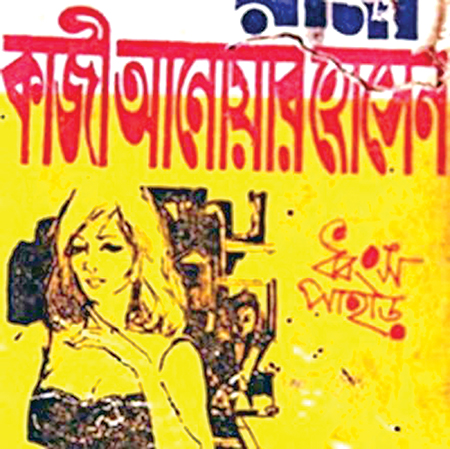
Actually, many parents who dissuaded their sons to read Rana were secret fans of the books. Rana's love for the drink and feminine company were the reasons why the series was regarded as a pernicious influence.
But then, anything that goes against prosaic social norms never fade away; on the contrary, the popularity soared and after independence, Masud Rana was Bangladesh's first fictional hero.
So much was his popularity that in 1974, a film was made with Qazida winning the national award for best script. The movie,Masud Rana, starring dashing Sohel Rana as the eponymous hero, is available in You Tube and even today, with society relaxed about drinks and casual intimacy, the plot of the movie will appear very liberal.
In 2021, we don't get too many film heroes drinking and having an extra marital fling. But the 1974 film showed Rana doing just that. Radical indeed!
Of course, very few of the more than 400 Masud Rana books are original plots but that is hardly on anyone's mind.
Qazida had the privilege to see the nation-wide hunt for the right person to play the role in an upcoming three movieMasud Rana series. He must have been proud to see that despite so much Internet based entertainment, the allure of Rana did not wane.
Kuasha - the hero who remains an enigma:
But before Qazi Anwar Hussain created Rana, he gave us Kuasha, meaning the fog. Just like the name, the protagonist known as Kuasha is a mystery with very little revealed about his personal life. Kuasha was also a crime fighter but a hero who operated from behind the shadows. In fact, the English translation of Kuasha should be the shadow man. The series was also a hit but was discontinued in the mid seventies to be resurrected briefly in the mid eighties.
A highly successful movie was also made with actor Anwar Hossain playing the role of the mystery vigilante.
Masud Rana and Kuasha made readers out of millions
It cannot be denied that in those days of economic stringency, Rana and Kuasha provided the gateway into a world of suspense, adventure and thrill. The popularity of Qazi Anwar Hussain reached such heights that in the late 80s, widely read Bengali weekly magazine Bichitra did a special cover story on him. There Qazida said that the inspiration for the first book of the Rana series, DhongshoPahar, came from his own trip to the Chittagong Hill Tracts.
The death of Qazida brings back so many unforgettable memories with Sheba Prokashoni, the publishing house he founded. For millions of people in their fifties and sixties, Sheba books were indispensable companions in a period when there were very few entertainments available. For train journeys, school and college holidays plus winter weekends, Masud Rana, Kuasha or any other Sheba book was the most preferred companion. Come to think of it, despite having so many forms of tech based distractions, that unalloyed joy of the past remains untarnished.
Thanks Kazida, for making our teenage years so exciting! Those bus rides to Malibagh to buy the latest Rana thriller or the journey to Nilkhet to find a copy of the Kuasha series will always remain enduring memories of our teen years. As a teen I, like countless others, dreamed of becoming Masud Rana….well, at fifty, that desire is still kept hidden in a secret chamber of my heart. One is never too old……right?
Pradosh Mitra is an avid Masud Rana/Kuasha fan!





