The beginning in October, 1967 as I was bound for Lahore in a PIA flight from Dhaka one phase of my working life ended. Another phase of my career began as my would be colleagues from the eaters wing and I stepped into the premises of the Civil Service Academy at upper mall in Lahore. As mentioned earlier with three out of four of the merit positions and ten out of twenty under the provision of inter-regional parity there were 13 of us in the CSP Cadre. The members of the Pakistan Foreign Service also received their initial training along with the CSPs in the Lahore Academy.
So we were in Predominant majority among the CSP trainees in the Academy. Together with seven members of the Foreign Service from the eastern wing we were in overall majority. Among the CSPs were Shahed Shadullah, myself, ABM Abdus Shekoor, Shah Mohammad Farid, Akbar Ali Khan, Md. Khashruzzaman Choudhury, Mamun-ur-Rashid, Kazi Rakibuddin Ahmed, A.K. Shamsuddin, Abdul Hamid Choudhury, Waliul Islam, Abdul Muyeed Chowdhury and Syed Rezaul Hayat. Among those who joined the Foreign Service Cadre from the eastern wing were: Ahmed Tariq Karim (merit position) Mohiuddin Ahmed, Aminul Islam, Anwarul Karim Choudhury, Ziaus Shams Choudhury, S.M. Rashed Ahmed and Mostafa Kamal.
As mentioned earlier, the academy was located on grassy green sprawling ground. The Centre-Piece was the Provincial Governor's residential Mansion during the British Raj. It contained a spacious lounge on the ground floor and equally large dining hall on the first floor. There were also commodious rooms for accommodating some of the trainees who were higher on the list of successful examinees. Besides, there were several Tennis Courts adjacent to the main building. In addition, a large part of the ground was earmarked for training in horse riding. Then at one end adjacent to the outer boundary wall there was the new building which housed several trainees.
Most of us from the then East Pakistan including Ziaus Shams Choudhury and Mohiuddin Ahmed of the Foreign Service, Waliul Islam, Abdus Shekoor, Shah Mohammad Farid, Akbar Ali Khan, Abdul Muyeed Choudhury, Kazi Rakibuddin Ahmed, Abdul Hamid Choudhury and I traveled from Dhaka to Lahore by the same PIA flight on Monday the 16th of October, 1967. As far as I remember others such as A.K. Shamsuddin, Syed Rezaul Hayat, Mamunur Rashed and A S M Rashed Ahmed who were already in West Pakistan came to Lahore from their different stations.
I recollect that the rest of the day including the evening was devoted to adjust to the new reality. In the afternoon over tea at the lounge and in the evening at dinner in the massive dining hall we met the probationers from the Western wing.
Then we were taken by the room bearers to our respective rooms. Shahed Shadullah and I got room no 1 and 2 facing each other. The rooms were large and the attached bath room was almost half of the room. The iron beams that held up the roof reminded one of colonial days. Each room had a room bear attached to the occupant. The room bearers virtually represented an institution from the colonial days. They took care of practically every need of the officer concerned: from sounding the wake-up call early in the morning with bed tea and laying out his dress to sewing severed buttons of the officer's shirts and trousers. This was of immense relief to persons like me who had no experience of hostel life.
Alone in my room at night I considered the implications of the change that had just began in my life. Here I was in a place hither to unknown to me save through the references in the sub continental history. I was all along, sundered from my extended family and my wife with two little sons. Again, I felt that destiny had torn me from my familiar academic environment. At that point of time it was impossible to imagine what unexpected and dramatic events were in store for me. I only knew that along with my colleagues I was about to become a sort of student again. An entire year from now, I found later, was a virtual return to the days to the days as student.
Morning came early the next day. We all went to the administrative office to sign our joining reports. Some of us were in haste as if to beat the others in the race. Muyeed smiled and remarked with biting humour that the fast runners were probably afraid that if they signed their joining reports even a minute later, they might become juniors! After the joining formalities were over, we were guided into a cozy and well appointed class room on the ground.
The Director of the Civil Service Academy in accordance with tradition was a very senior Civil Servant. In 1967 our Director Mr. Abdul Majid was ICS of batch of 1939. He had also served earlier as Deputy Commissioner and District Magistrate of the greater Mymensing district. There were two Deputy Directors, Dr. Sheikh Maksud Ali, CSP and Mr. Akram Zaki, PFS. Dr. Maksud Ali was a Bengali from East Pakistan while Mr. Zaki was a Panjabi from West Pakistan. We all became close to them in course of our stay at the Academy.
On the 17th October, the very first class was taken by a Senior Member of the CSP Mr. Qashem Rizvi, the Revenue Secretary of West Pakistan. Earlier he was Director General of Public Relations of the Central Government. It was during that period that I had met him on several occasions as the Editor of the monthly "Concept". However, on the 17th October, 1967 he received us with the traditional greeting, "Welcome to the tribe".
Many rites and rituals of initiations into the "tribe" sought to drill us into the compact group. These were, of course, unwritten and composed mostly of conventions, customs and usages. A well known practice followed by senior officials in the Civil and Military Services was that in clubs, the messes and restaurants the seniors paid the bills!
The formal part of the drill was constituted by studies in law for the Civil Servants and Diplomacy by the Members of the PFS. An indivisible part of the curriculum was horse riding. Games, especially Tennis and physical exercises were indispensible co-curricular activities. During the first year of rigorous training of the Academy the days started very early. In fact, it was not even day light when we had to have training in horse riding under a dark sky studded with twinkling stars.
There will be more on horse riding in course of this chronicle. After this we went to our rooms to change from the breeches into appropriate dress after bath. Then there was a short time to grab breakfast with refreshing tea before the classes started. The class room routine was from 7:30 am to 1:00 pm. Then there was lunch followed by a short break. The afternoons were devoted to Tennis and tea. Evenings were marked for dinner. On several days special dinner events were held.
These were attended by distinguished guests and their wives who in their youthful and attractive presence made the evenings colourful. After dinner, there was time for study and home work. On free weekends and sometimes even on week days we used to go to the Lahore Gymkhana Club to socialize with elites of the city. All these activities excepting on the quite holidays made us dog tired. In the beginning we often complained to the Deputy Directors that the training was too demanding. Dr. Sheikh Moqsood Ali laughed and said with experienced affection, "you will find yourself gaining a few pounds at the end of the training despite its rigours!
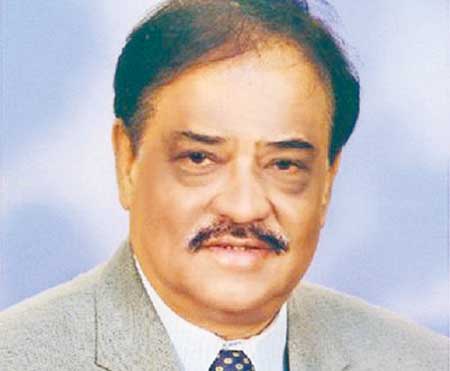
Dr Mizanur Rahman Shelly, founder Chairman of Centre for Development Research (CDRB), and former
teachnocrat Cabinet Minister of Bangladesh, Died on August 12, 2019. He contributed his writeups to the Daily Observer which are being published regularly as "The Symphony of Our Times"





