Patale Sharbori came close to winning the prestigious Adamjee Literary Award after it was published in 1965. It reportedly failed to win the price as the conservative judges opined that it was obscene in parts! Nevertheless I was so enthused by the instant success of my first novel that I resolved to write at least one novel a year. Little did I know that a cruel and demanding life could not leave much room for such creative luxury. From 1965-1995, I managed to write and publish only three novels: Patale Sharbori (Night in Hades) (1965), Aleek Attiya (The Ethereal Kin) (1990), and Aniket Ovisarey (The Homeless Tryst) (1995).
However, I continued writing short stories and poems from the 1960s. The other species of my writings which began thriving during my days as University teacher were topical essays and articles on contemporary themes. These writings in English and Bengali were published in dailies such as the Pakistan Observer, Ittefaq, Sangbad and Dainik Pakistan. Many of these were also published in weekly papers. The subjects were many and varied. These ranged from contemporary politics and economics to the evolution of Bangla literature in the then East Pakistan. These writings were published in the form of a book called Contemporary Essays in 1967.
Another species of writing that kept me busy and gave me some qualified fame were books for use by candidates appearing at the competitive examinations for central and provincial superior services. In these ventures my co-author was an affectionate junior Khasruzzaman Chowdhury. He was a first year student of B.A. (Honours) Economics, resident in the S.M. Hall in 1962. A brilliant student, he attracted our affectionate attention. He did not, however, join our party, the Students' Force. He contested in the 1962 S.M. Hall Student Union elections.
He joined our adversary the NSF and fought and won the election as Assistant Secretary. Nevertheless, my affection for him did not get reduced. We used to be in regular contact. As he also passed his Masters by 1966, Khasru came up with the idea that we author books for the competitive examinations. The result was the publications by 1966-67, books such as International Affairs and Pakistan Affairs which were in great demand by the intending C.S.S. and E.P.P.S examinees.
Such was the socio-political environment that the educated youth specially the meritorious ones felt strongly attracted to the jobs in the Central Superior Services. Those who could not compete successfully in the C.S.S had as their second choice, the Provincial Civil Services. To qualify as tests, you needed to have a simple graduation and good health. Success deepened not only on passing but in being included among those top few who qualified for limited number of superior government jobs. Thus, in the C.S.S every year, the intake would vary from 120-150 or 175.
The jobs ranged from the top great Civil Service of Pakistan (CSP) and Pakistan Foreign Service (PFS) to Police Service, Finance Services such as Audits and Accounts, Income Tax and Customs and Excise. There were also other cadre services such as Postal and Land Cantonment executive Service. You had to be among the top 120 or 175 successful candidates to obtain these jobs through a highly competitive examination that was country wide or province wide.
The first twenty percent of the jobs in CSS was reserved for those who were topmost in merit. It did not matter from which region they came. The other eighty percent were usually equally divided between the candidates from East and West Pakistan. This was in accordance with the strategy of the central government, avowedly to ensure parity of representation for East Pakistan in higher central services.
In the 40's, 50's, and 60's of the last century higher government services were considered superior and highly attractive in comparison to other callings. The pay, privileges and security of these jobs were attractive in the context of the then society and economy. The Civil Services were considered to be successors to the legendary Indian Civil Service (ICS) introduced by the British colonialist rulers and was called the 'Steel Frame of the British Empire'.
The authority exercised by superior government servants was considerable, especially in the context of the doctorial government supported by the military that ruled Pakistan from 1958 to the dismemberment of the state in 1971. That year, the erstwhile East Pakistan achieved freedom and sovereignty as Bangladesh from the internal colonial rule of Pakistan through a blood soaked War of Liberation.
During the twenty four years of Pakistan, the superior civil servants were held in high esteem by others and their own perception. During the 1950's and 60's the civil bureaucrats in the then Pakistan virtually reached the zenith of their power, position and status. The Civil Service cadres known by the acronym CSP considered themselves as torch-bearers of the fabled 'Heaven born' Indian Civil Service (ICS) of the British colonial times. So did their counterparts Indian Administrative Service (IAS) in post 1947 Indian Union.
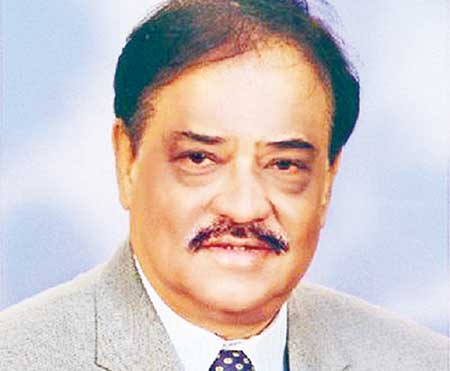
Dr Mizanur Rahman Shelley, founder Chairman of Centre for Development Research (CDRB), and former technocrat Cabinet Minister of Bangladesh, died on August 12, 2019. He contributed his writeups to the Daily Observer which are being published regularly as "The Symphony of Our Times".





