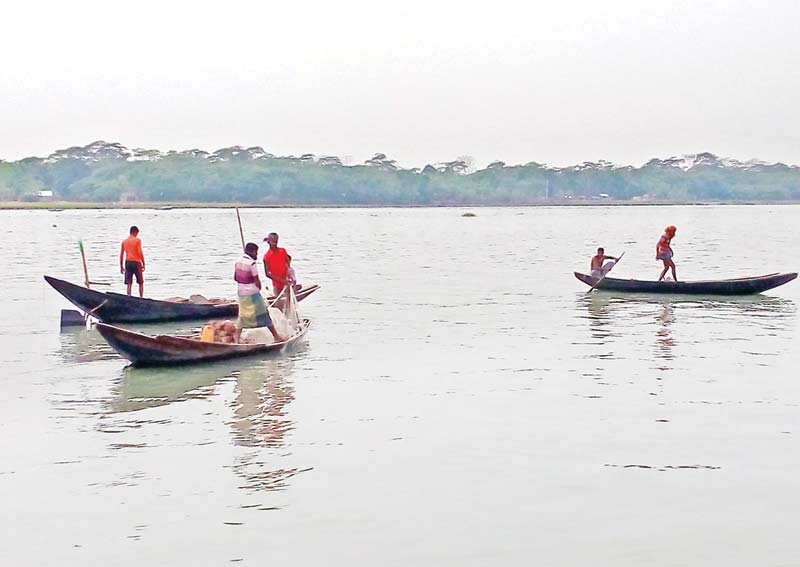
KAWKHALI, PIROJPUR, July 28: In this full season, fishermen are not getting expected hilsas in five rivers including Kocha, Sandhya and Kaliganga at Kawkhali Upazila of the district.
In this situation, the fishermen are being compelled to take loan from different sources to run their families.
Upazila fisheries office sources said the number of fishermen in the upazila is 1,500, and most of them maintain livelihood by fishing in the rivers.
Though hilsas are found less in May every year, it becomes abundant in the beginning of June. At that time, the fishers repay their year's debts.
But, the picture is different this year. In June and July, hilsas are not being found.
Fishers like Kabir, Hanif and Babul said they are in great trouble as they are not finding hilsa in the rivers. They cannot adjust the fuel cost of their fishing trawlers by selling the minimal hilsa catch. On the other hand, they are facing pressure for refunding the money that they loaned from different sources. Being frustrated, many fishers stopped going to rivers. Some are passing idle times sitting on riverbanks. Most of them are hiding from their houses fearing pressure from sources to refund the loans.
On the other hand, the hilsas which are being netted in limited scale are beyond the purchasing capacities of the general buyers.
Concerned sources said, due to the lack of depth in the rivers, the hilsa breeding is facing setback. So, in this full season, the hilsas are being hardly found. The eight to ten spots in the rivers, where the jatka hilsas grow, are being filled.
Getting no expected catches, fishermen are returning from rivers empty-handed. Thus, serious hardship is prevailing in fishers' villages.
A spot visit found frustration among fishermen in Bekutia ferry ghat, Pangasia, Subidpur, Amrajuri ferry ghat, Dhabri, Dakkhin Bazar and Uttar Bazar areas.
Upazila Fisheries Officer (In-charge) Foni Bhusan Pal said, probably, climate change effects have altered the hilsa breeding season. Though the same crisis prevailed during the beginning of the hilsa season last year, but later huge amount of hilsas was netted.
He expected that a good number of hilsa would be found from the end of July and up to November, and it would be enough to meet the demand of this fiscal year.