



| HEADLINE |

|
The Symphony Of Our Times
Strength of 60s student movement
Published : Monday, 13 January, 2020 at 12:00 AM
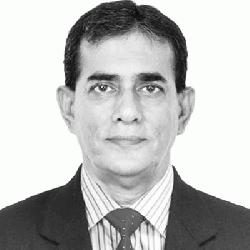
Mizanur Rahman Shelley


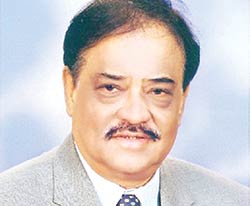
Mizanur Rahman Shelley
In 1961 even before the election results were out, we knew that Chhatra Shakti and EPSU did not stand a chance against the massive NSF-Chhatra League coalition. Confused by this strange alliance of opposing forces, I asked the noted student leader of the Chhatra League Sheikh Fazlul Hoque Moni, who was our senior and personally affectionate to me, as to why the League had coalesced with the NSF against us, who were their traditional allies. Moni bhai replied, 'The NSF's rise to power with our help will further expose its reactionary and high-handed conduct. It will fast lose its appeal and support. Your organisation having the Students' Union would also suffer as a result of electoral defeat. This will lead the field in our control.'
The memorable students' movement of 1961 and 1962 against the regime of military dictator Ayub Khan centred round the Dhaka University. As mentioned, the role played by Chhatra Shakti (Students' Force) in leading the coalition of Students' League and Students' Union sent the pro-government National Students' Federation on the back foot. Nevertheless, by 1962 on account of irresistible stream of historic forces Bengali autonomist Students' League and leftist Students' Union gathered greater strength. The unexpected marriage of convenience between the pro-government NSF and the anti-government Students' League in the SM Hall elections of 1962 led to the victory of this coalition. Chhatra Shakti and the Chhatra Union who fought separately were both defeated.
The NSF victory eventually proved to be a last flicker before the organisation's final blowout by the end of the 1960s. It appears that the Chhatra League led by its prominent leader Sheikh Fazlul Haque Moni masterminded the move to use the NSF's still considerable might to corner other progressive forces such as the Chhatra Shakti and Chhatra Union (EPSU).
During the 1962 elections campaign in the SM Hall, the Chhatra Union (EPSU) circulated the photocopy of a bill of Kamran Hotel in Rawalpindi in the name of NSF leaders including Abul Hasnat. Principal EPSU leaders such as Kazi Zafar Ahmed and Zia Uddin Mahmud took the steps to show that NSF leaders had gone to Pindi to mobilise patronage and the support from the Ayub government. It was designed as a master stroke but it backfired with miserable results for the EPSU and Chhatra Sakhti.
Both lost the election as the NSF frightened into massive action to counter the EPSU move. The NSF mobilised all their supporters and organised several marches in the SM Hall to show their strength. Its coalition partner Chhatra League marshalled support for it. Thus, by a strange twist of events, the anti-regime Chhatra League provided decisive support at the critical moment for the pro-government NSF. The anti-government students' movements of the early 1960s were not without comic relief.
Once during the movement of 1961, I found agitated clusters of students gathered around the proctor, famous playwright and teacher of law Mr Nurul Momen. Prominent student leader, one year our junior, Rashed Khan Menon was desperately pleading with him. Mr Nurul Momen wanted to discourage the students from going out of the old arts faculty building and clashing with the police ready outside the gate. During that time, the convention that the police would not enter educational institutions without permission of the authorities was always obeyed.
The police, however, went into action if the demonstrating students broke out of the campus. Evidently, it was for their safety and welfare that the affectionate proctor was trying to dissuade the students from venturing out. His warnings were, therefore, stern. Menon assisted by another Students' Union leader, Haider Akbar Khan Rono, strongly pleaded with professor Nurul Momen. Repeatedly saying, 'No Sir, please do not do it. We will do whatever you want us to do'. I thought that the proctor had threatened them with dire consequences.
I asked Momen, 'What has happened? What is Sir going to do with you?' Momen replied with a naughty smile. 'You see, Sir threatens that he will write a drama with us as the villain if we do not stop going out to confront the policemen. Don't you think it is better to call a halt to today's action rather than be enduring troublesome characters in Sir's play?' We burst into laughter as Professor Nurul Momen smiled in evident relief. Thanks to his unconventional intervention a violent student-police clash was avoided that day.
Another incident to remember happened also during mid-1961. In course of the ongoing movement, several of the prominent student leaders such as Kazi Zafar, Sheikh Moni, Zia Uddin Mahmud and ATM Wali Ashraf and others were imprisoned under the Preventive Detention Ordinance without any trial. This naturally caused the students' movement to grow stronger. The government was concerned. It made a conciliatory move. Accordingly, it approached the then vice-chancellor Professor Mahmud Hussain. He was a reputed professor of history with a pleasing and dignified personality.
We learnt that he belonged to a very prominent family of Uttar Pradesh in India. On partition, part of his family opted to stay on in India and his brother Dr Zakir Hussain became the vice-president of Indian Union, later who became the third president of India. On the request of the provincial government, vice-chancellor Mahmud Hussain called a few student leaders not yet in prison. Nuruzzaman and I represented Chhatra Shakti while Abul Hasnat and another leader represented the NSF. The Chhatra League and EPSU were represented by second ranking leaders.
The vice-chancellor drove us in his car to the East Pakistan secretariat. There we were led to a meeting with the chief secretary Kazi Anwarul Haque, an officer of the police service of Pakistan. With him on the government side were the home secretary, the inspector general of police and deputy inspector general of the Special Branch and Criminal Investigation Department. We were a bit moved at the sight of assembled authority. Nevertheless, as representative of agitating students, we had our credentials of confident courage. 'Why the students are restless? What can we do to make matters peaceful?' asked the chief secretary.
We replied, 'The students have their grievances both as citizens and students and they are peacefully protesting to press their demands. Many of their leaders have been arrested without trial. There cannot be any reconciliation without their unconditional release.'
The chief secretary said, 'Many legal and administrative steps are needed for their release. It takes time.' We were firm and said that peace in Dhaka University would not return until the detained student leaders were freed. That signalled the end of the seemingly inconclusive meeting. The government officers gloomily shook hands with us. A shaken vice-chancellor came out from the secretariat with us in his car. We reached the university in inconclusive silence. As we, the crestfallen students, entered Madhu's Canteen to have much needed cups of tea, we found that the canteen was agog with cheer and joy. To our pleasant surprise, we found that the imprisoned leaders had been released even as we were locked in negotiation with the authorities. This was our first but not the last experience of government moving fast when it is deemed necessary in the interest of powers that be.
Dr Mizanur Rahman Shelley, founder Chairman of Centre for Development Research (CDRB), and former technocrat Cabinet Minister of Bangladesh, died on August 12 last. He contributed his writeups to the Daily Observer which are being published regularly as "The Symphony of Our Times".
Loading...
Loading...
Also read


Editor : Iqbal Sobhan Chowdhury
Published by the Editor on behalf of the Observer Ltd. from Globe Printers, 24/A, New Eskaton Road, Ramna, Dhaka.
Editorial, News and Commercial Offices : Aziz Bhaban (2nd floor), 93, Motijheel C/A, Dhaka-1000.
Phone: PABX- 41053001-06; Advertisement: 41053012; 01793317829, 01550707291, E-mail: [email protected], [email protected] Online: email: [email protected] 41053014; 01550707297 Advertisement: 01550707296
Published by the Editor on behalf of the Observer Ltd. from Globe Printers, 24/A, New Eskaton Road, Ramna, Dhaka.
Editorial, News and Commercial Offices : Aziz Bhaban (2nd floor), 93, Motijheel C/A, Dhaka-1000.
Phone: PABX- 41053001-06; Advertisement: 41053012; 01793317829, 01550707291, E-mail: [email protected], [email protected] Online: email: [email protected] 41053014; 01550707297 Advertisement: 01550707296


