



| HEADLINE |

|
The Kaaba & the Masjid al Haram through the ages
(Concluding part)
Published : Thursday, 17 October, 2019 at 12:00 AM
Nizam Ahmed


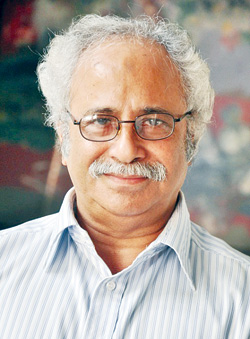
Nizam Ahmed
By the end of the 8th century, the mosque's old wooden columns had been replaced with marble columns and the wings of the prayer hall had been extended on both sides along with the addition of a minaret on the orders of Al-Walid ibn Abd al-Malik ibn Marwan, commonly known as al-Walid I, was the sixth Umayyad caliph, ruling from October 705 until his death. Al-Walid was the eldest son of his predecessor Caliph Abd al-Malik.
The spread of Islam in the Middle East and the influx of pilgrims required an almost complete rebuilding of the site which included adding more marble and three more minarets.
In 1570, Sultan Selim II commissioned the chief architect Mimar Sinan to renovate the mosque. This renovation resulted in the replacement of the flat roof with domes decorated with calligraphy internally, and the placement of new support columns which are acknowledged as the earliest architectural features of the present mosque. These features are the oldest surviving parts of the building. Selim II, also known as Sar? Selim, was the Sultan of the Ottoman Empire from 1566 until his death in 1574. He was a son of Suleiman the Magnificent and his wife H�rrem.
During heavy rains and flash floods in 1621 and 1629, the walls of the Kaaba and the mosque suffered extensive damage. In 1629, during the reign of Sultan Murad IV, the mosque was renovated.
Murad IV was the Sultan of the Ottoman Empire from 1623 to 1640. He was born in Constantinople and was the son of Sultan Ahmed I and K�sem Sultan. In this renovation of the mosque, a new stone arcade was added, three more minarets (bringing the total to seven) were built, and the marble flooring was retiled. This was the unaltered state of the mosque for nearly three centuries. Construction of one of the entrances of the Grand Mosque, King Abdul Aziz Gate completed and made functional in February this year under the current second expansion of Masjidul Haram undertaken by incumbent royal administration.
The first major renovation under the Saudi kings was done between 1955 and 1973. In this renovation, four more minarets were added, the ceiling was refurnished, and the floor was replaced with artificial stone and marble. The spot for performing Saiwas annexed with Masjid al Haram through roofing and enclosures. During this renovation many of the historical features built by the Ottomans, particularly the support columns, were demolished.
On 20 November 1979, the great mosque was seized by extremist insurgents who called for the overthrow of the Saudi dynasty. They took hostages and in the ensuing siege hundreds were killed. These events came as a shock to the Islamic world, as violence is strictly forbidden within the mosque.
The second Saudi renovations under King Fahd, added a new wing and an outdoor prayer area to the mosque. The new wing, which is also for prayers, is reached through the King Fahd Gate. This extension was performed between 1982 and 1988. The mosque complex added more minarets between 1988 to 2005, a King's residence overlooking the mosque and more prayer area in and around the mosque were built.
These developments took place simultaneously at Arafat, Mina, Muzdalifa and Zamara - the pertinent spots for performing the annual hajj. The extension also added 18 more gates, three domes corresponding in position to each gate and the installation of nearly 500 marble columns at Masjid al Haram. Other modern developments added heated floors, air conditioning, escalators and a drainage system at the grandosque including Mataf and the Masa (canopied storeyed lanes for Sai)
In 2008, the Saudi government under King Abdullah Ibn Abdulaziz announced the third expansion of the mosque, involving the expropriation of land to the north and northwest of the mosque covering 300,000 square metres (3,200,000 sq ft)
The present Saudi administration of King Salman has extended the ongoing projects under the third phase expansion which will cover an area of 400,000 square metres or 4,300,000 sq ft and accommodate 1.2 million worshippers, including a multi-level extension on the north side of the complex, new stairways and tunnels, a gate named after King Abdullah, and two minarets, bringing the total number of minarets to eleven.
Under the Mataf space around the Kaaba were further expanded and all the closed spaces got air conditioning. King Salman launched five megaprojects as part of the overall King Abdullah Expansion Project in July 2015, covering an area of 456,000 square metres (4,910,000 sq ft). The project was carried out by the Saudi Binladin Group.
On 11 September 2015, at least 111 people died and 394 were injured when a crane collapsed onto the mosque. Construction work was suspended after the incident, and remained on hold due to financial issues during the 2010s oil glut. Development was eventually restarted two years later in September 2017.
In 2015 during the annual hajj isome 1000 people were killed and many maimed in a tragic stampede at the Zamara complex. In 2016, it was estimated that the expansion of the Great Mosque had cost 100 billion dollars.
However, there has been some controversy that the expansion projects of the mosque and Mecca itself are causing harm to early Islamic heritage. Many ancient buildings, some more than a thousand years old, have been demolished to make room for the expansion.
Some examples are: Bayt Al-Mawl?d, the house where Prophet Muhammad was born, was demolished and rebuilt as a library.
D?r Al-Arqam, the Islamic school where Prophet Muhammad first taught, was flattened to lay marble tiles.
The house of Abu Jahal has been demolished and replaced by public washrooms. A dome that served as a canopy over the Well of Zamzam was demolished. Some Ottoman porticos at the Mosque were demolished, and those remaining are under threat.
The author is Business Editor,
The Daily Observer
The house of Abu Jahal has been demolished and replaced by public washrooms. A dome that served as a canopy over the Well of Zamzam was demolished. Some Ottoman porticos at the Mosque were demolished, and those remaining are under threat.
The author is Business Editor,
The Daily Observer
Loading...
Loading...
Also read




Editor : Iqbal Sobhan Chowdhury
Published by the Editor on behalf of the Observer Ltd. from Globe Printers, 24/A, New Eskaton Road, Ramna, Dhaka.
Editorial, News and Commercial Offices : Aziz Bhaban (2nd floor), 93, Motijheel C/A, Dhaka-1000.
Phone: PABX- 41053001-06; Advertisement: 41053012; 01793317829, 01550707291, E-mail: [email protected], [email protected] Online: email: [email protected] 41053014; 01550707297 Advertisement: 01550707296
Published by the Editor on behalf of the Observer Ltd. from Globe Printers, 24/A, New Eskaton Road, Ramna, Dhaka.
Editorial, News and Commercial Offices : Aziz Bhaban (2nd floor), 93, Motijheel C/A, Dhaka-1000.
Phone: PABX- 41053001-06; Advertisement: 41053012; 01793317829, 01550707291, E-mail: [email protected], [email protected] Online: email: [email protected] 41053014; 01550707297 Advertisement: 01550707296


