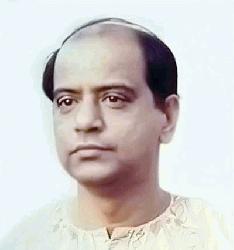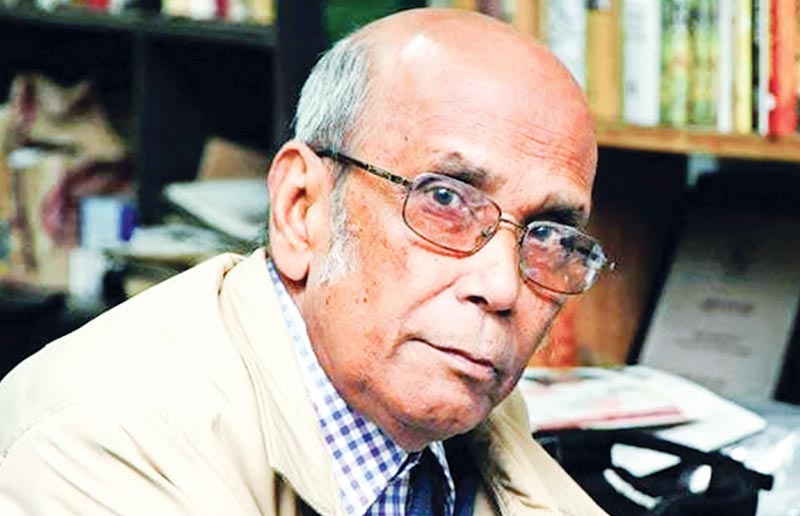
Syed Shamsul Haque was a poet, lyricist and writer. The maestro's work has been lauded since his first publication. He was a journalist, a lover of words and sentences, and an overall elegant human being. There isn't a soul he hasn't touched on his own land, including many abroad. He was awarded Bangla Academy Award in 1966, Ekushey Padak in 1984 and Independence Day Award in 2000 by the Government of Bangladesh.
Haque was born in Kurigram on December 27 in 1935. His father, Syed Siddique Husain, was a homeopathic physician. His mother was Halima Khatun. His father came to Kurigram to pursue the practice of medicine.
Haque wrote poetry, fiction, plays, music lyrics and essays. His literary works were included in the curriculum of school level, secondary, higher secondary and graduation level Bengali literature in Bangladesh. Though he wrote amazing songs and scripts, Haque was mostly a man of literature. His best works lied in his novels and poetry. Aspiring a whole generation, he wrote the epic Boishakhi Pankhtimala. With a pen name, Haque wrote Poraner Gohin Bhitor using local dialect. The poetry which was an experiment from Haque's part was well received by the readers. In his book Rajpothe Cholechi, Haque described a critical time period of Dhaka which, while reading can give one a shiver down the spine.
Another one of his unparalleled talents was in translating plays of Shakespeare. Keeping the original text and the poetic value almost undamaged; Haque even made harmony of phonetically sound English language with Bangla. To this day, Haque's translation of Macbeth is praised by audiences all around. It's quite rare to find a writer who can translate Shakespeare like Shamsul Haque.
Syed Samsul Haque created Joleswari, the locality he created in his poems. The place was inspired by Kurigram, his hometown. Haque's Rangpur and Kurigram influence can be seen in many of his works. The most remarkable one is in Nuruldiner Sarajibon where he wrote the famous dialogue "Jaago Bahe Konthe Shobai". One of his first novels Rokto Golap which was based on a magic reality story also took place in Kurigram.
Through his life, Syed Samsul Haque has written 39 novels, 7 books of poetry, 5 stories, 12 plays and 4 translations. He has also written a lot of songs for cinemas such as Achen Amar Moktar, Hayre Manush Rongin Fanush, etc. It is safe to say that he was born with a golden pen. His equal grab on poetry, novel and essays earned him the title of Sabhyasachi- a writer who is incomparable in this day and age. His five verse plays such as 'Nuruldiner Sarajiban,' 'Ekhane Ekhon', 'Gana Nayak' and 'Eersha'; will forever be timeless. Following the great playwrights of Greek Golden Age, William Shakespeare and Rabindranath Tagore, Haque was unblemished in writing verse plays for which they were equally pleasurable for both reading and staging. To this day his remarkable use of metaphors, allegories, similes and symbolism are unmatched by any other writer.
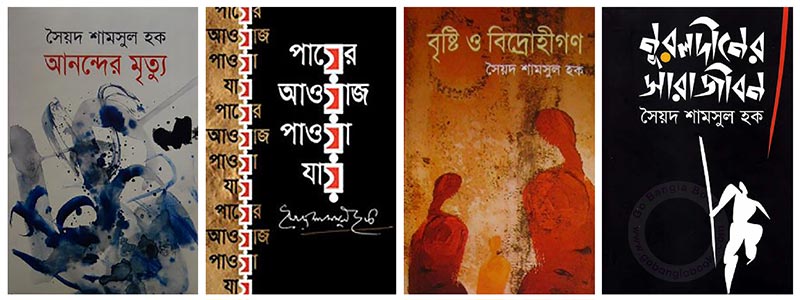
Some of his poetry books Ekoda Ek Rajje, Boishekhe Rochito Ponktimala, Birotihin Utsob, Protidhonigon, Opor Purush, Kobita Samagra, Ek Ascharja Sangamer Smriti and others.
Some of his famous novels Ek Mahilar Chhobi, Anupam Din, Simana Chhariye, Neel Dangshon, Smritimedh, Mrigayay Kalakshep, Stabdhatar Anubad, Ek Juboker Chhayapath, Swapna Sankranta, Brishti O Bidrohigon, Baro Diner Shishu, Banabala Kichu Taka Dhar Niyechhilo, Trahi ,Tumi Sei Tarbari, Kayekti Manusher Sonali Jouban, Shreshtho Uponyas, Nishiddha Loban, Khelaram Khele Ja, Megh O Machine, Iha Manush, Mahashunye Poran Master, Dwitiya Diner Kahini, Balikar Candrojan, Ayna Bibir Pala, Kaldharma, Duratwa, Na Jeyo Na, Onya Ek Alingan, Ek Mutho Janmabhumi, Bukjhim Bhalobasa, Alor Jonyo, Rajar Sundari, Gupta Jibon Prakashya Mritu, Chokebazi, Duder Galase Nil Machi, Jesmin Road and others.
Haque received many prestigious awards including Bangla Academy Award (1966), Adamjee Literary Award (1969), Alakta Gold Medal (1982), Alaol Literary Award (1983), Kabitalap Award (1983), Literary Award of the Association of Women Writers, Ekushey Padak (1984), TENAS Medal (1990), Jebunnessa-Mahbubullah Gold Medal (1985), Padabali Kabita Award (1987), Nasiruddin Gold Medal (1990), National Poetry Award (1997), Independence Day Award (2000), National Poetry Honour (2001).
On September 27 in 2016, he died of lung cancer at the age of 81.
The writer is a freelance contributor.