



| HEADLINE |

|
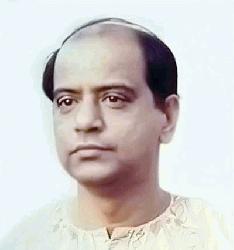
Ahmed Faraz, the poet of poets
Published : Sunday, 21 July, 2019 at 12:00 AM
Iftakhair Hossen


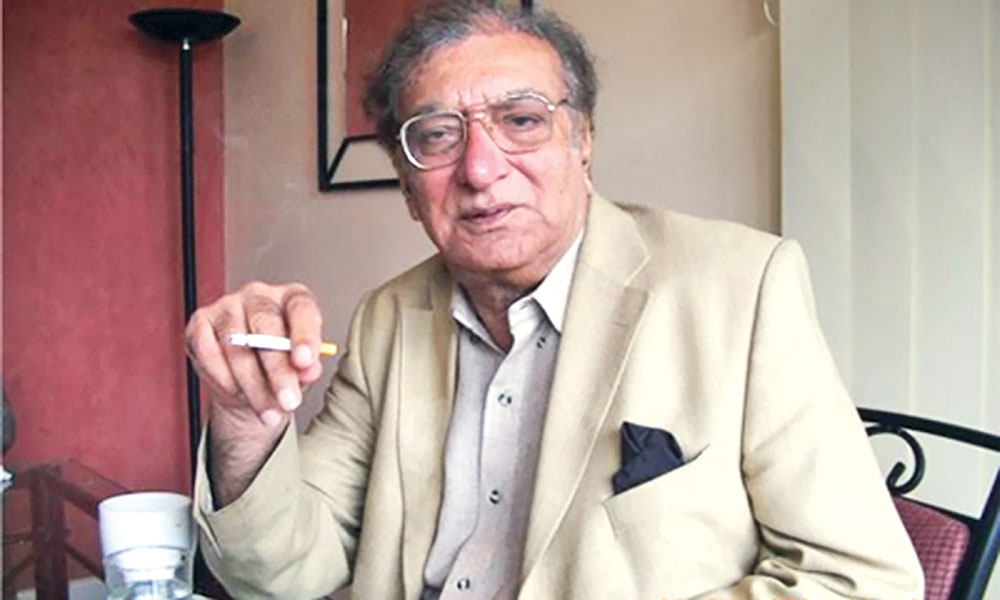 Popular among both the cognoscenti and the general public, Ahmed Faraz was one of the few poets from the subcontinent whose verses were read as well as sung. Often compared to legends of the past like Mohammad Iqbal and Faiz Ahmed Faiz, Ahmed Faraz was as popular in India as he was in his own country-Pakistan.
Faraz was born in Kohat, Pakistan to Syed Muhammad Shah Barq. His brother is Syed Masood Kausar. In an interview with BBC he recalls how his father, once bought clothes for him on Eid. He didn't like the clothes meant for him, but preferred the ones meant for his elder brother. This lead him to write....
He was from a respectable family of Syed, descendents of '"Haji Bahadar" a famous saint of Kohat, he moved to Peshawar with entire family. Studied in famous Edwards College, Peshawar and then did his Masters in Urdu and Persian from Peshawar University. During his time in college, Faiz Ahmad Faiz and Ali Sardar Jafri were the best progressive poets, who impressed him and became his role models.
A passionate voice for change and progress, Faraz was usually at his best when writing the poetry of love and protest. His romantic poetry made him particularly beloved by the young; the establishment was not so fond of his verses mocking and at times exposing the authorities.
It has been mentioned that Faraz became the voice of those across the Urdu-speaking world living under military rule or dictators, or in poverty. He was arrested for criticising General Ziaul Haq's government and went into self-imposed exile in the 1980s. Other than his works that make a social commentary on the status quo, his romantic poems gained immense recognition. His works including Ab Ke Tajdeed-e-Wafa Ka Nahin Imkaan Jana and Ranjish Hee Sahi have been sung by music virtuosos across the globe.
Faraz enjoyed a near cult status in the pantheon of revolutionary poets. In India and other countries outside Pakistan, he was best known for his ghazals - poems expressing the writer's feelings, especially about love - which were popularised by leading singers like Ghulam Ali, Mehdi Hasan, Runa Laila and Jagjit Singh.
An advocate for the poor and downtrodden, Ahmed Faraz raised his voice against capitalists, usurpers and dictators. In the 1980s he went into a six-year self-imposed exile in Canada and Europe during the era of Gen. Mohammad Zia ul-Haq. Ahmed Faraz once said of the general's rule, "That was the worst phase for our country's writers." Once he said, "Yet it also provided ample food for thought for the poet and made protest poetry so popular in Pakistan."
Faraz, who was also closely associated with Zulfikar Ali Bhutto and his Pakistan People's Party, wrote some of his best poetry in exile, including "Dekhtay Hain" ("Let Us Gaze") and "Mohasara" ("The Siege"). In all, he had written 13 volumes of Urdu poetry.
Faraz's first volume of poetry, "Tanha Tanha," was published in the late 1950s, when he was an undergraduate student, and became a huge, instant hit. He had a tendency to create controversies about himself or about various issues. In 1976 Mr. Faraz became the founding director general of the Pakistan Academy of Letters. He was its chairman in 1989 and 1990. His last official job was as the chairman of National Book Foundation based in Islamabad. Despite his deteriorating health, Faraz was quite active in the Judicial Crisis, in 2007. He joined personally the lawyers to protest against the government, and also encouraged his colleagues to do the same.
Faraz has been awarded with numerous national and international awards. Awarded one of Pakistan's greatest civilian honours, the Hilal-e-Imtiaz, in 2004 for his literary achievements, he returned it in 2006 after becoming disillusioned with President Pervez Musharraf's government.
"My conscience will not forgive me if I remained a silent spectator of the sad happenings around us," he said at the time. "The least I can do is to let the dictatorship know where it stands in the eyes of the concerned citizens, whose fundamental rights have been usurped," reported the New York Times.
-The writer is a freelance contributor.
Loading...
Loading...
Also read





Editor : Iqbal Sobhan Chowdhury
Published by the Editor on behalf of the Observer Ltd. from Globe Printers, 24/A, New Eskaton Road, Ramna, Dhaka.
Editorial, News and Commercial Offices : Aziz Bhaban (2nd floor), 93, Motijheel C/A, Dhaka-1000.
Phone: PABX- 41053001-06; Advertisement: 41053012; 01793317829, 01550707291, E-mail: [email protected], [email protected] Online: email: [email protected] 41053014; 01550707297 Advertisement: 01550707296
Published by the Editor on behalf of the Observer Ltd. from Globe Printers, 24/A, New Eskaton Road, Ramna, Dhaka.
Editorial, News and Commercial Offices : Aziz Bhaban (2nd floor), 93, Motijheel C/A, Dhaka-1000.
Phone: PABX- 41053001-06; Advertisement: 41053012; 01793317829, 01550707291, E-mail: [email protected], [email protected] Online: email: [email protected] 41053014; 01550707297 Advertisement: 01550707296


