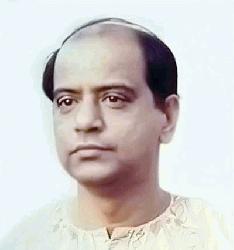
Humayun
Ahmed is the most distinguished writer of contemporary time and one of
the best story tellers in the history of our literature. Sunil
Gangopadhyay described him as the most popular writer in the Bengali
language for a century and according to him, Ahmed was even more popular
than Sarat Chandra Chattopadhyay. His writings have an enchanting charm
over Bangalees, especially the youths. His works have been drawing
readers for more than two decades. Fiction or non-fiction, he always had
a story to tell. With exceptional beginnings, endings and
characterisations, his works have an unusual spell like quality.
Yesterday marked the seventh death anniversary of this creative genius.
His
works include Bristi Bilash, Brihonolla, Bipod, Ayna Ghor, Ayomoy,
Badol Diner Prothom Kodom Phul, Ochinpur, Daruchini Dwip, Debi, Jochhna O
Jononyr Golpo and more. Nondito Noroke, Ei Sob Dinratri, Moyurakkhi,
Misir Alir Omimangshito Rohosyo, Amar Ache Jol, Dui Duari, Durotto,
Nirontor, Noy Number Bipod Sanket, Saajghor, Shonkhonil Karagar are some
of the personal favourites written by Humayun Ahmed. He created
characters like Himu and Misir Ali, illustrated by eccentric, comic and
compassionate features, who achieved unparalleled fame, especially among
the youths.
Humayun directed films based on his own stories.
His first film, "Aguner Poroshmoni", based on the Liberation War, won
the National Film Award in total eight categories, including Best
Picture and Best Director. The theme of the Liberation War often came
across in his stories, often drawing upon Ahmed's memories of that war
and his father's execution during the war. Humayun's film "Shyamal
Chhaya" was based on the liberation war of 1971.
Humayun Ahmed
presented each of the characters of his novels, stories, even
non-fictions and films in such ways that not only the lead characters
but also the second and third leads, and even the ones with tiniest bit
of role in the creation will tell you a different story.
Humayun
often portrayed magical or unreal elements as a natural part in an
otherwise realistic or mundane environment .Things often work out
magically in his works. Even Misir Ali fails to explain certain things.
At first this seems unrealistic .But if you give this a second thought
you will understand what Ahmed actually wants to tell us. How often does
it happen that we don't find concrete explanations for something in
life? The answer is every day! Just because something's been happening
since the beginning of life doesn't mean something is ordinary and can
be explained logically. We get used to most of these things, that's why
they don't bother us. Humayun points toward these magical elements of
life.
This Bangladeshi author, dramatist, screenwriter and film
director reached the peak of his fame with the publication of his novel
Nondito Noroke in 1972, which remains one of his most famous works. He
wrote over 200 fiction and non-fiction books, all of which were
bestsellers in Bangladesh.
Humayun Ahmed left us on July 19 in
2012 to enter the afterlife. Uncountable tears were shed that day. Six
years since then, we still have not grown accustomed to not to wait for
the publication of his new books in Ekushey Boimela. His 2012 film
"Ghetuputra Kamola" was selected as the Bangladeshi entry for the Best
Foreign Language Film at the 85th Academy Awards. He won several
prestigious awards for his contribution in Bangla literature in his life
time. Among them Lekhak Shibir Prize (1973), Jainul Abedin Gold Medal,
Bangla Academy Award (1981), Michael Madhusudan Medal (1987), Ekushey
Padak (1994), Sheltech Award (2007) are most important. He also won
National Film Awards (Bangladesh) in different categories over the years
of 1993, 1994 and 2012.
The writer is a freelance contributor.