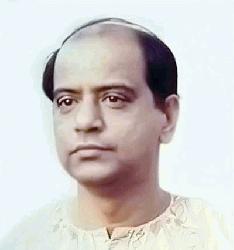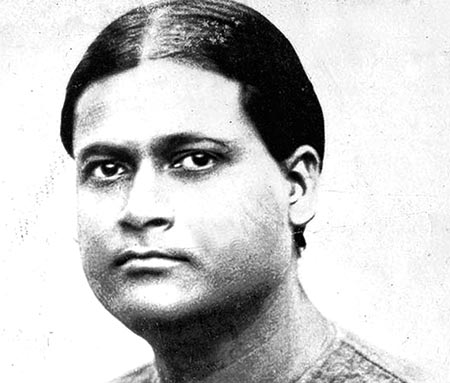
Kazi Abdul Wadud was an educationist, litterateur and thinker. His prose is based mainly on logic, moderation and self-confidence. The history of Bangla prose does not show many examples of writing with all three values. From this point of view he can be regarded as a distinctive prose writer in Bangla literature.
Wadud found a unique combination of patriotism and internationalism in the life of Rabindranath Tagore. He was a keen reader and reviewer of Tagore's writings and activities. His Kaviguru Rabindranath is a book that indicates his deep understanding of literature and wider horizon of intellectualism. Hazrat Muhammad O Islam is a work of his mature age where he has portrayed Muhammad as a human being and a great man needed at a critical juncture of history.
Wadud is primarily known as an intellectual writer and for the contemporary Muslim literary society he was a trend setter. He began his literary career through fiction writing. His contribution to the concept of free thinking and non-communalism deserves to be particularly remembered.
While still a college student, Kazi Abdul Wadud engaged himself in literary work and published two books - Meer Paribar, a collection of short stories, and novel Nadibokse. After doing his MA, he stayed for some time in the residential building of the Bangiya Musalman Sahitya Samiti on the College Street in Calcutta. Here he came in contact with Kazi Nazrul Islam. A group of litterateurs used to regularly assemble in the office of the Samiti. The presence of war-veteran Nazrul used to enliven their gossips. It was in the association of these poets and litterateurs that the foundation of Kazi Abdul Wadud's literary career was built. But his thought process gained maturity through his association with the Muslim Sahitya-Samaj of Dhaka. He actively joined hands with Abul Husain in producing every issue of the Samaj's mouthpiece Shikha.
Wadud edited two periodicals 'Sankalpa and Tarunpatra published from Calcutta. He was the editor of the first journal and chairman of the board of editors of the second one. His first book Meer Paribar is a collection of five short stories. Later, he wrote three more short stories. These were subsequently included in his book Tarun. His two novels are Nadibokse and Azad. He also wrote two plays 'Path O Bipath' and 'Manab-Bandhu'. Manab-Bandhu was later included in Tarun.
Wadul was one of the leading literary figures, who, under the banner of the Muslim Sahitya-Samaj in Dhaka, pioneered in the second decade of the twentieth century the movement for freedom of thought. Shashwata Babga is a precious document of the efforts made by Kazi Abdul Wadud in making intellectual exercise without resorting to traditional prejudices and superstition. This book also reveals his own liberal thought and his concern for his community's social and intellectual stagnation. He deeply loved freedom of thought and this love formed a focal point in the expressions of his writings. His Shashwata Banga decries the false sense of history, particularly about the Muslim notion of their so-called golden past.
Abdul Wadud thought that the 19th century had brought about a renaissance in Bengal with a major message that there was nothing wrong with patriotism if it did not obstruct one's world outlook. This perception greatly inspired him to talk about his Bengal's uplift and write his book Banglar Jagoran. In his view, the efforts for intellectual freedom from Rammohan to the Muslim Sahitya-Samaj in Dhaka were the product of this inspiration. The same inspiration also runs through his book on Goethe. He thought the transparency and boldness of Goethe's freedom of thinking would help the people of this country attain a greater sense of responsibility for life, higher merit, a more transparent perception about religion, patriotism and about the past, present and future as well as a wider field of communication. He was inspired by Goethe's perception of life based on truth and his message and example of world outlook.
Kazi Abdul Wadud's Baboharik Shabdokos was published in 1953. In this work of a popular Bengali dictionary, he made himself known as a person with deep interest in linguistic modernism. A distinctive feature of the dictionary was his attempt to introduce popular Arabic, Persian and Turkish words in a scientific way and words commonly used in the Bengali Muslim society.
Kazi Abdul Wadud'd other works included: Essays and Literary Reviews Naboparjay, Samaj O Sahitya, Hindu-Musalmaner Birodh, Fundamentals of Islam, State and Literature, Tagore's Role in the Reconstruction of Indian Thought, Ajkar Katha, Swadhinata Diner Upahar, Rabindrakabya Pathh, Nazrul Pratibha, and Sharatchandra O Tarpar; translation Creative Bengal, Pabitra Quran. Kazi Abdul Wadud Rachanabali was published in six volumes and Kazi Abdul Waduder Patrabali.
The writer is a freelance contributor