A Bangladeshi journalist's maiden visit to kolkata's iconic landmark Netaji Bhawan leaves him speechless…awestruck and a proud Bengali ...
Kolkata is a place that I love to visit more than any other cities in the world. Many people from Bangladesh pay visit to this one of the oldest cities for shopping. I neither love Kolkata for any pomp and grandeur nor for shopping. I love the city's old smell. One can easily notice the juxtaposition of its antiquity and modernity. Again we share the same political background. The city was the flashpoint of many political upheavals during the British rule. May be this is the main reason as to why the city fascinates me the most.
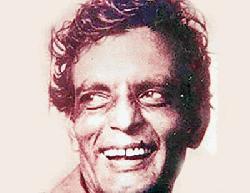
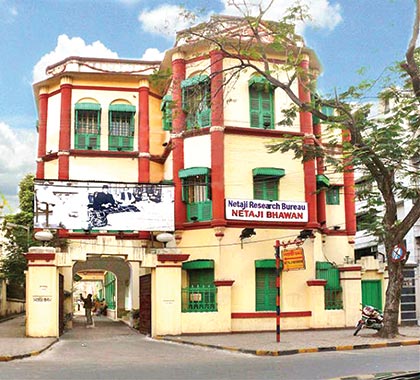
A recent trip to Kolkata got me walk down my memory lane as I went to visit Netaji Bhaban - the house of the great nationalist leader Netaji Subhas Chandra Bose. The very word 'Netaji' always obsesses me. When I was a college student I came to know about his life and political role against the imperialist British rule after I read Shailesh Dey's book 'Ami Subhas Balchhi' (I am Subhas Speaking). This book was my source of inspiration as I was gradually being thrown into the then political whirlwind of the country. This name got embedded into my memory for ever. After that whatever books on Subhas Bose I came across with I grabbed them and got through them with undivided attention. During my six-day trip on February 13 as I got off my taxi on the Elgin Road just a few yards away from Netaji's house I could hear his clarion call 'give me blood I will give you freedom'. It is a three-storey building with its original architectural design built by Netaji's father Janakinath Bose in 1909. The house is now known as Netaji Research Bureau with a museum, archives and a library. One can easily distinguish his house from that of others because of its antique architectural design. Before entry to the building one can see a bust of Subhas standing on the right-side outer wall adjacent to the main gate. That fearless and defiant posture of Netaji Subhas Bose welcomes visitors. As I stepped in the portico I found a car inside a glass structure. It was the historic Wanderer Sedan car used by Netaji to make his great escape when he was 'home-interned'. On the wall close to the parked car murals of Sisir Kumar Bose, Subhas Chandra Bose and the car were displayed with a caption. It was Sisir Kumar Bose who drove Netaji out of the house to Gomoh of Jharkhand from where he made his great escape to Berlin to organize his Indian National Army to fight against the British ruler. He never returned.
The house is full of precious collections of things and items used by Netaji. His shoes, robes, coats and his iconic cap have all been preserved with utmost care. The cot he used has been kept as it was when he was alive. The most interesting thing is his living room from where he made his great escape. The footprints of Netaji show his escape route - how he went down the staircase to board his Sedan car. The reading room with books and a large table placed in the middle has been kept intact.
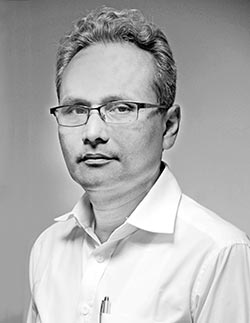
Maksud Ibna Rahaman
His photograph with all iconic political figures at home and abroad decorate the walls of the house. His photographs with his Austrian wife Emilie remind one instantly of his true love for the woman. But he never placed his love for Emilie above his love for his country. His love for Emilie mingled with the love for his country. We get a glimpse of his love for his country in Krishna Bose's, wife of Netaji's nephew Sisir, book 'A True Love Story' where Emilie quoted Netaji as saying: "My first love and only love is my country, so I have nothing left to give you." Among the photos displayed Netaji is seen with Jawaharlal Nehru - the two temperamentally different personalities. Hamletish and well-versed politician Nehru could never come out of the orbit of Gandhi's bourgeois compromising humanistic political trend while Subhas had a very straightforward view with a mission to overthrow the British colonial regime through an armed struggle. Despite all these difference in political views and lines they had a very close and intimate relation. When Kamal Nehru, wife of Jawaharlal Nehru, was in Europe for her tuberculosis treatment Nehru was in prison in India. It was Subhas who accompanied Kamala from Vienna to Prague during her ailment. It was a rare display of camaraderie between the two persons who were poles apart in their political views that is now almost impossible to find anywhere in the world.
As I was walking around scrutinizing everything with inquisitiveness a picture of Netaji with Ghandhi caught my eyes. It took me back to the time when Subhas Bose met Ghandhi after he was placed fourth in ICS examination. As Netaji already decided on his mission he wanted to meet none other than Ghandhi who had already established his singular dominance over the Indian politics. Ghandhi failed to give satisfactory answers to Netaji's questions about how he was going to establish his Swaraj (self-rule). Netaji then turned to Deshbandhu (Friend of the Nation) Chiittaranjan Das (CR Das) as his political mentor.
With his meeting CR Das a new uncompromising force developed in the fight against British colonial rule. Gandhi never could accept Netaji's line of struggle prompting Subhas to leave Congress. He was virtually thrown out of Congress. The death of CR Das when Subhas was in jail was a big blow for him as he lost his principal mentor. But he was not a man of conceding defeat. After his great escape in 1941 he organized Indian prisoners of wars outside of the country to march towards India to free his enslaved country. But his sudden death that is still shrouded in mystery halted the uncompromising political force in the Indian political landscape. If he had not died such an immature death the Indian history might have been written in different way.
The writer is a Senior Sub-Editor of the Daily Observer
Published by the Editor on behalf of the Observer Ltd. from Globe Printers, 24/A, New Eskaton Road, Ramna, Dhaka.
Editorial, News and Commercial Offices : Aziz Bhaban (2nd floor), 93, Motijheel C/A, Dhaka-1000. Phone: PABX- 41053001-06; Online: 41053014; Advertisement: 41053012.
E-mail: district@dailyobserverbd.com, news@dailyobserverbd.com, advertisement@dailyobserverbd.com, For Online Edition: mailobserverbd@gmail.com



 Kolkata is a place that I love to visit more than any other cities in the world. Many people from Bangladesh pay visit to this one of the oldest cities for shopping. I neither love Kolkata for any pomp and grandeur nor for shopping. I love the city's old smell. One can easily notice the juxtaposition of its antiquity and modernity. Again we share the same political background. The city was the flashpoint of many political upheavals during the British rule. May be this is the main reason as to why the city fascinates me the most.