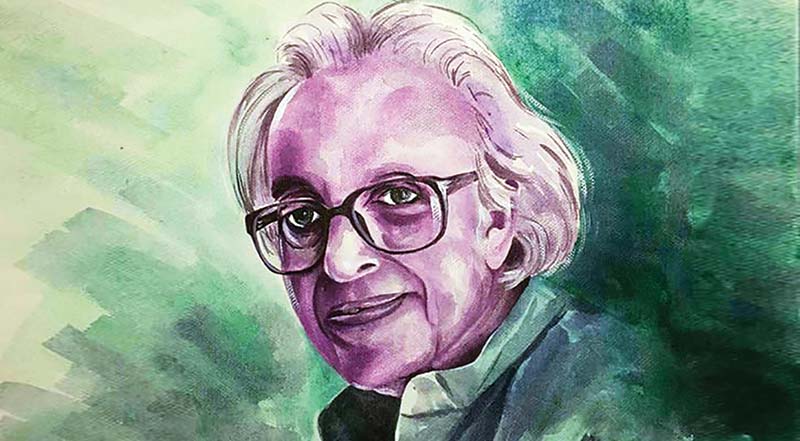
Undaunted awareness, love, and mercy were what poet Shamsur Rahman had in store for his people. After five well-known poets reigning the era of literature for decades in the nineteenth century, Shamsur was the first male poet to pen modern poetry.
He was born on October 23, 1929, in his grandfather's house Mahut-tuli, Dhaka. With his roots set back on the Meghna banks of Pahartali, Narshingdi, Shamsur was fourth among his thirteen siblings born to father Moklhlesur Rahman and mother Amena Begum.
Gradually he began schooling at the Pogos High School and completed his matriculation exam in 1945. Soon he completed his I A from Dhaka College and his grades secured him a seat at the University of Dhaka.
He studied his bachelors for three consecutive years there but did not sit for his final year exam. With leisure from studies, he spent the next three years away from books and this was the time while he penned down his thoughts in the form of poems.
Finally, in 1953, he passed his BA. Two years after that he managed to secure the second position in second class for his masters. He married Johra Begum in 1955 and three sons and two daughters completed their family after the marriage.
Shamsur Rahman was actually a journalist by profession. He started this career in 1957 with Dainik Morning News. After two years at this place, he took a break and elected his new workplace to be Radio Pakistan's office. However, again two years at the radio station, he felt that he wanted to come back to his old office as it was like home to him and continued to work there as an assistant editor for the next four years till 1965.
He started to pen for Dainik Bangla and soon became the editor for Weekly Bichitra. Soon he was forced to quit his position and he then started working as an editor to the monthly magazine Adhuna.
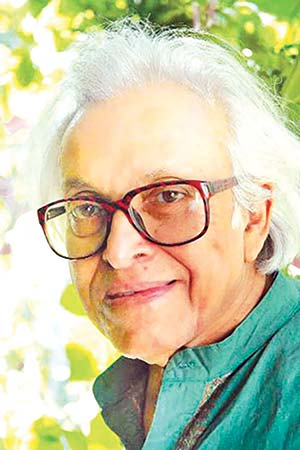
Rebelling against the tyranny of Ayub Khan, Shamsur wrote his first poem Hatir Shur in 1958 at the Shamakal. While the father of the nation was held captive in the rod cage of central jail, he wrote Telemachus.
When General Ayub Khan proposed Urdu to be the national language in 1968 forty-one poets, scholars, and aristocrats rebelled against his decision. One of these forty-one heads was Shamsur Rahman. His words, "Bornomala, Amar Dukhini Bornomala is a proof of his love for the language Bangla."
January 20, 1969, left a mark on Shamsur's mind while he saw a crowd revolting with Shaheed Asad's bloodstained shirt flushing in the wind as a flag. Thus, he wrote Asader Shirt.
With his pen revolting against tyrants and weeping the common people's tears, this unofficial laureate of Bengal left the earthly pleasures on August 17, 2006. He has seen the liberation, seen bloodshed and seen his owns on deathbed.
With his poems, Shamsur Rahman will always scream whenever a stick, gun or knife is pointed towards his people.
Notable works:
Poetry
Prothom Gan Ditio Mrittur Age (1960)
Roudro Korotite (1963)
Biddhosto Nilima (1967)
Niralokay Dibboroth (1968)
Neej Bashbhumay (1970)
Bondi Shibir Theke (1972)
Tableay Applegulo Heshe Othay (1986)
Obirol Jolahromi (1986)
Amra Kojon Shongi (1986)
Jhorna Amar Angulay (1987)
Shopnera Dukray Othay Barbar (1987)
Khub Beshi Valo Thakte Nei (1987)
Moncher Majhkhanay (1988)
Buk Tar Bangladesher Hridoy (1988)
Short stories
Shamsur Rahmaner Golpo
Novels
Octopas (1983)
Adbhut Adhar Ak (1985)
Niyoto Montaz (1985)
Elo Je Abelay (1994)
Children's literature
Alating Belating (1974)
Dhan Bhanle Kuro Debo (1977)
Golap Phote Khukir Hatay (1977)





