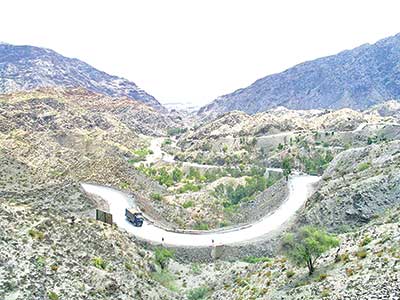
Sprightly times: In course of the tranquil year 1970, we engaged ourselves in visits to one another's place and in travel to various cities such as Lahore, Peshawar and Murree. One of our trips took us beyond the historic city of Peshawar to the fabled Khyber Pass linking Pakistan to its mountainous neighbour Afghanistan. The Khyber Pass and its noted bazaar in Landikotal, the border outpost, were full of foreign commodities ranging from tape-recorders to motorcycles and arms and ammunition. Since the pass and Landikotal was 'Tribal Areas', they were technically autonomous and outside the jurisdiction of the laws of Pakistan. The attractive goods that were available there were relatively inexpensive as there was no tax and tariff on them. One could buy as much and as many of the goods as one liked. The problem was bringing them out of the tribal area.
There was the inevitable check post run by the paramilitary frontier constabulary. If they caught you, they would impose heavy fines. Failure to pay the fines would mean seizure of your commodity that you so eagerly purchased! In our case, however, a friendly officer or two in charge of the border guards helped us to bring into Pakistan the goods purchased at Landikotal. I remember that this happened earlier also in 1967-68 as trainee civil service officers in the Lahore academy. We had an opportunity to go to Landikotal and buy attractive things including electronic goods with whatever financial resources we had. I recollect that batchmates Abdus Shakur and Kazi Rakibuddin Ahmed bought the latest model cassette tape-recorders. We were helped to cross the frontier between the tribal area and Pakistan by the officers-in-charge of the contingent of frontier constabulary Captain Fazal Ur Rahman, a friend of Rakib who became a Major General of the Ordnance Branch in the liberated Bangladesh in the 1980s.
In 1970 we also travelled to Lahore. There with my wife Sufia and our sons Nipu and Topu, we stayed in the residence of Rezaur Rahman Naku's father-in-law and mother-in-law. It was a nice place near the canal bank. Naku had married Panjabi girl Kokab. Her father was joint controller of export and import, West Pakistan, and posted to Lahore. Nipu and Topu befriended Naku's brothers-in-law of the same age and often went out to take a dip in the canal nearby.
Sufia was taken care of by Naku's affectionate mother-in-law. She often used to say with some measure of seriousness, 'I have heard that Mujib (Sheikh Mujibur Rahman) will make East Bengal independent. In that case, what will happen to my only daughter married as she is to a Bengali, Reza!' Now, in 2018 that she is no more. She possibly would be happy to see her daughter as a pampered daughter-in-law of Bangladesh.
While in Lahore, we visited the historic Shahi Mosque, the mausoleum of Mughal Emperor Jahangir and the beautiful Shalimar Garden of the Mughal times. I recollect with delight our visit one afternoon to the sub-division Shahdara, a sub-division of the outskirts of Lahore. AHM Mufazzal Karim of the 1966 batch of the CSP was the sub-divisional magistrate. He treated us to high tea. He was my immediate predecessor in the sub-division of Brahmanbaria in 1969. An efficient officer, he later became deputy commissioner of Grater Dhaka in the early 1980s. A noted Bengali poet, he also served as our high commissioner to the United Kingdom during early in the 21st century.
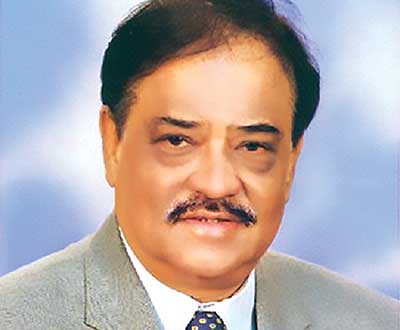
Visit to Murree: The sub-division of Murree was a picturesque place on mountains reaching some 7,000 feet. It was close to Pindi-Islamabad and one could reach it through by hilly roads within an hour or two. When we visited Murree the hill station in 1970, the sub-divisional magistrate was Bengali, Rafiul Karim Runu of the 1966 batch of the CSP. A delightfully energetic person, he was not only a good officer but an excellent rider. In the Civil Service Academy in Lahore he distinguished himself as a skilful horseman. In Murree, I was virtually saved by him. One evening, I ventured to ride a horse on the heights of Murree's Kashmir point. It had been three years that I last rode a horse in the Civil Service Academy, Lahore.
My lessons in riding had become somewhat faded and I found that my horse had become uncontrollable. It stood still right on the age of a precipice. However much, I persuaded him, he would not move. I was afraid that if I prodded him anymore, he would jump into the abyss with me. The frightening prospect almost froze me. Fortunately, Rafiul Karim who was on another house came to my rescue and gently urged my horse to turn around which the animal obediently did. Sufia, who was standing nearby nervous and in anxiety, heaved a sigh of relief,. She said to me, 'Don't you ever dare ride a horse in the hills. Thank Runu bhai that he saved your life.' Rafiul Karim Runu was more than a superb rider. He was a Bengali committed to the assertion of Bengali rights in Pakistan. In Murree as SDM, he had the street names written in Bangla along with English and Urdu. And the Bengalis in West Pakistan were pleased beyond measure by this symbolic action of according Bangla its place of honour. Rafiul Karim later became the commissioner of the Khulna division in early 1980s. He had a difference of opinion with the army exercising martial law authority on matters of protocol and resigned in protest. He later distinguished himself as a successful businessman and industrialist.
Irate wife and the Italian Job
One incident shines bright in memory. One day, friend and colleague AM Mofazzal offered me and my family a treat in Rawalpindi. He said that he would take us to watch a highly interesting film, The Italian Job, then being screened in a Pindi cinema. He also promised to treat us to dinner in a nice restaurant called the Silver Girl. He asked us to get ready to go to the matinee show. Since there was some time left, he went to see neighbouring colleague Rezaul Karim. My wife Sufia and our sons got ready in time. There was, however, no sign of Mofazzal even after the time for the show began. Hence, there was no question about getting to the hall in Pindi in time for the matinee show. When we gave up hope, an embarrassed Mofazzal returned. Meanwhile, Sufia had withdrawn upstairs and we heard disturbing sounds of glass bottles being shattered. Mofazzal said that he had fallen prey to the temptation of game of cards being played at Karim's place and was delayed.
He profusely apologised and told Sufia, 'We could still make it to the cinema in Pindi for the first show'. Sufia calmed down and we all got into my car. Needless to say, the film The Italian Job, a story about a sophisticated bank robbery in Rome, was full of suspense, thrill and fun. We all thoroughly enjoyed the movie as well as the delicious dinner that followed in the well-appointed restaurant Silver Grill. Both Mofazzal and I were relieved to learn from a smiling Sufia that glass bottles which she had broken in rage were old and empty ones. We all laughed heartily.
Friends visiting from sub-divisions: Early in 1970 when we were inhabitants of the government hostel in Islamabad, we had friends visiting us from outlying sub-divisions. They were brothers. The elder one M Akhter Ali was our senior in Dhaka University and belonged to the 1965 batch of the CSP. His younger brother AMM Shawkat Ali, academically a year junior to me, was a member of the 1966 batch of the CSP. During 1970, both of them were serving as sub-divisional magistrates in West Pakistan under what was called the inter-wing posting.
Akhter Bhai (elder brother Akhter) was posted to Mandi Bahauddin, a sub-division some 120 miles to the south-west of Rawalpindi. Shawkat Ali was the SDM of Pind Dadan Khan some 70 miles from Pindi. Both of them were full of youthful spirit and energy. Every weekend, that is Saturday, they used to drive down from their stations to Pindi-Islamabad to meet friends such as Rezaur Rahman Naku and me. In course of the roaring and delightful weekends, they used to tell us about life in rural West Pakistan's Punjab.
They told us that the texture of sub-divisional administration in West Pakistan differed from that of the East. Here in the West, the sub-divisional officer in the East, was called the sub-divisional magistrate, stressing his magisterial functions as the key to his position. Since Punjab was an unregulated province in British Colonial times, its police force ended to act with relatively greater autonomy.
One Saturday, the Ali brothers drove down to Islamabad to take me and Naku for an evening in Pindi. Once we were there, we met Md Shamim Arif, class friend of Akhter Bhai and also a member of the CSP. He was originally a Bihari domiciled in East Pakistan and became a CSP officer in the East Pakistani quota. He was a friendly fellow and glib talker. At that time he was additional deputy commissioner, Rawalpindi.
He said, 'I shall take you to meet a wonderful fellow, an army major.' He then took us to the Electrical Mechanical Engineers' Army Mess and introduced us with Major Tauhid Uddin Ahmed (Tauhid). We sat in his spacious room of the EME mess which was spick and span. The Mosaic floors were so clean and shiny that you could eat off these! We had a round of drinks and introductory conversations, all in English.
At one point, I asked our host looking very much like a Punjabi with a hooked nose of an Arab, whether he had ever been to East Bengal. In reply, he almost flew into a rage and said, 'What do you mean? I am from Barisal.' We all burst into hearty laughter and started speaking in Bangla with Major Tauhid. He took us to the Pindi Club dominated by members from the military. We had a very delightful dinner there. This was the beginning of many more and frequent visits to the club by us.
Our friendship with Major Tauhid led to befriending the highly regarded intelligent and learned Bengali major in the Engineers' Corps, Ziauddin. He resided in the Army Engineers' Mess not far from the EME mess of Major Tauhid. He also went to the Pindi Club with us from time to time. Major Tauhid later became a brigadier in the Bangladesh army and served it until taking early retirement in the 1980s. Ziauddin who was in the military secretariat at the army headquarters in Rawalpindi (1970-71) crossed the border with Major Manzur to enter India and joined the liberation war of Bangladesh.
Ziauddin became a lieutenant colonel by 1972 and resigned from the Bangladesh army as he had difference of opinion regarding government policy. Later, he went underground and joined the Sarbahara Party led by Siraj Shikder. He resurfaced by 1977 and became the chairman of a government corporation. All this, however, was in the womb of the yet unknown future in 1970 and until mid-1971.
The writer is a former member of the erstwhile Civil Service of Pakistan (1967-1980) and former non-partisan technocrat cabinet minister of Bangladesh (1990)