
Shawkat Ali, one of the major contemporary writers of Bangladesh, has been contributing to Bangla literature for the last four decades. In the late 20th century, he earned fame and won the hearts of millions over the years by writing stories and novels in the post-liberal Bangladesh.
Shawkat Ali was born on February 12, 1936 in Raiganj Thana, in the city of West Dinajpur, India. Shawkat Ali is the third child of his parents.
Ali's primary education started with the admission in Serampore Missionary School. But, in 1941, when the invasion on Kolkata began during the World War II, his family returned to Raiganj. His mother joined a girls' school as a head teacher of Raigonj, in the while his father started his medical career.
Ali was admitted into third standard grade at Raiganj Carnation English High School. He passed his matriculation examination securing first division from the Coronation School. Later, he completed his IA and BA from Surendranath College of Dinajpur.
During his college days, he joined the Communist Party and engaged in various processions and movements. In 1954, he was arrested, sent to jail and was released in December of the same year.
In 1955, his writings began to be published in various newspapers. At the same time, Ali started his career with the news desk of the Daily Millat. Afterward, he joined as a lecturer in a school of Dinajpur in 1958 and as a lecturer in Thakurgaon College in 1959. From 1962 to 1967, he served as a lecturer in Jagannath College (now Jagannath University). He was also assistant editor of Bangladesh District Gazetteers. In 1989, he joined as the Principal of Government Music College and retired in 1993.
Though he started writing when he was a ninth grade student, his story was first published in a newspaper named Notun Sahitya, published by the leftists after the partition of India. Many of his stories, poems, children literature were published on Daily Millat, monthly Samakal and Ittefaq.
His fiction touches every sphere of human lives of mass people of Bangladesh. He preferred to work with history, especially the liberation war in 1971. Ali, in his first novel Pingal Akash (1963) portrayed the coarseness of the urban middle class and its immoral craving for riches.
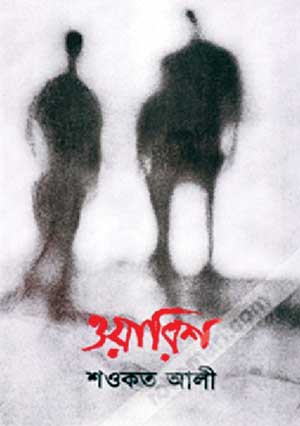
His novel Warish (1989) has a vivid description of Hindu-Muslim riots following the 1947 partition. The novel has an epic spell. We have to go from the past through present to the future. This is the nature of the human civilization, which is called evolution. In this versatile prose writing, he depicts the continuity of individual, society and notion through the character of Ranju.
Ali's trilogy Daksinayaner Din (1985), Kulaai Kalashrot (1986), and Purbaratri Purbadin (1986) are written on the basis of thedreams and political aspirations of the Bengali people of the sixties also earned praises from readers. An award winning film was made on his another creation called Uttorer Khep, on liberation struggle.
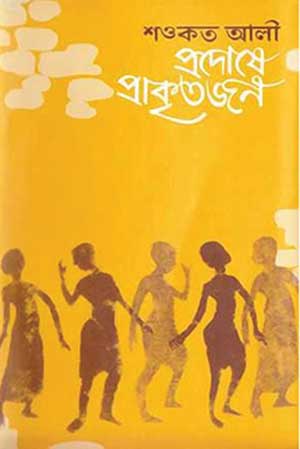
The writer is best known for his novel Prodoshe Prakritojon (1984) which is a unique addition to Bengali fiction. This story is based on the backdrop of 'Sena dynasty and of the pre-Turkish invasion'. All Hindu and Buddhist groups protested against the oppressive feudalism. The reign of King Laxmana Sena was captured in this novel.
In his books, he depicted the British rule in Indian subcontinent, separation of India and Pakistan, and riot between the Hindus and the Muslims. Ali has narrated the miseries suffered by low-caste groups. He also sheds light on how the so-called untouchables revolted against their oppressors.
Ali, a powerful author of Bangla literature, breathed his last at the Bangabandhu Sheikh Mujib Medical University (BSMMU) in Dhaka on January 25, 2018, suffering from illness and hospitalized with infection in the lungs.
Notable novels Novels
Pingal Akash, (1963)
Jaatra, (1976)
Prodoshe Praakritajon, (1984)
Apeksha, (1985)
Dakshinayaner Din, (1985)
Kulyaai Kalasrot, (1986)
Purbaratri Purbadin, (1986)
Jete Chai, (1988)
Warish, (1989)
Basar O Madhucandrima, (1990)
Uttarer Khep, (1991)
Short StoriesUnmul Bashona, (1968)
Lelihan Swad, (1978)
Shuno He Lakkhindor, (1988)
Baba Aapne Jaan, (1994)





