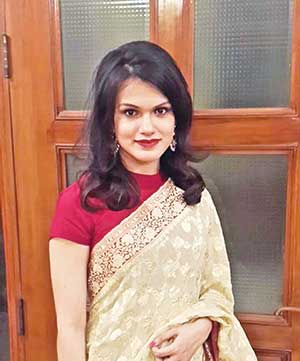
 Zaiba Tahyya is the founder and CEO of Female Empowerment Movement (FEM). She has been chosen for the Queen's Young Leaders Award, 2017, in recognition of her efforts to promote equality in society and reduce violence against women in Bangladesh through training and employment of women from low income areas in Bangladesh. In a recent conversation with the Young Observer Zaiba Tahyya talks about her wide range of works, future plans, and dreams.
Your wide ranging work--women empowerment, gender equality, self-defence and community development can be described as powerful mechanisms for social change. What drives your interest and engagement in these areas?
Zaiba Tahyya is the founder and CEO of Female Empowerment Movement (FEM). She has been chosen for the Queen's Young Leaders Award, 2017, in recognition of her efforts to promote equality in society and reduce violence against women in Bangladesh through training and employment of women from low income areas in Bangladesh. In a recent conversation with the Young Observer Zaiba Tahyya talks about her wide range of works, future plans, and dreams.
Your wide ranging work--women empowerment, gender equality, self-defence and community development can be described as powerful mechanisms for social change. What drives your interest and engagement in these areas?Having lived and studied abroad, I was not exposed to the criminal justice system and the treatment of women in Bangladesh. One summer, I did an internship at a legal firm and came to know the prevailing mistreatment, abuses, and violence against the women especially in low-income areas.
My experience as a researcher in the legal firm gave me a unique insight into the problems and vulnerability among women in low-income areas of the country. After my internship, I decided to develop programmes for women that not only limits itself to awareness programmes, but also work with physical empowerment of women.
What is 'women empowerment' to you? Is that about gender equality or more than that? Gender equality is just an aspect of women empowerment and I believe, it can be reached through women empowerment. In my opinion, women empowerment is giving women the freedom to choose everything from clothing to careers, to have education, and to know their sexual health rights.
Women can be empowered in various ways such as through training for skill development and by taking care of their health.
What are the achievements that 'Female Empowerment Movement' (FEM) was able to attain since its beginning?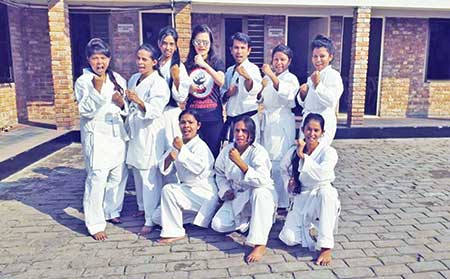
FEM is somewhat successful when it comes to its impact on social change and community development. It has been successfully training women in slum areas to make them more confident to survive in their own communities.
Few months ago, one of our projects regarding cyber security of women was featured in media outlets in seven different countries. In such a short period, FEM has changed the lives of women from low income areas who are more vulnerable to be victims of mistreatment, abuse, and violence. There is no doubt that FEM has received strong support and recognition from every strata of the society.
What are the projects you are currently working on or have successfully initiated under 'Female Empowerment Movement (FEM)'? FEM started its journey with 'Project Attorokkha' which is focused on self-defence training of women in urban areas. For the trainees of 'Project Attorokkha', FEM initiated a programme that trains them in computer literacy and cyber security.
On October 2017, FEM has finally come up with a training hub which serves as an afterschool club for women in urban slums. The hub has been successfully conducting English language teaching, self-defence and bicycle training. Moreover, FEM has introduced engineering classes where girls can learn how to make circuits and electric emergency fire alarms.
Martial arts and cycling are always viewed as a 'men's task', how do you work against such stereotype ideas? Although it was a challenge for us at the beginning to integrate the whole project, the movement had spread through the ripple effect. FEM participants were endowed with support from each other after the success of its first session.
What obstacles did you face when you initiated these anti-harassment precautions?Every day is challenging for FEM as its projects are very unconventional. For instance, it was very difficult to convince girls' parents to let them learn self-defence and cycling. Integration and building trust with the community was also a challenge for someone like me who is not personally belonging to the urban slums. Sometimes, the girls cannot be convinced as to why they needed to learn the skills that FEM is providing.
Do you think self-defence should be included in our national curriculum for primary and secondary level?self-defence is a life skill, and, at some point, it should be included in our national curriculum. However, we should promote gender equity and respect towards women so that self defence is not needed in the first place. If not self defence, I believe that inclusion of female in sports should be mandatory.
What are your plans with 'Female Empowerment Movement (FEM)' for the future?FEM is planning to expand it projects throughout the country. Instead of working with women in urban slums only, I would really like to introduce hubs in rural Bangladesh and make sure a positive change in lifestyle of women all over the country.
What is your advice to a girl or a woman reading this interview to protect them?I feel that a lot of women are not aware of their rights, whether it is sexual rights or human rights, which can protect them from mistreatment, violence, and abuse. I believe, every girl should be aware of their rights.





