

Choreographer and dancer Ivan Shahriar Sohag is teamed with Jaaz Multimedia's next release "Dhat Teri Ki". He has choreographed a song with heroine of the movie Nusrat Fariha. The song titled, "Mor Ghumo Ghore Elo Monohor" is a famous Nazrul score. The song's music has been engineered by Imon Saha and vocal lent by Nodi.
Sohag says, "Nusrat is a talented artiste. She dances marvelously. For the song, she has given much effort to do a best piece. She has balanced between both lyrics of the song as it is the creation of our National Poet and her expression precisely as the script demanded which is noteworthy." Sohag also mentioned that the journey of Nusrat and him began long ago. They have made together a number of stage shows and Television Dance shows. Sohag hopes that Nusrat Fariha will captivate the million of her fans across the globe after releasing the song as a music video.
Exhibition offers antidote to Trump's view of Iran
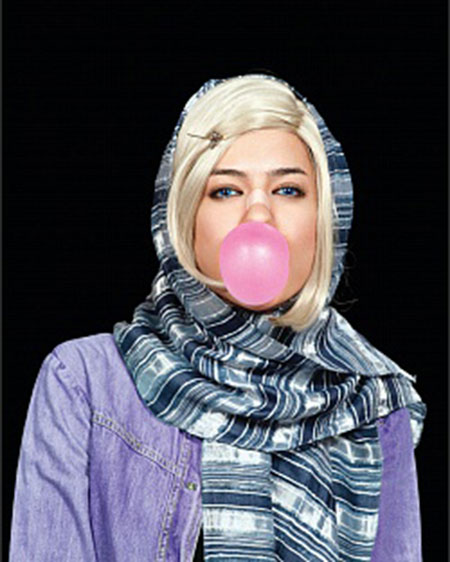
As President Donald Trump's immigration ban is causing a global uproar, the future of the US-Iran nuclear deal negotiated by his predecessor also hangs in the balance. Trump has described Iran as "a terrorist state", pledged to renegotiate the agreement, and filled his administration with foreign policy hardliners. Iran is among the seven countries whose citizens are barred from entering the US for at least the next 90 days.
This is the backdrop to the first wide-ranging survey of contemporary Iranian art ever staged in the US. The show, which includes the work of 23 artists, is drawn from the collection of the Iranian-born financier Mohammed Afkhami, who says he wants to present an alternative, "softer" vision of his country to the US.
Entitled Rebel, Jester, Mystic, Poet: Contemporary Persians, the exhibition opens at the Aga Khan Museum in Toronto on 4 February (until 4 June). It is then scheduled to travel to "prominent institutions" in California, in Texas and on the East Coast, Afkhami says, although he declined to name the venues.
While the US has hosted retrospectives of established Iranian artists, such as the 2015 survey of work by the Canadian-Iranian sculptor Parviz Tanavoli at the Davis Museum in Massachusetts and the 2013 New York Asia Society survey show of Iranian art, Iran Modern, there has been no major exhibition focusing on Iranian contemporary art.
Afkhami's show, which is organised by Fereshteh Daftari, who co-organised Iran Modern, will include pieces such as a digital fighter jet made from 32 stacked Persian carpets, Flying Carpet (2007), by Farhad Moshiri, a two-metre-high sculpture by Tanavoli, Blue Heech (2005), and a triptych by the late photographer and Palme d'Or winning film-maker Abbas Kiarostami, Untitled, Snow White Series (2010). Pieces by Shirin Neshat and Monir Farmanfarmaian will also be included.
Also on display will be works by artists who are still little known in the West, such as Hamed Sahihi, Morteza Ahmadvand and Nazgol Ansarinia.
The display aims to counter claims that the Iranian market has gone stale and that there is no longer any interesting art being produced in the country. "People have been exhibiting and collecting the same works, but there are a lot of artists who haven't had the chance to be seen yet," says Afkhami, adding that the perspective of these emerging artists is global: "They are travelling more and seeing more and getting represented by galleries in the US, Europe, and Asia."
Many of these artists face challenging conditions back home. Tanavoli, regarded as the most expensive living Iranian artist, was briefly barred from leaving Iran last July for reasons that are unclear. —The Art Newspaper





