



| HEADLINE |

|
Syed Abul Hossain no more
Published : Thursday, 26 October, 2023 at 12:00 AM
Staff Correspondent


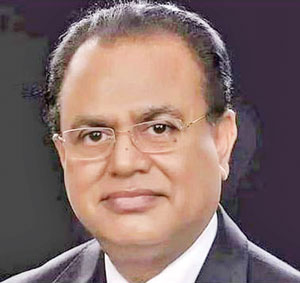 Syed Abul Hossain, a valiant freedom fighter and former communications minister, as well as an Awami League lawmaker representing Madaripur-3 (Dashar and Kalkini), passed away on Wednesday at the age of 72.
 He breathed his last in the United Hospital in Dhaka, succumbing to cardiac ailments, as confirmed by Kalkini Upazila Awami League President Tahmina Siddiqui.
Prime Minister Sheikh Hasina, along with government ministers, state ministers, and political leaders, including Awami League General Secretary Obaidul Quader, expressed their condolences over his demise.
Speaking to the media, PM's Deputy Press Secretary Hasan Zahid Tushar stated, "The Prime Minister has expressed deep shock at the death of former Communications Minister Syed Abul Hossain."
Born in 1951 in the village of Dasar in Madaripur, Abul Hossain completed his bachelor's degree in business management at the University of Dhaka in 1972, followed by a master's degree in 1974. He is survived by his wife Khaja Nargis, daughters Syeda Rubaiyat Hossain and Syeda Iffat Hossain, and thousands of well-wishers.
His body is currently in the morgue at the Combined Military Hospital (CMH) in Dhaka. The place and time of his burial will be finalized after a discussion with his family, according to his nephew Syed Shakhawat Hossain, who is the president of Dasar Upazila Awami League.
Syed Abul Hossain was not only a prominent political figure but also the founder, managing director, and chairman of SAHCO International Ltd. He was elected as a Member of Parliament (MP) in the general elections of 1991, 1996, 2001, and 2008, representing the Madaripur-3 constituency.
His political career also included serving as the Minister of Information and Communication Technology and State Minister for Local Government, Rural Development, and Co-operatives from 1996 to 1997.
Furthermore, he held the position of international affairs secretary for the Awami League from 1991 to 2012.
Abul Hossain was notably the Communications Minister in 2011 when Bangladesh signed a contract with the World Bank for the construction of the Padma Bridge.
However, he had to step down in 2012 following corruption allegations and was subsequently sent to jail. Later, a Canadian court acquitted him, and the Anti-Corruption Commission in Bangladesh did not find any evidence against him either.
Despite the complications, Bangladesh eventually canceled its contract with the World Bank and constructed the Padma Bridge with local funding.
Nevertheless, Syed Abul Hossain never returned to politics. In a statement given in 2017, he attributed the false allegations to certain newspapers and 'dignitaries.'
Loading...
Loading...
Also read



Editor : Iqbal Sobhan Chowdhury
Published by the Editor on behalf of the Observer Ltd. from Globe Printers, 24/A, New Eskaton Road, Ramna, Dhaka.
Editorial, News and Commercial Offices : Aziz Bhaban (2nd floor), 93, Motijheel C/A, Dhaka-1000.
Phone: PABX- 41053001-06; Advertisement: 41053012; 01793317829, 01550707291, E-mail: [email protected], [email protected] Online: email: [email protected] 41053014; 01550707297 Advertisement: 01550707296
Published by the Editor on behalf of the Observer Ltd. from Globe Printers, 24/A, New Eskaton Road, Ramna, Dhaka.
Editorial, News and Commercial Offices : Aziz Bhaban (2nd floor), 93, Motijheel C/A, Dhaka-1000.
Phone: PABX- 41053001-06; Advertisement: 41053012; 01793317829, 01550707291, E-mail: [email protected], [email protected] Online: email: [email protected] 41053014; 01550707297 Advertisement: 01550707296


