



| HEADLINE |

|
How our corrupt elites capture power, resources
Published : Monday, 25 April, 2022 at 12:00 AM
M S Siddiqui


 The new institutional economics argue for specific and well-defined rules and property right systems i. e. good governance can promote economic growth. There are some alternative approaches to this new institutional economics namely 'limited access order' followed in many developing counties, 'open access order' in some developed countries. In 'limited access orders', political elites divide up control of the economy, each getting some share of the rents; and since outbreaks of 'violence' (conflicts among the elites) reduce the rents, the elite groups have incentives to reduce conflicts among them.
The country political economy analysis (PEA), tell the dominant coalitions exert influence over formal institutions or processes that should in principle hold the powerful in check. "limited access orders", powerful elites in a majority of countries form "dominant coalitions" to overcome political disorder. Some of the lucrative businesses taken over by some influential groups, public resources such as land properties sold or lease out to influential group of people, good industrial unit under public sectors are denationalized at negotiated price.
Authorities acquire agricultural land at throughway price, develop and sale and a very low price to the elites. This is done by limiting access to resources and decision making, allowing the extraction of rents and their redistribution to participating elites through patron-client networks. The dominant coalition share the big contracts of development projects and get the consultancy at negotiated price.
The limited access order creates limits on access to valuable political and economic functions as a way to generate rents. Rents are created both by limits on access to resources and functions--like land, contracts, trade etc--and by limiting access to forms of social organization that the larger society will support. Powerful individuals possess privileges and rents, and since violence threatens or reduces those rents, the risk of losing the rents can make it in the interests of powerful individuals and groups to cooperate with the coalition in power rather than to fight. Privileged individuals have privileged access to social tools enabling them, and only them, to form powerful organizations. In limited access orders the political system manipulates the economy to create rents as a means of solving the problem of violence.
Highly personalized relationships among the bureaucracy both civil and military, politicians and few business conglomerates and patron-client networks are at the heart of dominant-coalition power systems. Businesspersons become the junior partners to bureaucrats and politicians. In order to gain control of public resources, elites seeking power organize capture of the bureaucratic institution by the dominant coalition of few bureaucrats, politicians and businesspersons. The legislature is often indirectly controlled by the dominant coalition as well, compromising its independent policymaking and oversight functions.
In many countries is the dominant coalition's gain influence over electoral processes. The presidential appointment of heads and members of electoral commissions, tampering with voter registration and vote counts during elections, or using public funds and equipment for party campaigns. These practices can only survive in the absence of the rule of law. Thus, in many developing countries are likely to witness executive influence over the judiciary.
The oversight institutions such as anti-corruption agencies, supreme audit institutions, ombudsmen, and human rights commissions are usually not independent and openly cooperate with the dominant coalition. The appointment and budget of those institutions are controlled by the government. Legislation and rampant use of laws for curtailing civil society and media freedom has the same objective of limiting oversight. The politicians become businessperson and business person become politician. The lines between politics and business are blurred in many countries, with elites extensively pursuing business interests for the purpose of personal advancement or to fulfil clientelistic obligations.
"Limited access orders" of the "dominant coalitions" overcome any possible political disorder or violence. Lines of patronage rely on the transfer of power or resources to sustain the positions of both patrons and clients. Therefore, there is a tacit acceptance of rent seeking and corruption as the glue that holds together these elites, institutions and systems of power. In the most damaging cases, the dispute between the beneficiaries are settled through compromise and re-distribution of rents among the participating elites via patron-client networks.
For power-seeking elites, wielding influence through the bureaucracy is a prime means of gaining control of public resources, especially since the public sector constitutes the major source of rents in many developing countries. Therefore, capture of the bureaucracy by the dominant coalition is commonly seen in these settings. The legislature is often dominated by the dominant coalition. Parliaments are seems weak in comparison to the executive. This is often indicative of powerful patrimonial obligations and decision-making powers lying outside of formal institutions.
The functioning of the legislature may be compromised in various ways, including arbitrary control of parliamentary budgets, influence over parliamentary election processes, and outright bribery of politicians through government development contracts and benefits. The dominant coalition to control or influence the behaviour of opposition parties through sharing of business and contracts. Sometime threatening of allegations of corrupt behaviour on the part of their leading members.
On the election campaign side, political corruption includes the executive's use of public funds and equipment for party campaigns. This make the elections are very expensive affairs. They invest huge amount in the election and this is an investment to become part of the elites. Different stakeholders also support the process by the powerful entrepreneurs, companies, and even organized crime cartels. Accountability for political action then easily shifts towards those financial contributors, resulting in skewed decisions and policy making by those who are elected to office.
Many of these practices can only survive in the absence of the rule of law. Thus, many developing countries witness extensive executive influence over the judiciary. Such influence manifests itself across the spectrum, resulting in notionally independent judiciaries that are, however, hesitant to rule against the government; cuts in and delays to the judiciary's budget; and the unaccountable appointment of judges, prosecutors, heads of police, and attorneys general. Naturally, executive control over the judiciary creates legal openings for corruption, from minor acts all the way to outright impunity for grand corruption.
There are many instances in which parliamentary adoption of laws and policies serves the particular interests of business groups. The groups are actually shell companies and beneficiaries are known to all citizens. It is important to recognize that such patterns are not salient in all developing countries, nor are they exclusive to the developing world. Highly personalized relationships and patron-client networks exist in all political systems. However, in some countries they are highly developed, creating a power base that either lies outside of formal state institutions or distorts these institutions to serve particular interests.
This dominant coalition of personalized networks may be also based on different affiliations: for example, inheritance, partisan, ethnic, or regional/clan lines, groups affiliated to the military, or a combination of these. Personalized relationships secure support for those in power by creating loyalty towards the patron and by infiltrating state institutions with these loyalties. Patrons in turn offer clients access to positions and resources, usually through the public sector. In some instances the head of the country or government remain out of monetary corruption but let others free hand of corruption in order to remain at the helm of the power.
The extent to which this happens through informal mechanisms varies among countries and can even vary within a country. In many countries, formal and informal structures exist in parallel. The formal state might function according to the rules in certain areas but not in others.
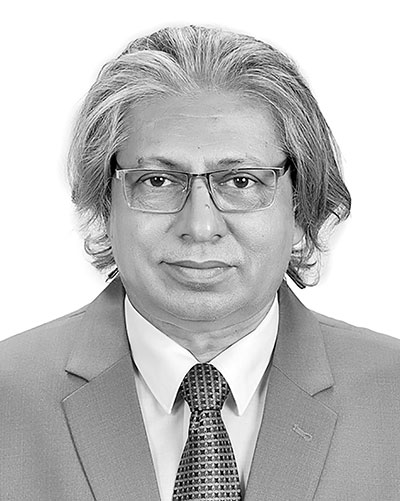
M S Siddiqui is a Legal
Economist & adviser, Bangladesh Competition Commission
Loading...
Loading...
Also read



Editor : Iqbal Sobhan Chowdhury
Published by the Editor on behalf of the Observer Ltd. from Globe Printers, 24/A, New Eskaton Road, Ramna, Dhaka.
Editorial, News and Commercial Offices : Aziz Bhaban (2nd floor), 93, Motijheel C/A, Dhaka-1000.
Phone: PABX- 41053001-06; Advertisement: 41053012; 01793317829, 01550707291, E-mail: [email protected], [email protected] Online: email: [email protected] 41053014; 01550707297 Advertisement: 01550707296
Published by the Editor on behalf of the Observer Ltd. from Globe Printers, 24/A, New Eskaton Road, Ramna, Dhaka.
Editorial, News and Commercial Offices : Aziz Bhaban (2nd floor), 93, Motijheel C/A, Dhaka-1000.
Phone: PABX- 41053001-06; Advertisement: 41053012; 01793317829, 01550707291, E-mail: [email protected], [email protected] Online: email: [email protected] 41053014; 01550707297 Advertisement: 01550707296


