



| HEADLINE |

|
We need women-friendly men to accelerate women’s equality
Published : Tuesday, 8 March, 2022 at 12:00 AM
PARVEZ BABUL


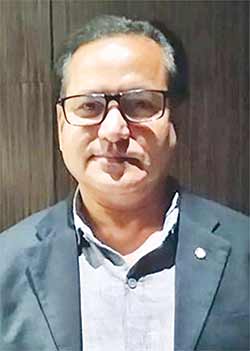
PARVEZ BABUL
The first women's day celebration took place in Chicago on May 3rd, 1908. The US socialist party organized it, brought together an audience of 1500 women. They demanded economic and political equality, on a day officially dedicated to "the female worker's cause". The second international conference of working women was held in Copenhagen in 1910. Clara Zetkin, the leader of the women's office for the Social Democratic Party in Germany proposed the idea of celebrating international women's day every year in every country.
Ok, now come to the point to discuss about the theme of this year: Gender equality today for a sustainable tomorrow. So what is gender equality? Gender equality is: the state in which access to rights or opportunities is unaffected by gender. Gender equality is when people of all genders have equal rights, responsibilities and opportunities.
Ok, what about sustainable tomorrow? First we learn about sustainability: Sustainability means meeting our own needs without compromising the ability of future generations to meet their own needs. Sustainability is most often defined as meeting the needs of the present without compromising the ability of future generations to meet their needs. It has three main pillars: economic, environmental, and social. These three pillars are informally referred to as people, planet and profits. Sustainability is the ability to exist and develop without depleting natural resources for the future.
 Experts observed that this year's International Women's Day is a day of reflection rather than celebration. According to latest research, at the start of the lockdown, almost 56 percent of women in the region who previously worked but now are unable to do so. And 21 percent lost their jobs entirely. As lockdown ended, women returned to economic activity at a substantially slower rate than men.
 In terms of empowering women and promoting gender equality is crucial to accelerating sustainable development. Among the 17 Sustainable Development Goals (SDGs), that United Nations sets for 2030, Goal 5 is: Gender Equality. It means ending all forms of discrimination against women and girls is not only a basic human right, but it also has a multiplier effect across all other development areas. The SDGs aim to build on these achievements to ensure that there is an end to discrimination against women and girls everywhere.
We now understand the vital link between gender, social equality, equity, and climate change recognize that without gender equality today, a sustainable future, an equal future, remain out of reach. Women and girls experience the greatest impacts of the climate crisis as it amplifies existing gender inequalities and puts women's lives and livelihoods at risk. Across the world, women depend more on yet have less access to natural resources. And women often bear a disproportionate responsibility for securing food, water, and fuel. As women and girls bear the burden worst impacts of climate change, they are also essential to leading and driving change in climate adaption, mitigation and solutions.
This year's Women's Day observance is in recognition and celebration of the women and girls they are leading the charge on climate change adaptation and response. Also recognizing and honoring their leadership and contribution towards a sustainable future. As countries and communities start to slowly recover from a devastating pandemic, so we will have to take the chance to finally end the exclusion and marginalization of women and girls.
To perform those important jobs, we must break down the deep-seated historic, cultural, and socio-economic barriers. Those prevent women from taking their seat at the decision-making table to make sure that resources and power are more equitably distributed. For example, across the globe, women remain concentrated in the lowest paid jobs, many in extremely vulnerable forms of employment. Women are nearly twice and more than men to lose their jobs during the COVID-19 crisis. In fact, the pandemic will dramatically increase the poverty rate for women and widen the gap between men and women, those who live in poverty. All the states must address the inequalities to remove accordingly.
We know that more inclusive leadership and representation leads to stronger democracies, better governance, and more peaceful societies. Study of UN Women, demonstrates that involving women in peace processes is likely to make peace agreements last much longer. However, we aren't moving fast enough. At the current rate of progress, gender equality among Heads of Government, for example, will take another 130 years. To disrupt the status quo, we need to amplify women's voices, promote their participation, leadership in public institutions, parliaments, the judiciary, and the private sector.
We must accomplish things differently. That means shattering the barriers that hold women and girls back. It's a rallying cry for generation equality. It is the time to finally, fully harness the power of women's leadership to realize a more equal, more inclusive and more sustainable future. Women's capacity development, social, cultural, economic and environmental sustainability are critically important.
Therefore, considering all the issues, we need women-friendly men everywhere, in every family, workplace, society, in every country, and globally to treat and respect all the women and girls as human-beings. Women-friendly men may entertain women fairly, equally to establish women's human rights with all due respect as men. And to implement all the actions mentioned in this story to truly empower women. In addition, women-friendly men are prerequisite to help raise women's voice, to cordially support women, to make local, national, international platforms for women and girls for their total participation in decision-making in all the sectors. Above all, we need women-friendly men to accelerate women's equality. So women-friendly men must come forward to establish and ensure gender equality today for a sustainable tomorrow.
Parvez Babul is a poet, journalist, author and activist based in Bangladesh.
Loading...
Loading...
Also read



Editor : Iqbal Sobhan Chowdhury
Published by the Editor on behalf of the Observer Ltd. from Globe Printers, 24/A, New Eskaton Road, Ramna, Dhaka.
Editorial, News and Commercial Offices : Aziz Bhaban (2nd floor), 93, Motijheel C/A, Dhaka-1000.
Phone: PABX- 41053001-06; Advertisement: 41053012; 01793317829, 01550707291, E-mail: [email protected], [email protected] Online: email: [email protected] 41053014; 01550707297 Advertisement: 01550707296
Published by the Editor on behalf of the Observer Ltd. from Globe Printers, 24/A, New Eskaton Road, Ramna, Dhaka.
Editorial, News and Commercial Offices : Aziz Bhaban (2nd floor), 93, Motijheel C/A, Dhaka-1000.
Phone: PABX- 41053001-06; Advertisement: 41053012; 01793317829, 01550707291, E-mail: [email protected], [email protected] Online: email: [email protected] 41053014; 01550707297 Advertisement: 01550707296


